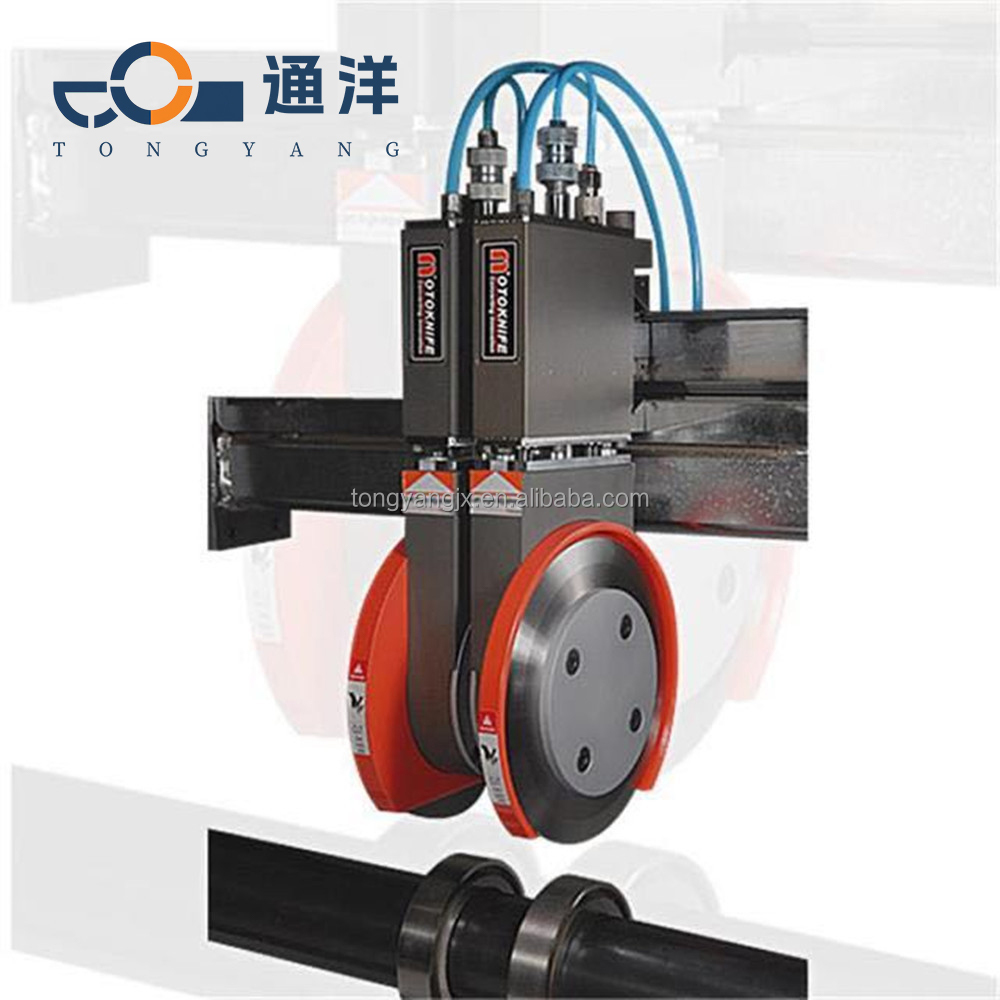
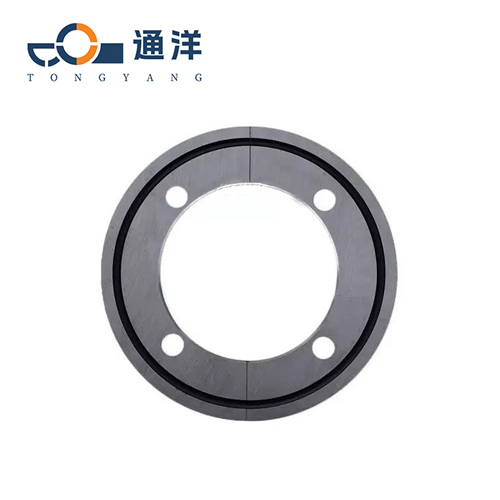
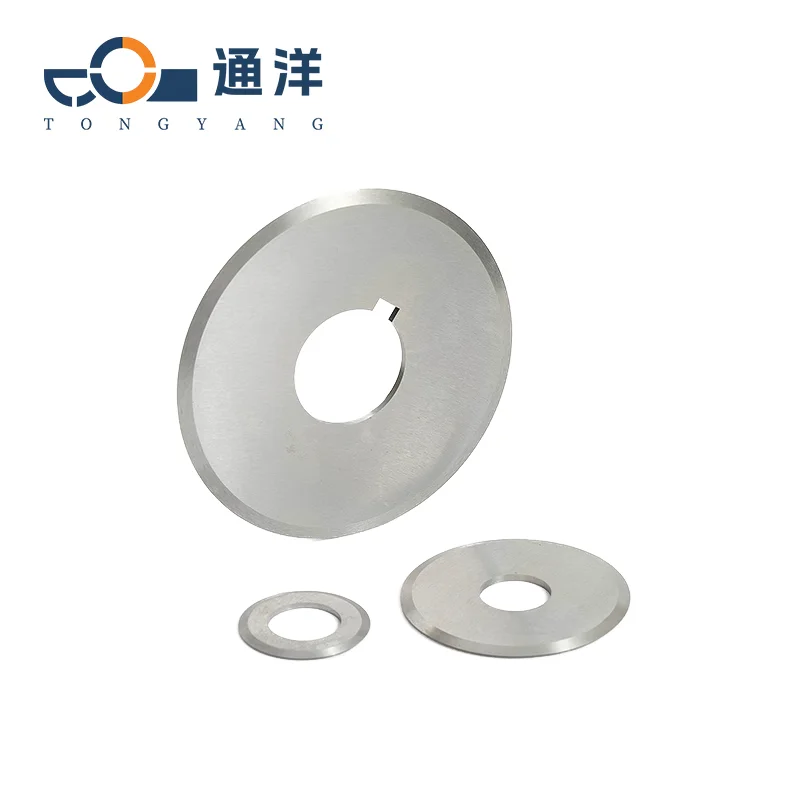
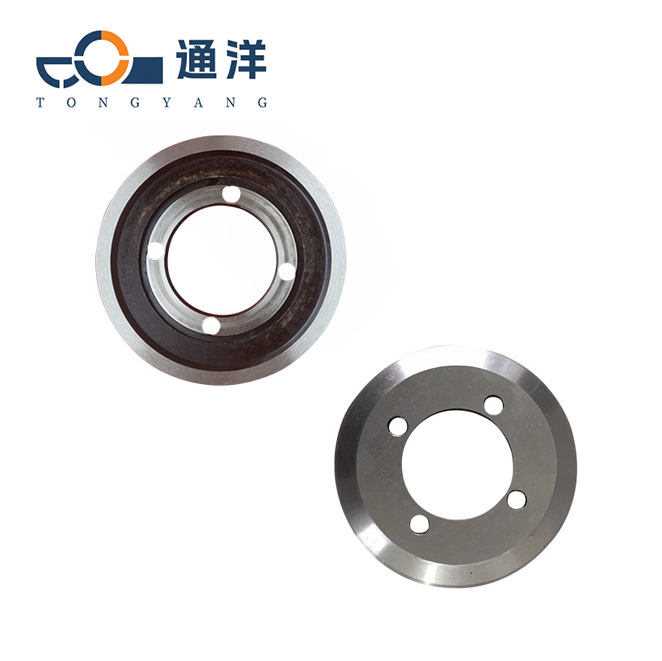
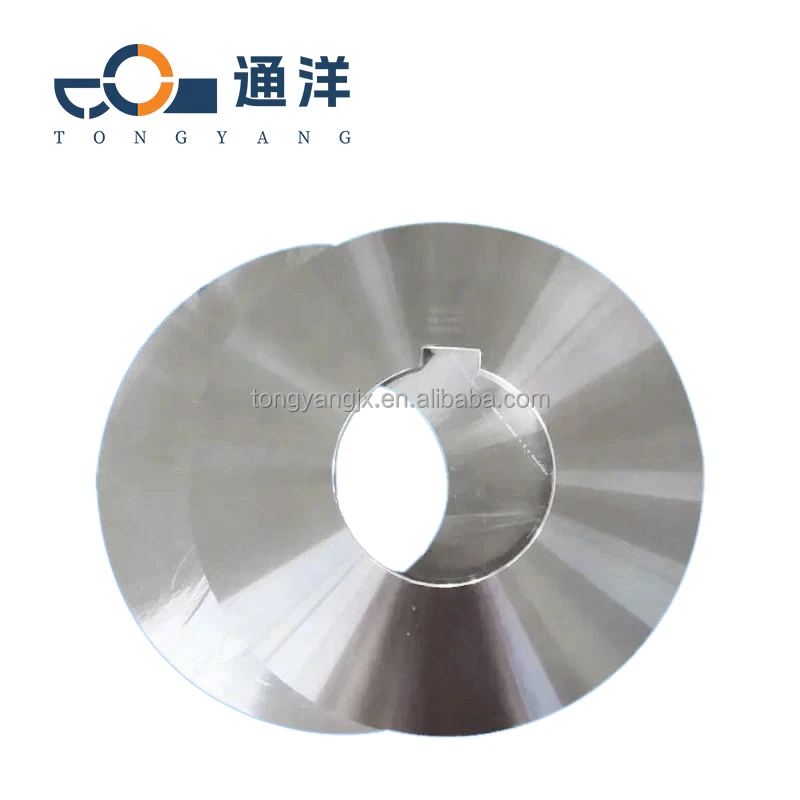
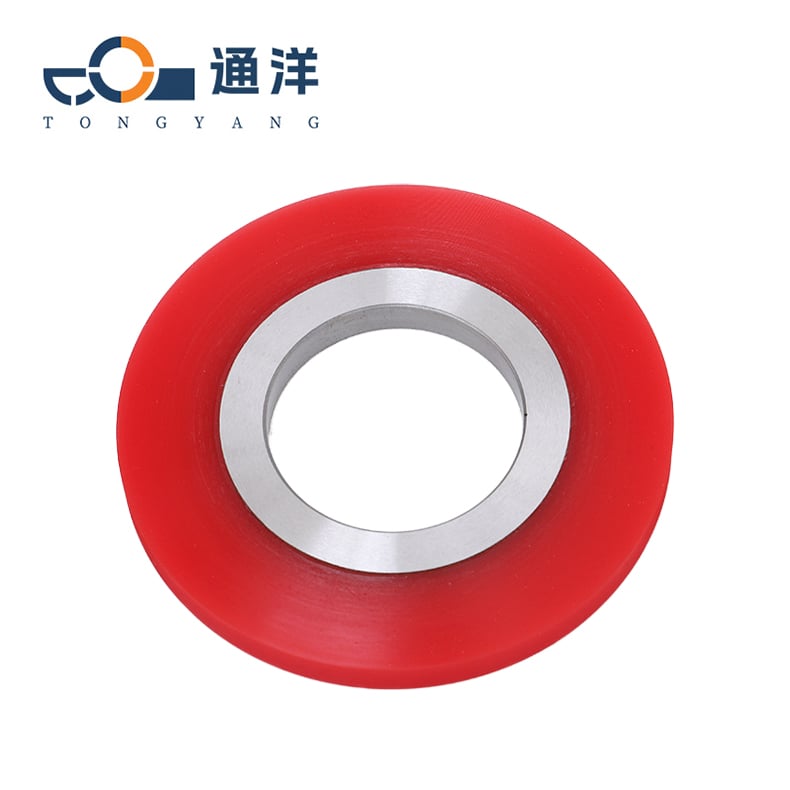
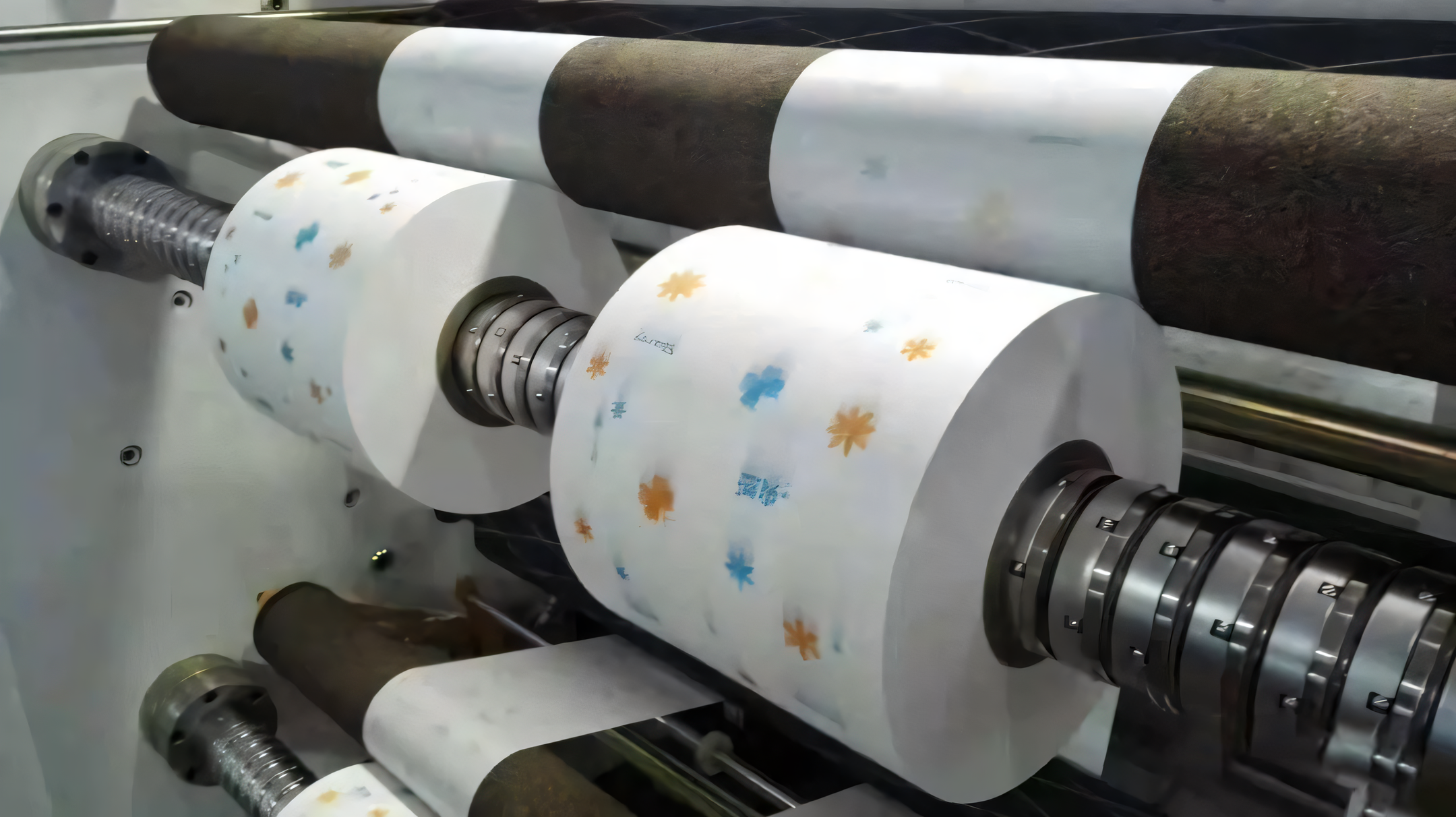
Slitting and its three mainstream methods: circular knife slitting, flat knife slitting, and crush slitting. Selection can be made quickly according to the material and application scenario.
Flat knife slitting
Single-sided or double-sided blades are fixed on a stationary
blade holder. During material operation, the blade is lowered to cut the material longitudinally, achieving the slitting purpose.
There are two types of razor slitting: grooved slitting and suspended slitting.
In grooved slitting, as the material runs on the grooved roller, the cutting blade is lowered into the grooves of the roller to cut the material longitudinally. At this time, the material forms a certain wrap angle on the grooved roller, making it less prone to drifting. This method is commonly used for slitting cast PP films or films with narrow edge trims, as it can improve slitting efficiency. However, compared with suspended slitting, its disadvantage is inconvenient blade alignment.
In suspended slitting, when the material passes between two rollers, the razor is lowered to cut the material longitudinally. Since the material is in a relatively unstable state, the slitting accuracy is slightly lower than that of grooved slitting. Nevertheless, this method features convenient blade alignment and operation.
Advantages of Flat Knife Slitting
Low tooling cost, fast blade replacement, wide adjustable width range.
Disadvantages
Limited speed, rapid blade wear, and easy occurrence of burrs on the cut edges.
Circular Knife Slitting
Circular knife slitting can be divided into tangential slitting and non tangential slitting.
In tangential slitting, the material is slit along the tangential direction of the upper and lower circular blades. This method allows convenient blade alignment, and the positions of the upper and lower circular blades can be easily and directly adjusted according to the required slitting width. Its disadvantage is that the material tends to drift at the cutting point, resulting in low accuracy, so it is rarely used nowadays.
In non-tangential slitting, the material forms a certain wrap angle with the lower circular blade, and the material is cut as the lower circular blade is engaged. This method prevents material drifting and ensures high slitting accuracy. However, blade adjustment is relatively inconvenient, as the entire shaft must be removed when installing the lower circular blade.
Circular knife slitting is suitable for slitting relatively thick composite films and paper
products.
Advantages of circular knife slitting: high precision, high speed, neat cutting edges, wide adaptability.Disadvantages: high equipment cost, strict requirements for maintenance and blades, and easy material movement.
Crush Cut Slitting
Crush slitting mainly relies on a single circular knife pressing directly against a hard backing roller. The knife edge squeezes and crushes the material, causing it to fracture under force, thereby achieving longitudinal slitting.
It does not involve the meshing and shearing action of upper and lower knives; instead, the material is "crushed and cut" by means of pressure and rolling. Featuring a simple structure and low cost, it is a relatively convenient slitting method.
Applicable materials
Circular knife slitting: Paper, thick composite films, thin metal foils
leather Flat knife slitting: Thin films, non-woven
fabrics Crush slitting: Non-woven fabrics, foam, rubber, soft fiber materials

 Hot News
 EN
EN