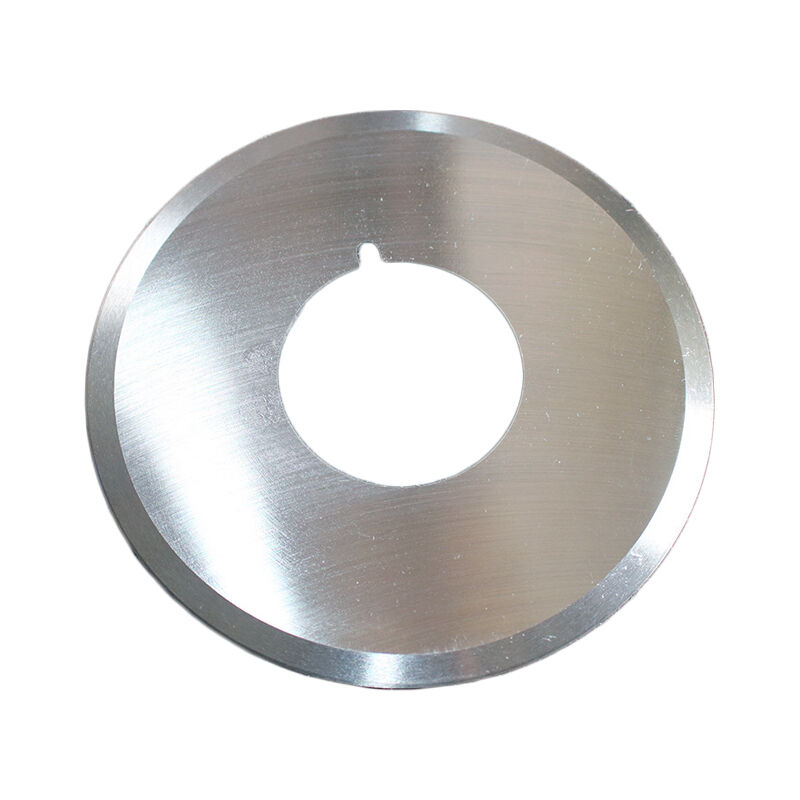
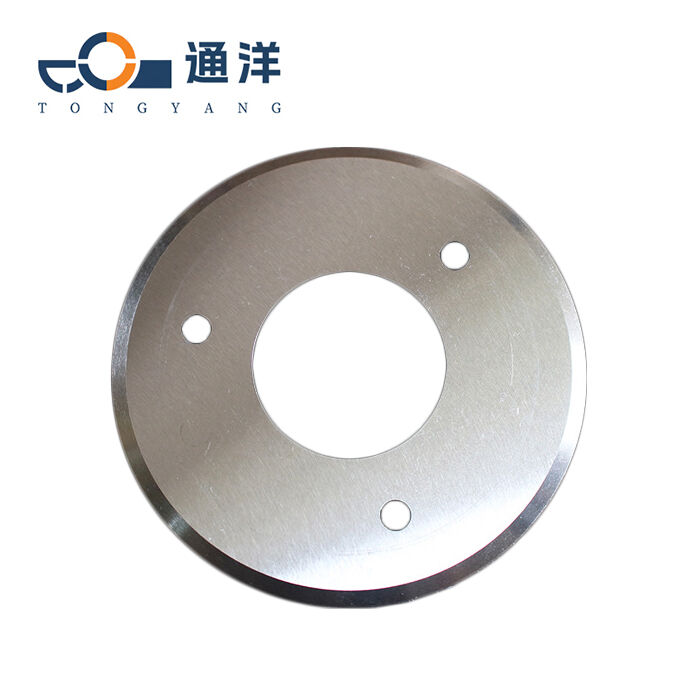
Premium Circular Slitter Knives - Precision Cutting Solutions for Industrial Applications

All Categories

Get a Free Quote

Our representative will contact you soon.
Email
WhatsApp
Name
Company Name
Message
0/1000

circular slitter knives

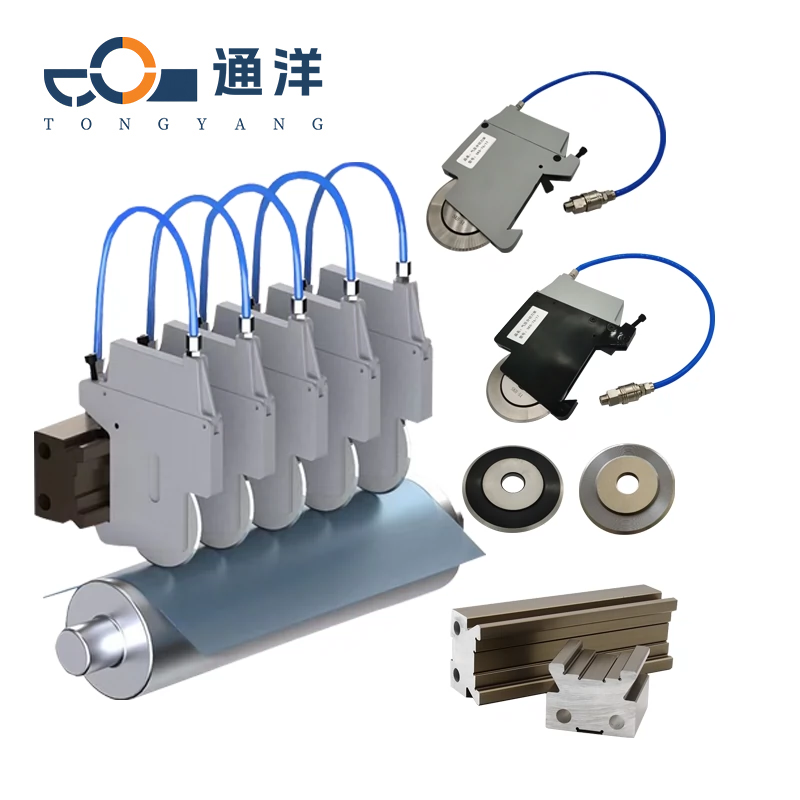
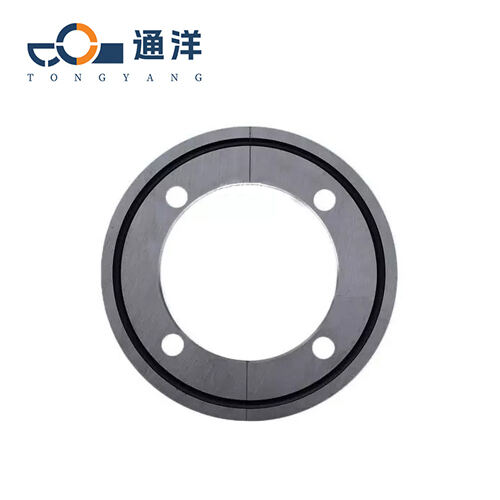
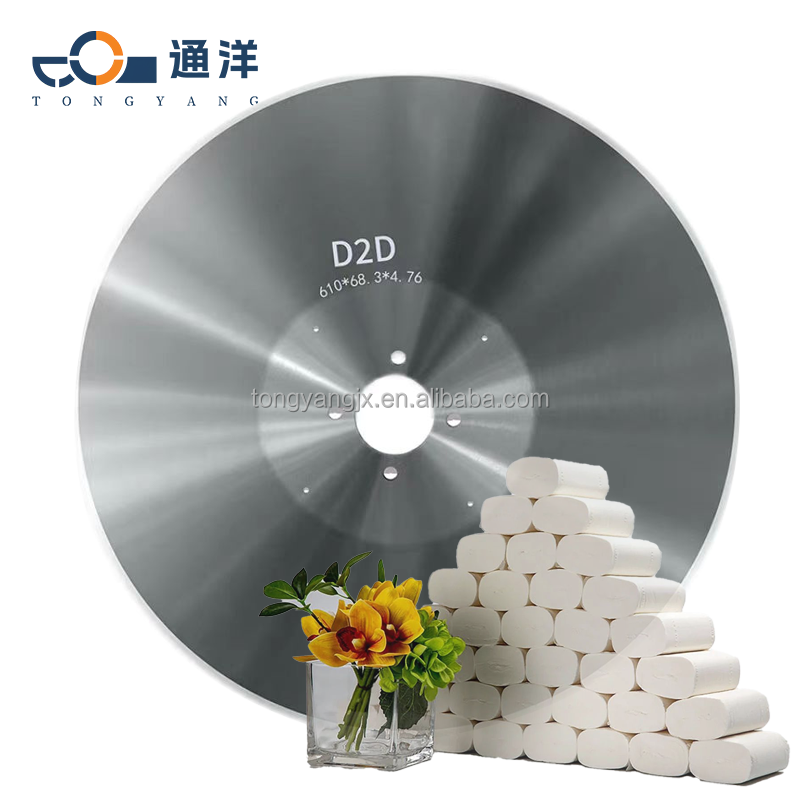
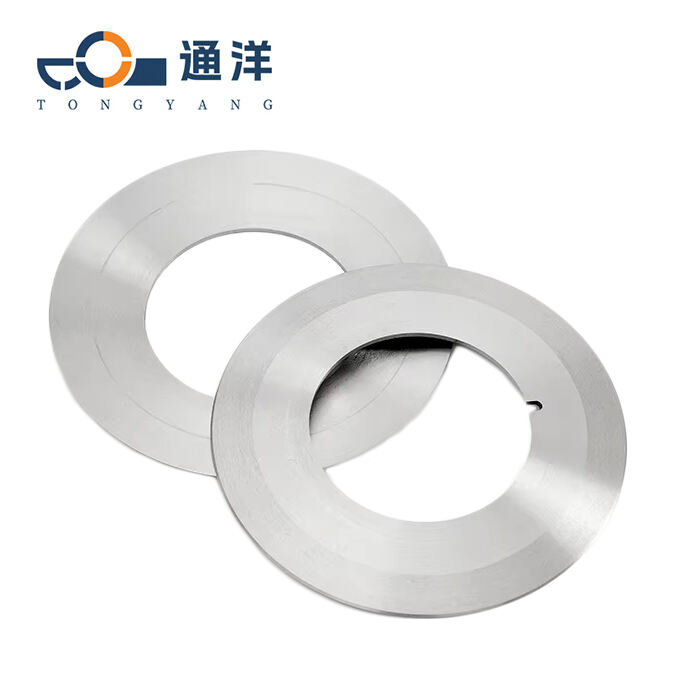
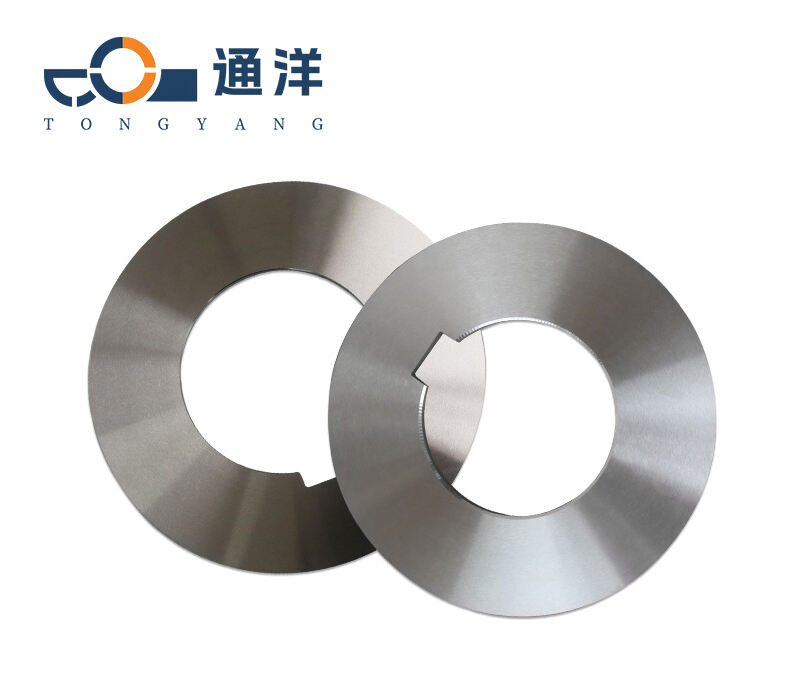
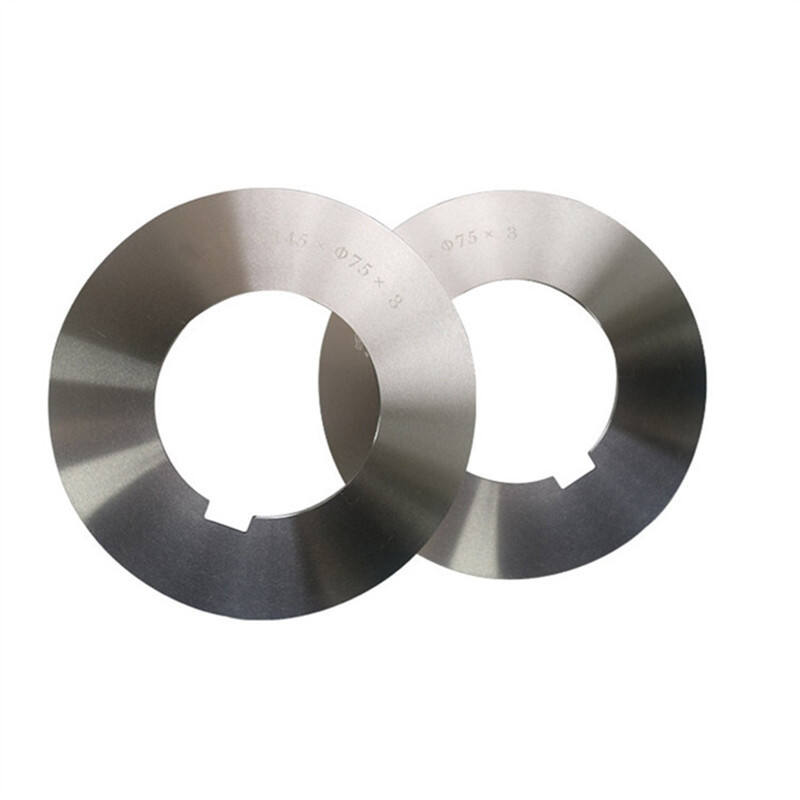
Circular slitter knives represent essential cutting tools in modern manufacturing and processing industries, designed to deliver precise slicing and cutting operations across diverse materials. These specialized blades feature a circular geometry that enables continuous rotational cutting motion, making them indispensable for operations requiring clean, accurate cuts at high production speeds. The main function of circular slitter knives centers on converting large rolls or sheets of material into narrower widths, a process critical in paper mills, packaging facilities, textile operations, and metal processing plants. The technological features embedded within these tools include advanced metallurgy, precision grinding techniques, and engineered edge geometries that maintain sharpness over extended production runs. Manufacturers craft circular slitter knives from high-grade tool steels, carbide materials, or specialized alloys selected for their hardness retention and wear resistance properties. The cutting edge undergoes sophisticated heat treatment processes that balance hardness with toughness, preventing premature edge failure while maintaining cutting precision. Applications for circular slitter knives span numerous industries where material conversion occurs. In paper and film production, these blades slice wide rolls into specific widths for packaging, labeling, or consumer products. Textile manufacturers rely on circular slitter knives to cut fabric rolls with minimal fraying or distortion. Metalworking facilities employ these tools for slitting steel, aluminum, and copper coils into precise dimensions. The pharmaceutical and food packaging sectors utilize circular slitter knives for cutting flexible packaging materials, ensuring hygienic and accurate results. Modern circular slitter knives incorporate design innovations such as optimized blade angles, surface coatings that reduce friction, and mounting configurations that simplify installation and replacement procedures. These technological advancements translate into improved productivity, reduced downtime, and lower operational costs for businesses that depend on efficient material conversion processes throughout their manufacturing workflows.

New Products

Investing in quality circular slitter knives delivers tangible benefits that directly impact your bottom line and operational efficiency. First and foremost, these cutting tools provide exceptional precision that ensures consistent product dimensions throughout production runs. When your materials maintain uniform widths, you reduce waste significantly, as fewer pieces fail quality inspections or require rework. This precision translates into cost savings that accumulate over thousands of cuts, making circular slitter knives a smart financial choice for businesses focused on maximizing material utilization. The durability factor stands out as another compelling advantage. Premium circular slitter knives maintain their sharp cutting edges far longer than conventional blades, which means your production lines experience fewer interruptions for blade changes. Extended blade life reduces both replacement costs and labor hours spent on maintenance activities, allowing your team to focus on value-adding tasks rather than constant tool management. This reliability becomes especially valuable during high-volume production periods when downtime directly affects delivery schedules and customer satisfaction. Operational speed benefits emerge naturally from the circular design. These blades rotate continuously during cutting operations, enabling faster processing speeds compared to reciprocating cutting methods. Higher throughput means you can fulfill orders more quickly, take on additional projects, and respond more effectively to market demands. The smooth rotational cutting action also generates less vibration and noise, creating a more comfortable working environment for your operators while reducing mechanical stress on associated equipment. Versatility represents another practical advantage worth considering. Circular slitter knives adapt to various materials including paper, plastic films, foils, textiles, rubber, and thin metals. This flexibility allows you to use the same basic equipment configuration across different product lines, simplifying inventory management and reducing capital equipment requirements. Many operations find they can consolidate multiple cutting processes using appropriately selected circular slitter knives, streamlining workflows and reducing floor space needs. The quality of cuts achieved with circular slitter knives minimizes edge defects such as burrs, tears, or ragged edges. Clean cuts mean your finished products look more professional and require less secondary processing. For applications where edge quality affects product performance, such as packaging seals or laminated materials, this advantage becomes critical. Customers notice the difference in product quality, which strengthens your reputation and supports premium pricing strategies. Maintenance simplicity adds practical value to daily operations. Circular slitter knives feature straightforward mounting systems that enable quick replacements without specialized tools or extensive training. Many designs incorporate safety features that protect operators during blade changes, reducing workplace injury risks. The predictable wear patterns of quality circular slitter knives allow you to implement preventive maintenance schedules, avoiding unexpected failures that disrupt production flow and create scheduling chaos.

Tips And Tricks

How to Extend Your Film Slitting Blade Lifespan

25

Mar

How to Extend Your Film Slitting Blade Lifespan

Manufacturing operations that rely on precise film cutting know that blade performance directly impacts production efficiency and product quality. A well-maintained film slitting blade can significantly reduce downtime, minimize material waste, and e...
View More
Can a Circular Blade Cut Metal? A Look at Hardened Metal Cutting Blades

25

Mar

Can a Circular Blade Cut Metal? A Look at Hardened Metal Cutting Blades

The ability to cut through metal efficiently and precisely has always been a cornerstone of modern manufacturing and fabrication industries. When professionals need to slice through various metal materials, the choice of cutting tool can make the dif...
View More
How to Choose the Perfect Metal Cutting Blade: Pro Guide

06

May

How to Choose the Perfect Metal Cutting Blade: Pro Guide

Selecting the right metal cutting blade is a critical decision that directly impacts production efficiency, cut quality, blade lifespan, and overall operational costs in industrial metalworking operations. Whether you're processing thin gauge steel, ...
View More
Metal Cutting Blade Maintenance: Essential Tips

30

Apr

Metal Cutting Blade Maintenance: Essential Tips

Metal cutting blades are critical components in industrial manufacturing environments, directly influencing productivity, cut quality, and operational safety. Whether deployed in metal slitting machines, shearing operations, or precision cutting appl...
View More

Get a Free Quote

Our representative will contact you soon.
Email
WhatsApp
Name
Company Name
Message
0/1000

circular slitter knives

Exceptional Edge Retention for Extended Production Cycles

Exceptional Edge Retention for Extended Production Cycles

The edge retention capabilities of circular slitter knives fundamentally transform production economics by extending the intervals between blade replacements and maintaining consistent cutting quality throughout each blade's service life. This characteristic emerges from sophisticated metallurgical engineering and precision manufacturing processes that create cutting edges capable of withstanding millions of cutting cycles without significant degradation. Understanding the importance of edge retention requires recognizing that every blade change represents both direct costs in replacement parts and indirect costs from production interruptions, setup time, and quality verification procedures. Manufacturing facilities operating multiple slitting lines can spend substantial resources managing blade inventories, scheduling maintenance windows, and training personnel on proper replacement procedures. When circular slitter knives deliver superior edge retention, these cumulative costs decrease dramatically, freeing up budgets for other operational improvements or flowing directly to profitability. The value proposition extends beyond simple cost reduction. Consistent edge sharpness throughout the blade's service life means product quality remains stable from the first cut to the last. This consistency eliminates the quality variations that occur when blades gradually dull, reducing the percentage of output requiring rework or rejection. For industries with stringent quality specifications, such as medical packaging or electronics manufacturing, this consistency provides the reliability needed to maintain compliance with regulatory standards and customer requirements. The engineering behind exceptional edge retention involves selecting base materials with optimal hardness characteristics, typically high-speed steel, tungsten carbide, or advanced ceramic composites. These materials undergo controlled heat treatment processes that develop microstructures resistant to wear while retaining sufficient toughness to prevent chipping or fracture under operational stresses. Surface treatments such as titanium nitride coatings or diamond-like carbon layers further enhance wear resistance by reducing friction and preventing material adhesion that accelerates edge degradation. Practical experience demonstrates that circular slitter knives with superior edge retention enable longer production campaigns without quality drift, particularly valuable during extended manufacturing runs of standardized products. Operators gain confidence in process stability, reducing the need for frequent measurement checks and adjustments that consume time and attention. Quality control personnel can focus on validating finished products rather than continuously monitoring for cutting defects that indicate blade wear. The economic impact becomes especially significant in high-volume operations where blade replacement on a single slitting line might occur weekly or even daily with inferior products, while premium circular slitter knives might operate for months before requiring replacement, depending on material characteristics and cutting conditions.
Precision Engineering for Clean, Burr-Free Cutting

Precision Engineering for Clean, Burr-Free Cutting

Precision engineering distinguishes professional-grade circular slitter knives from basic cutting tools, delivering clean, burr-free edges that meet demanding quality standards across diverse materials and applications. This precision results from exacting manufacturing tolerances controlling blade geometry, edge angles, and surface finish characteristics that directly influence cutting performance. The importance of precision engineering becomes immediately apparent when examining cut edges under magnification or when downstream processes depend on edge quality for successful operation. Ragged cuts, microscopic tears, or burrs create problems ranging from aesthetic defects to functional failures in finished products. Packaging materials with rough edges may not seal properly, creating pathways for contamination or moisture intrusion. Textile cuts with frayed edges unravel during subsequent handling, increasing waste and complicating assembly operations. Metal strips with burrs require secondary deburring operations that add cost and processing time while potentially introducing contaminants. Precision-engineered circular slitter knives eliminate these issues by creating shear forces that separate materials cleanly at the molecular level rather than tearing or crushing fibers and structures. The cutting edge geometry plays a critical role in achieving clean cuts. Blade manufacturers control edge angles within fractions of a degree, optimizing the included angle for specific material types and thicknesses. Sharper angles suit softer materials like paper and film, while slightly more obtuse angles provide the edge strength needed for cutting harder materials without premature chipping. The intersection of grinding wheel specifications, machine accuracy, and quality control procedures determines whether manufacturers achieve these precise geometries consistently across production batches. Surface finish quality on circular slitter knives affects cutting performance through its influence on friction and material flow across the blade face. Precision grinding and polishing operations create smooth surfaces that allow materials to slide past the blade without grabbing or deflecting. This smoothness becomes particularly important when cutting sticky materials, coated substrates, or products where static electricity might cause adhesion issues. Premium circular slitter knives exhibit mirror-like finishes on critical surfaces, achieved through multi-stage grinding processes using progressively finer abrasives followed by polishing compounds. Dimensional accuracy in circular slitter knives ensures proper fit within slitting equipment and maintains correct relationships between multiple blades in gang slitting configurations. Precision in blade diameter, bore dimensions, and thickness tolerances prevents vibration, ensures uniform cutting pressure distribution, and maintains consistent spacing between adjacent cuts. When blades meet tight dimensional specifications, equipment setup becomes faster and more reliable, with less trial-and-error adjustment needed to achieve target dimensions. The practical benefits of precision engineering manifest in reduced quality complaints, lower rejection rates, and improved productivity as operators spend less time troubleshooting cutting problems or making compensating adjustments to equipment settings.
Versatile Material Compatibility Across Industries

Versatile Material Compatibility Across Industries

Versatile material compatibility positions circular slitter knives as universal solutions capable of handling diverse substrates across multiple industries, eliminating the need for specialized cutting equipment for each material type and simplifying operational logistics. This versatility stems from fundamental design characteristics that accommodate different material properties, from soft and flexible films to rigid and abrasive metallic foils, while maintaining cutting performance and edge longevity. Understanding the scope of material compatibility requires examining the range of substrates processed in modern manufacturing environments. Paper products span from delicate tissue grades to heavy paperboard, each presenting different cutting challenges related to fiber structure, moisture content, and coating formulations. Plastic films include polyethylene, polypropylene, polyester, and specialty polymers, with thicknesses ranging from microns to several millimeters and surface characteristics from smooth to heavily textured. Textile applications encompass natural fibers like cotton and wool alongside synthetic materials such as nylon, polyester, and technical fabrics with complex weaves or nonwoven structures. Metallic materials processed with circular slitter knives include aluminum foils for packaging, copper sheets for electronics, and thin steel strips for various industrial applications. The value of versatile material compatibility becomes evident when manufacturers handle multiple product lines or experience frequent changeovers between different materials. Rather than maintaining separate slitting equipment optimized for each substrate, facilities can utilize standardized equipment fitted with appropriately specified circular slitter knives, reducing capital investment requirements and simplifying operator training. This consolidation streamlines maintenance procedures, as technicians become expert with fewer equipment types, and parts inventory management becomes less complex with fewer unique components to stock. Material compatibility extends beyond simply cutting different substrates to encompass varying thicknesses and widths within each material category. Quality circular slitter knives maintain performance across the thickness ranges common in their target applications, adapting to gauge variations without requiring blade changes or extensive equipment adjustments. This thickness tolerance proves particularly valuable when processing materials with inherent thickness variations or when switching between product specifications that differ in gauge. The ability to handle different materials reliably depends on blade material selection, edge geometry optimization, and surface treatment choices made during manufacturing. Tool steel blades provide excellent performance across general paper and film applications, offering good edge retention at economical price points. Carbide blades extend capabilities into more abrasive materials and significantly longer service life, justifying higher initial costs through reduced replacement frequency. Specialized coatings tailor blade performance for specific challenging materials, such as adhesive-coated films that might otherwise gum up cutting edges or highly abrasive composites that accelerate wear. Industry-specific applications demonstrate the practical importance of material versatility. Packaging converters benefit from processing various barrier films, paper laminates, and aluminum foils on the same slitting lines, responding quickly to customer orders without equipment limitations constraining product mix. Textile operations cut natural and synthetic fabrics interchangeably, accommodating fashion trends and seasonal variations in product demand. Electronics manufacturers slit copper, aluminum, and insulating films as components move through assembly sequences, maintaining production flow without material-specific bottlenecks.

Get a Free Quote

Our representative will contact you soon.
Email
WhatsApp
Name
Company Name
Message
0/1000
Newsletter
Please Leave A Message With Us