 EN
EN

Selecting the right metal cutting blade is a critical decision that directly impacts production efficiency, cut quality, blade lifespan, and overall operational costs in industrial metalworking operations. Whether you're processing thin gauge steel, heavy plate, stainless alloys, or non-ferrous metals, the blade you choose determines not only the precision of your cuts but also the safety of your operations and the profitability of your production line. Understanding the technical factors, material compatibility, and operational requirements involved in blade selection enables manufacturers and fabricators to optimize their cutting processes, reduce downtime, and achieve consistent results across diverse metal cutting applications.
This comprehensive professional guide walks you through the essential criteria for choosing the perfect metal cutting blade for your specific application. From understanding blade geometry and tooth configuration to matching material grades with workpiece characteristics, we'll explore the decision framework that separates efficient cutting operations from costly trial-and-error approaches. The selection process involves analyzing your cutting equipment capabilities, production volume requirements, material specifications, and desired finish quality to identify the blade configuration that delivers optimal performance and value for your particular metalworking environment.
Understanding Metal Cutting Blade Fundamentals
Core Blade Types and Their Applications
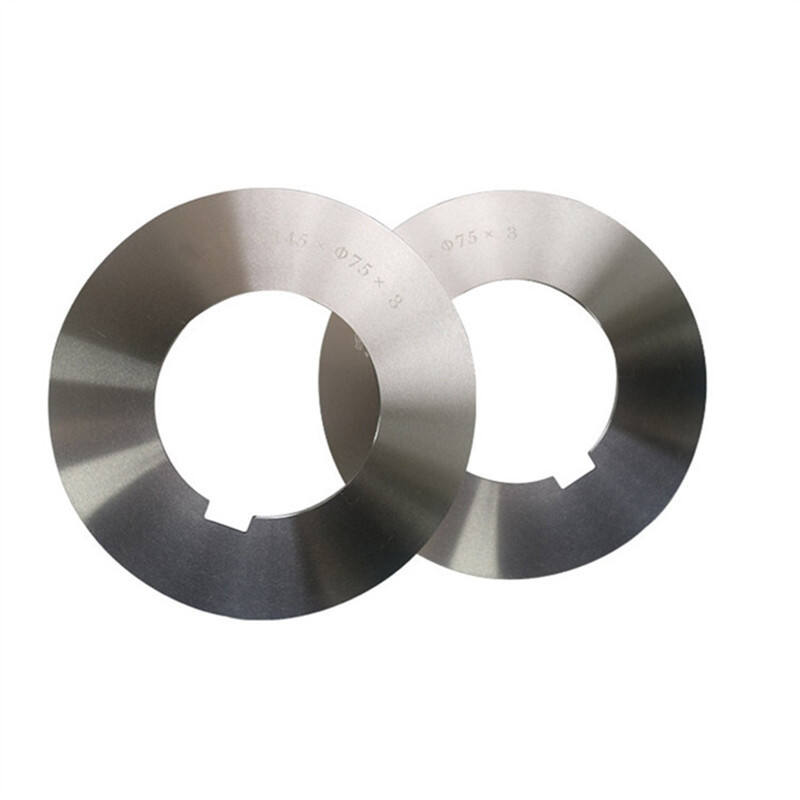
The industrial market offers several distinct metal cutting blade categories, each engineered for specific cutting methods and material types. Circular saw blades represent the most common category, available in cold saw variants with specialized tooth geometries for ferrous metals and carbide-tipped versions for abrasive materials. Band saw blades provide continuous cutting action ideal for high-volume production and irregular profiles, while abrasive cutoff wheels excel in portable applications and challenging alloy cutting. Shear blades function through mechanical force rather than chip removal, making them suitable for sheet metal fabrication and coil processing operations. Understanding these fundamental blade types establishes the foundation for effective selection, as each category operates on different cutting principles and offers distinct advantages for particular manufacturing contexts.
When evaluating blade types, consider the cutting mechanism that best aligns with your material characteristics and production requirements. Chip-forming blades like circular and band saws generate precise cuts with minimal material waste and produce manageable swarf for easy disposal. Abrasive cutting methods create wider kerfs and generate heat but handle hardened materials that challenge conventional tooling. Shearing actions deliver clean edges on thinner materials without heat-affected zones but require substantial force and are limited to specific thickness ranges. The cutting method fundamentally influences edge quality, cutting speed, tooling costs, and equipment requirements, making this initial classification decision critical to your overall blade selection strategy.
Material Composition and Blade Performance
The base material and cutting edge composition of a metal cutting blade determine its hardness, wear resistance, heat tolerance, and ultimate service life. High-speed steel blades offer excellent toughness and edge retention for general-purpose cutting of mild steels and aluminum alloys at moderate speeds. Carbide-tipped blades provide superior wear resistance and maintain cutting edges at higher temperatures, making them ideal for abrasive materials, stainless steels, and high-production environments where extended blade life justifies the higher initial investment. Bimetal construction combines a flexible backing material with a hardened cutting edge, delivering the durability needed for demanding applications while maintaining resistance to blade breakage under stress.
Advanced coating technologies significantly enhance metal cutting blade performance by reducing friction, preventing material adhesion, and extending operational life. Titanium nitride coatings increase surface hardness and reduce cutting temperatures, particularly beneficial when processing sticky materials like aluminum or copper alloys. Titanium carbonitride and aluminum titanium nitride coatings provide even greater hardness and oxidation resistance for extreme cutting conditions. When selecting blade material, match the composition to your predominant workpiece material, production volume, and acceptable tooling budget. A premium carbide blade may cost three times more than high-speed steel but deliver ten times the cutting life, resulting in lower per-cut costs and reduced changeover frequency in high-volume operations.
Blade Geometry and Cutting Efficiency
The physical geometry of a metal cutting blade encompasses tooth count, tooth form, rake angle, clearance angle, and gullet depth, all of which directly influence cutting performance, chip evacuation, and surface finish quality. Tooth count per inch or per diameter determines the number of cutting edges simultaneously engaged with the workpiece, affecting both cutting speed and finish smoothness. Coarse-tooth configurations with fewer teeth per inch enable aggressive cutting rates and efficient chip removal in thick sections but produce rougher surface finishes. Fine-tooth patterns increase the number of simultaneous cutting points, generating smoother surfaces and reducing vibration but requiring slower feed rates to prevent tooth overload and premature wear.
Rake angle, the inclination of the tooth face relative to the workpiece, fundamentally affects cutting force requirements and chip formation characteristics. Positive rake angles reduce cutting forces and power consumption, making them ideal for softer materials and situations where minimizing workpiece distortion is critical. Negative rake angles provide stronger tooth structure and better impact resistance, preferred for interrupted cuts, hard materials, and applications where edge durability outweighs cutting efficiency. Clearance angles prevent the blade body from rubbing against the cut surface, reducing heat generation and extending blade life. Optimal geometry selection requires balancing cutting speed, surface finish requirements, and material characteristics to achieve efficient production without compromising blade longevity or cut quality.
Matching Blade Specifications to Material Requirements
Ferrous Metal Cutting Considerations
When cutting ferrous metals including carbon steels, alloy steels, and cast iron, blade selection must account for material hardness, chip formation characteristics, and heat generation during the cutting process. Mild carbon steels with hardness below 200 Brinell respond well to high-speed steel blades with moderate tooth counts and positive rake angles that promote efficient chip removal. As material hardness increases into the alloy steel range, carbide-tipped metal cutting blade options become more economical despite higher initial costs due to their superior wear resistance and maintained edge sharpness under elevated cutting temperatures. Cast iron's abrasive silicon content and brittle chip formation require specialized tooth geometries with shallow rake angles and robust tooth structures to prevent chipping damage.
Cutting speed and feed rate adjustments significantly impact blade performance when processing ferrous materials. Excessive cutting speeds generate heat that softens blade edges and accelerates wear, while insufficient speeds cause work hardening and increased cutting forces. The optimal cutting speed for a metal cutting blade depends on material hardness, blade material, and cooling method employed. Generally, softer steels tolerate higher cutting speeds, while hard alloys require reduced speeds to maintain blade integrity. Feed rates must balance production efficiency against tooth load capacity, as excessive feed per tooth causes premature dulling while insufficient feed creates rubbing rather than cutting action, generating unnecessary heat and reducing blade life.
Non-Ferrous Metal Processing Requirements
Non-ferrous metals including aluminum, copper, brass, and titanium alloys present unique cutting challenges that demand specialized metal cutting blade configurations. Aluminum's tendency to adhere to cutting edges requires blades with polished gullets, aggressive rake angles, and specialized coatings that prevent material buildup. Triple-chip tooth geometries work particularly well for aluminum, with alternating flat-top and chamfered teeth that prevent edge welding while delivering clean cut surfaces. Copper and brass generate stringy chips that can clog gullets, necessitating coarse-tooth patterns with deep gullets and higher cutting speeds to facilitate chip evacuation and prevent binding.
Titanium alloys represent perhaps the most challenging non-ferrous cutting application due to their combination of high strength, low thermal conductivity, and chemical reactivity at elevated temperatures. Cutting titanium requires extremely rigid blade mounting, conservative cutting speeds, abundant coolant application, and premium carbide grades with enhanced toughness. The metal cutting blade selected for titanium must feature sharp cutting edges with slightly negative rake angles to prevent edge breakdown, along with sufficient gullet capacity to handle the tough, continuous chips characteristic of titanium machining. Success with titanium cutting depends as much on proper blade selection as on machine rigidity, coolant delivery, and operator technique, making it essential to consider the complete cutting system rather than blade specifications in isolation.
Stainless Steel and Special Alloy Challenges
Stainless steel families including austenitic, ferritic, and martensitic grades present distinct cutting challenges due to their work-hardening tendencies, toughness, and heat retention characteristics. Austenitic stainless steels like 304 and 316 grades work-harden rapidly during cutting, requiring sharp blade edges, positive rake angles, and consistent feed rates that maintain continuous cutting action without allowing work hardening to progress ahead of the cutting edge. Carbide-tipped or solid carbide metal cutting blade options prove most economical for stainless steel applications due to their ability to maintain sharp edges despite the abrasive, work-hardening nature of these materials.
Special alloys including Inconel, Hastelloy, and other nickel-based superalloys demand the most robust blade specifications and conservative cutting parameters. These materials combine extreme toughness with poor thermal conductivity, causing heat to concentrate at the cutting edge rather than dissipating into the workpiece or chips. Premium carbide grades with cobalt-enriched binders provide the hot hardness and toughness needed for these demanding applications. Blade selection for special alloys must prioritize edge integrity and heat resistance over cutting speed, often requiring speeds reduced to one-third of those used for carbon steel. Success cutting these challenging materials depends on recognizing that blade cost represents a minor fraction of total production expense, making premium tooling selection a sound economic decision when processing high-value aerospace and chemical processing components.
Critical Selection Factors for Optimal Performance
Production Volume and Economic Analysis
Production volume profoundly influences the optimal metal cutting blade selection by shifting the economic balance between initial blade cost and total cost per cut. Low-volume job shops cutting diverse materials may prioritize blade versatility and lower initial investment, accepting shorter blade life and more frequent changes as reasonable tradeoffs for operational flexibility. High-volume production environments benefit dramatically from premium blade selections that cost more initially but deliver substantially longer service life, fewer changeovers, and lower per-piece costs. Calculating total cost of ownership requires considering not only blade purchase price but also changeover labor, production downtime, cut quality consistency, and secondary finishing operations required to achieve specification compliance.
Economic analysis of metal cutting blade selection should include both direct and indirect cost factors across the blade's service life. Direct costs encompass the blade purchase price, sharpening or reconditioning expenses, and disposal costs for exhausted blades. Indirect costs include machine downtime during blade changes, labor costs for changeover operations, scrap from cuts made with degraded blades approaching end-of-life, and quality control inspection time. A comprehensive cost model often reveals that premium blades costing two or three times more than economy options deliver five to ten times longer service life, resulting in substantially lower total costs per linear foot of cutting. This economic reality makes premium blade selection clearly advantageous for production operations, while lower-cost options remain appropriate for occasional use and maintenance applications.
Machine Capability and Compatibility Requirements
The cutting machine's capabilities establish boundaries for effective metal cutting blade selection, as blade specifications must match machine power, speed range, rigidity, and mounting configuration. Undersized machines lack the power and rigidity to utilize aggressive blade geometries effectively, experiencing excessive vibration, poor cut quality, and premature blade failure when paired with coarse-tooth, high-feed-rate blade designs. Conversely, pairing fine-tooth finishing blades with powerful, rigid machines wastes production capacity and extends cycle times unnecessarily. Optimal blade selection requires honest assessment of machine condition, including spindle bearing condition, drive system power reserves, and structural rigidity that influences vibration resistance during cutting operations.
Speed range compatibility represents a critical but often overlooked aspect of blade selection. Each blade design operates most effectively within a specific surface speed range measured in feet per minute or meters per minute. Operating a metal cutting blade below its designed speed range causes rubbing rather than cutting, generating excessive heat and rapid wear. Exceeding the designed speed range compromises operator safety and risks catastrophic blade failure. Modern variable-speed machines offer flexibility to optimize speed for different blade and material combinations, but older fixed-speed equipment constrains blade selection to those designs appropriate for the machine's operating speed. When evaluating blade options, verify that your machine's speed capability falls within the blade manufacturer's recommended range for your specific material application to ensure safe, effective operation.
Cut Quality and Surface Finish Standards
Required cut quality significantly influences metal cutting blade selection, as applications demanding precise dimensions and smooth surface finishes require substantially different blade configurations than rough cutoff operations where some edge roughness is acceptable. Precision cutting applications benefit from fine-tooth blade patterns that increase the number of cutting edges simultaneously engaged with the workpiece, reducing individual tooth load and minimizing the depth of feed marks left on cut surfaces. Sharp blade edges with polished gullets and precision-ground tooth geometries maintain tighter dimensional tolerances and produce smoother finishes than economy blades with less precise manufacturing standards.
When downstream operations include welding or further machining, moderate surface roughness from economical blade selections may prove perfectly acceptable, eliminating the need for premium finishing blades. However, applications requiring minimal secondary processing or where cut surfaces remain visible in finished products justify premium metal cutting blade specifications optimized for surface finish quality. Industries including architectural metalwork, food processing equipment, and medical device manufacturing often specify tight surface finish requirements that mandate blade selections prioritizing finish quality over maximum cutting speed. Understanding your true surface finish requirements prevents both over-specification that unnecessarily increases tooling costs and under-specification that creates secondary finishing expenses exceeding any initial blade cost savings.
Implementation Best Practices and Performance Optimization
Proper Blade Installation and Setup Procedures
Correct blade installation procedures directly impact cutting performance, blade life, and operator safety regardless of how carefully the metal cutting blade was selected. Blade mounting requires attention to proper orientation, secure arbor fit, appropriate mounting hardware torque, and verification of guard functionality before initiating cutting operations. Directional markings on most industrial blades indicate proper rotation direction, critical because incorrect mounting can cause tooth breakage and dangerous blade failure. Arbor hole diameter must match precisely without forcing or shimming, as improper fit creates runout that degrades cut quality and accelerates blade wear through uneven tooth loading.
Blade tensioning for band saw applications requires specialized knowledge and proper equipment to achieve the manufacturer-specified tension that balances cutting accuracy against blade fatigue life. Under-tensioned blades wander during cutting, producing dimensional inaccuracies and potentially causing blade breakage. Over-tensioning accelerates fatigue crack development and premature blade failure. Circular saw blade installation requires verifying that arbor washers are clean, flat, and properly sized to distribute clamping forces evenly across the blade core. After mounting any metal cutting blade, perform a brief no-load trial run to verify smooth operation without vibration or unusual noise before beginning production cuts. This installation verification step takes minimal time but prevents costly damage from improperly mounted blades and protects operators from preventable safety hazards.
Cutting Parameters and Process Optimization
Optimizing cutting parameters including speed, feed rate, and coolant application maximizes metal cutting blade performance and service life while achieving desired cut quality and production efficiency. Cutting speed, typically specified as surface feet per minute for the blade's cutting edge, must fall within the manufacturer's recommended range for your specific material and blade combination. Starting with conservative speeds at the lower end of the recommended range allows assessment of cut quality and blade behavior before gradually increasing speed to identify the optimal balance between production rate and blade longevity. Feed rate determines how much material each tooth removes per revolution, directly affecting cutting forces, chip formation, and surface finish quality.
Coolant selection and delivery method significantly influence cutting performance when processing most metals. Flood coolant application provides maximum cooling and lubrication, ideal for continuous production cutting of steel and stainless alloys. Mist coolant systems reduce fluid consumption while maintaining adequate cooling for lighter cutting applications. Some non-ferrous materials including certain aluminum alloys cut effectively with air blast chip evacuation rather than liquid coolants, simplifying cleanup and eliminating coolant disposal costs. When using coolants, proper filtration and concentration maintenance prevent premature blade wear from abrasive particles and maintain lubrication effectiveness. Establishing a systematic approach to parameter optimization through documented testing generates valuable data that guides future blade selections and enables continuous improvement of cutting processes across your operation.
Blade Maintenance and Life Extension Strategies
Systematic blade maintenance practices substantially extend metal cutting blade service life and maintain consistent cutting performance throughout the blade's operational period. Regular inspection procedures should monitor blade condition including tooth sharpness, coating integrity, crack development, and overall blade straightness. Detecting wear or damage early enables timely blade changes before degraded performance creates quality problems or safety hazards. Some industrial blade types including band saw blades benefit from periodic sharpening or reconditioning that restores cutting edge geometry and extends useful life significantly beyond throwaway replacement approaches.
Proper blade storage protects unused blades from corrosion, physical damage, and edge degradation that reduces performance when the blade enters service. Store blades in dry, temperature-controlled environments using proper hanging or racking systems that prevent contact between cutting edges and other surfaces. Light oil coating protects bare steel blades from rust during storage periods. Rotating blade inventory using first-in-first-out principles prevents blades from aging in storage while ensuring consistent performance characteristics across production runs. Comprehensive maintenance records tracking blade performance metrics including linear feet cut, materials processed, and failure modes provide valuable data for evaluating blade selection decisions and identifying opportunities for specification optimization that reduces overall tooling costs while maintaining or improving cutting performance.
FAQ
What is the most important factor when choosing a metal cutting blade?
The most important factor is matching blade material composition and tooth geometry to your specific workpiece material characteristics. Different metals require distinct blade specifications due to variations in hardness, chip formation, heat generation, and abrasiveness. A blade optimized for cutting mild steel will perform poorly on stainless steel or aluminum, potentially causing safety hazards and excessive costs. Start by identifying your predominant workpiece material, then select blade specifications including carbide grade, tooth count, and rake angle appropriate for that material family. This material-centric approach ensures effective cutting performance and acceptable blade life regardless of other application variables.
How do I determine the right tooth count for my cutting application?
Tooth count selection depends on material thickness and desired surface finish quality. A practical guideline suggests maintaining at least three teeth engaged in the material at any time to distribute cutting forces and prevent tooth breakage. For thick sections, coarse tooth patterns with fewer teeth per inch enable aggressive cutting and efficient chip evacuation. Thin materials require finer tooth counts to maintain adequate engagement and prevent tooth snagging or material distortion. Applications demanding smooth surface finishes benefit from higher tooth counts that reduce individual feed marks, while rough cutoff operations where finish quality is secondary can utilize coarser patterns for faster cutting. Consider your typical material thickness range and finish requirements to identify the tooth count range that best serves your predominant applications.
Can I use the same blade for different types of metal?
While versatile blade designs can handle multiple material types, optimal performance requires matching blade specifications to specific material families. General-purpose blades offer acceptable performance across moderate hardness steels but compromise efficiency compared to specialized blades optimized for particular materials. Job shops cutting diverse materials benefit from maintaining separate blade inventories for ferrous metals, non-ferrous alloys, and stainless steels rather than attempting to use universal blades for all applications. If operational constraints require using a single blade for multiple materials, select specifications appropriate for your most challenging material, accept reduced efficiency on easier materials, and adjust cutting parameters accordingly for each material type to prevent premature blade wear or quality problems.
How often should I replace my metal cutting blade?
Replace metal cutting blades based on performance indicators rather than arbitrary schedules or appearance alone. Key replacement triggers include increased cutting forces requiring higher machine power, deteriorating surface finish quality, dimensional accuracy problems, unusual noise or vibration during cutting, and visible damage including cracked teeth or missing carbide tips. Many production operations establish objective replacement criteria by measuring specific parameters such as maximum acceptable burr height, surface roughness values, or power consumption increases above baseline levels. Preventive replacement before complete blade failure prevents quality problems and protects workpieces from damage caused by degraded blades. High-volume operations often track linear feet cut or number of pieces processed to establish predictable replacement intervals that optimize blade utilization without risking quality degradation or safety hazards from excessively worn blades.