Round Slitter Blades - Precision Cutting Tools for Industrial Material Converting Applications

All Categories

Get a Free Quote

Our representative will contact you soon.
Email
WhatsApp
Name
Company Name
Message
0/1000

round slitter blades

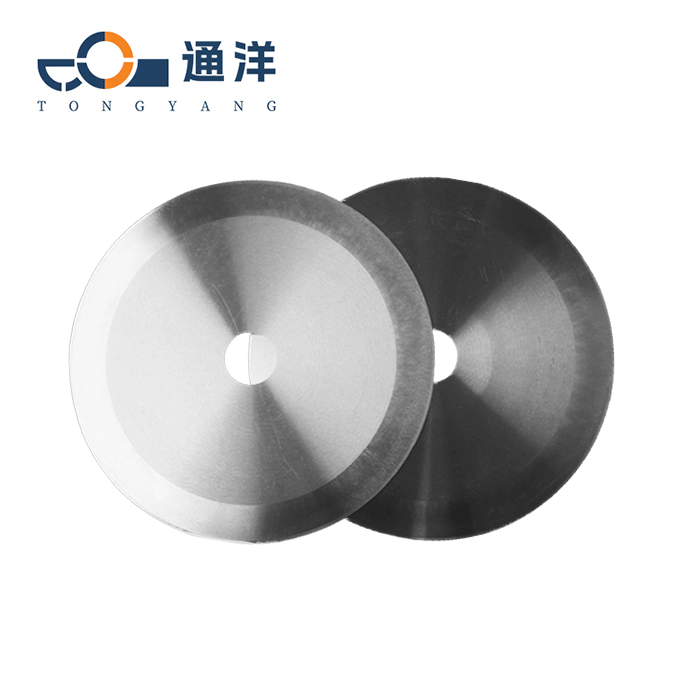
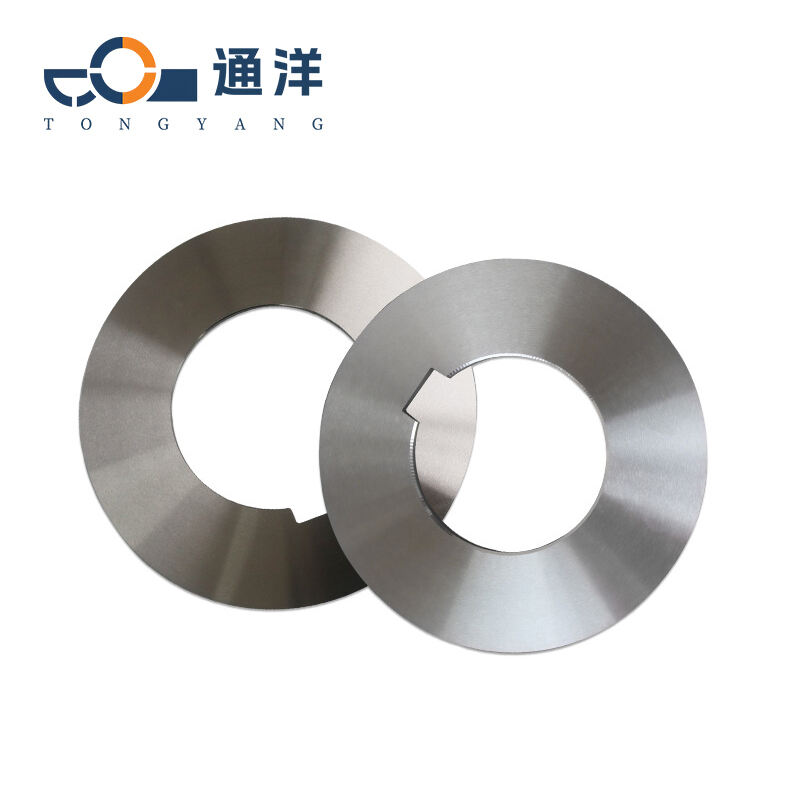
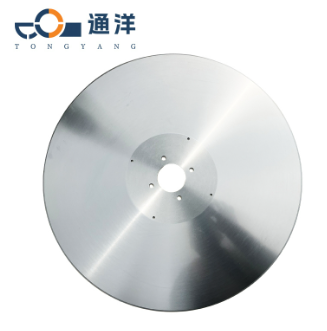
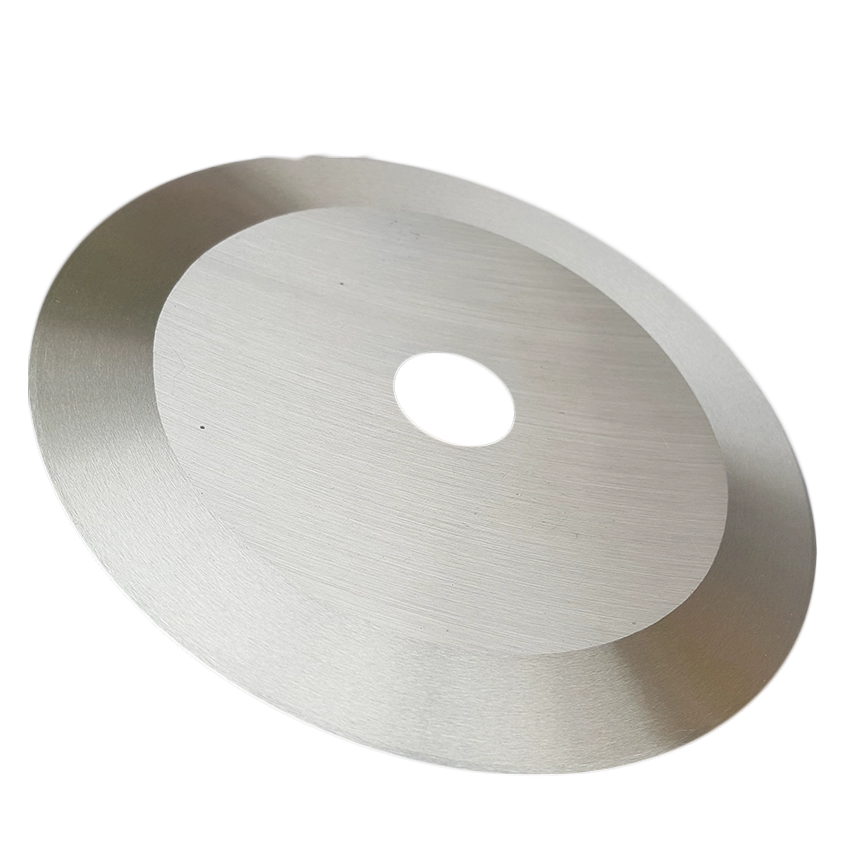
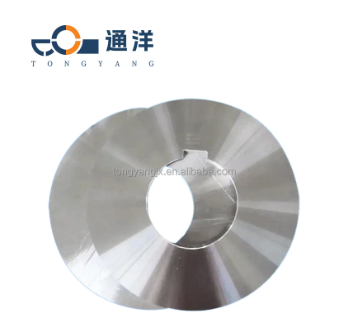
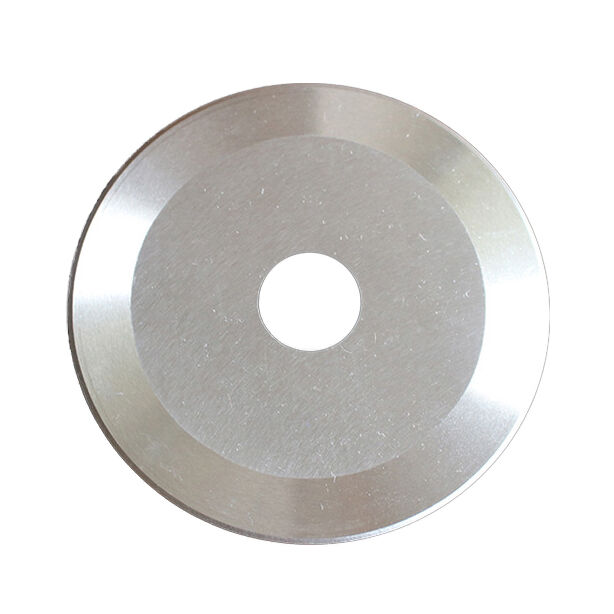
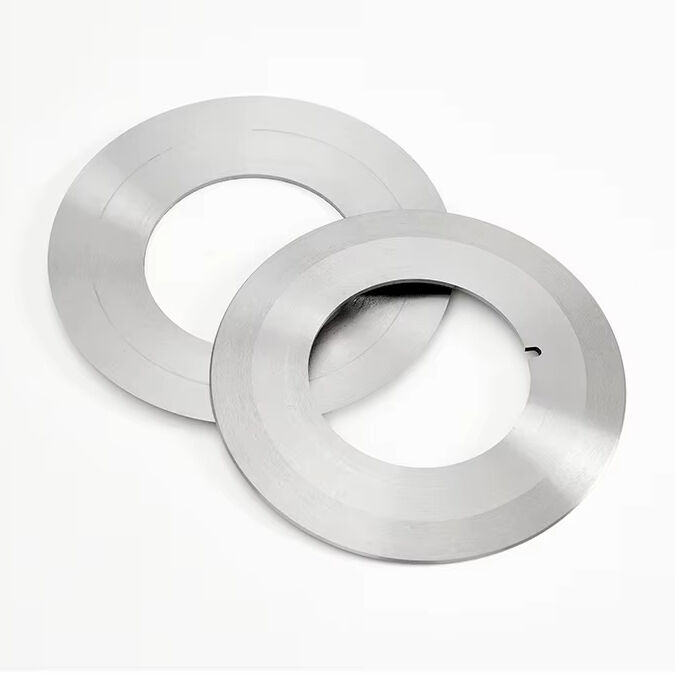
Round slitter blades represent essential cutting tools designed for precision slicing and converting operations across diverse manufacturing environments. These circular cutting implements feature a distinctive disc-shaped configuration that enables continuous rotational cutting motion, delivering consistent results in material processing applications. Round slitter blades excel in converting large rolls of material into narrower widths, making them indispensable in industries ranging from packaging and paper production to textile manufacturing and film processing. The fundamental function of round slitter blades involves creating clean, accurate cuts through various substrates while maintaining dimensional integrity and edge quality. These blades operate through rotational mechanics, where the circular edge engages with the material substrate to perform slicing operations with minimal waste generation. The technological design of round slitter blades incorporates advanced metallurgy and precision engineering principles to achieve optimal cutting performance. Manufacturers construct these blades using high-grade steel alloys, carbide compositions, or specialized materials selected for their hardness, wear resistance, and edge retention characteristics. The circular geometry provides distinct mechanical advantages, distributing cutting forces evenly around the blade perimeter and enabling extended operational life compared to linear cutting tools. Round slitter blades find extensive application in converting operations where materials must be slit, trimmed, or separated into specific dimensions. Paper mills utilize these blades for converting jumbo rolls into finished products, while packaging facilities depend on them for creating precise material widths. The pharmaceutical industry employs round slitter blades for cutting packaging films and foil materials, ensuring product integrity and presentation quality. Textile manufacturers rely on these cutting tools for fabric processing, while the printing industry uses them for finishing operations. The versatility of round slitter blades extends to metalworking applications, where specialized versions handle thin gauge metals, foils, and composite materials requiring precise dimensional control and burr-free edges.

New Product Recommendations

The implementation of round slitter blades delivers substantial operational benefits that directly impact production efficiency and cost management. These cutting tools provide exceptional longevity, reducing the frequency of blade replacements and minimizing production interruptions. The circular design distributes wear patterns evenly across the cutting edge, extending useful blade life significantly compared to alternative cutting methods. This durability translates into lower tooling costs and reduced maintenance requirements, allowing production facilities to allocate resources more effectively. Round slitter blades produce remarkably clean cuts with minimal edge defects, ensuring superior product quality that meets exacting specifications. The precision cutting action eliminates fraying, tearing, or deformation commonly associated with inferior cutting methods, resulting in finished products that exhibit professional appearance and structural integrity. This quality consistency reduces rejection rates and enhances customer satisfaction, strengthening market position and brand reputation. The operational efficiency of round slitter blades manifests through increased production speeds and reduced downtime. These tools accommodate high-speed converting operations without sacrificing cut quality, enabling manufacturers to maximize throughput and meet demanding production schedules. The quick-change capability of many round slitter blade systems allows operators to perform tool changes rapidly, minimizing non-productive time and maintaining operational momentum. Round slitter blades demonstrate remarkable versatility in handling diverse material types and thicknesses. From delicate films measuring mere microns to substantial cardboard and composite materials, these cutting tools adapt to varying substrate characteristics without requiring extensive reconfiguration. This flexibility enables manufacturers to service multiple product lines using standardized equipment, reducing capital investment requirements and simplifying inventory management. The cost-effectiveness of round slitter blades extends beyond initial purchase price to encompass total ownership costs. The extended service life, minimal maintenance requirements, and consistent performance combine to deliver exceptional value throughout the blade lifecycle. Energy efficiency represents another advantage, as the rotational cutting action requires less force than alternative methods, reducing power consumption and operating costs. Safety features inherent in round slitter blade designs protect operators while maintaining productivity. Modern blade systems incorporate guards, sensors, and automated handling mechanisms that minimize manual intervention and reduce injury risk. The predictable cutting behavior of round slitter blades enables implementation of robust safety protocols that protect personnel without impeding production flow. Environmental considerations favor round slitter blades through reduced material waste and recyclability. The precision cutting minimizes scrap generation, conserving raw materials and reducing disposal costs. Many round slitter blades can be resharpened multiple times, extending their useful life and reducing environmental impact associated with manufacturing replacement tools.

Practical Tips

What is the difference between a combination blade and a ripping or crosscutting blade?

25

Mar

What is the difference between a combination blade and a ripping or crosscutting blade?

What is the Difference Between a Combination Blade and a Ripping or Crosscutting Blade? In woodworking, the type of saw blade you use directly affects the quality of your cuts, the efficiency of your work, and even the lifespan of your tools. Three c...
View More
Industrial Circular Knife Applications: Complete Overview

25

Mar

Industrial Circular Knife Applications: Complete Overview

Industrial cutting operations rely heavily on precision tools that deliver consistent results across diverse manufacturing environments. The circular knife stands as one of the most versatile and essential cutting implements in modern industrial appl...
View More
Paper Cutting Blade Safety: Essential Guidelines

23

Apr

Paper Cutting Blade Safety: Essential Guidelines

Workplace safety incidents involving paper cutting blade equipment account for thousands of injuries annually across commercial and industrial facilities. From minor cuts to severe lacerations requiring medical attention, these incidents often stem f...
View More
Metal Cutting Blade Types: Complete Comparison Guide

30

Apr

Metal Cutting Blade Types: Complete Comparison Guide

Selecting the appropriate metal cutting blade for industrial applications requires understanding the distinct characteristics, capabilities, and optimal use cases of each blade type available in the market. Metal fabrication professionals face consta...
View More

Get a Free Quote

Our representative will contact you soon.
Email
WhatsApp
Name
Company Name
Message
0/1000

round slitter blades

Superior Material Compatibility and Cutting Precision

Superior Material Compatibility and Cutting Precision

Round slitter blades distinguish themselves through exceptional material compatibility, accommodating an extensive range of substrates with varying physical properties and thicknesses. This remarkable versatility stems from advanced engineering principles and material science innovations that enable these cutting tools to handle everything from gossamer-thin films to robust industrial materials. The precision cutting capability of round slitter blades originates from their geometric design, which maintains consistent blade-to-material contact throughout the cutting cycle. This continuous engagement ensures uniform cutting force application, eliminating the pressure variations that cause inconsistent edge quality in other cutting methods. Manufacturers serving diverse markets particularly value this adaptability, as it permits them to process multiple material types without investing in specialized cutting equipment for each substrate category. The material compatibility extends to challenging substrates that pose difficulties for conventional cutting tools, including adhesive-coated materials, textured surfaces, and composite constructions. Round slitter blades maintain cutting effectiveness across temperature variations and humidity conditions, providing reliable performance in diverse environmental settings. The precision achieved by these blades proves critical in applications requiring tight dimensional tolerances, where variations of even fractions of a millimeter compromise product functionality or aesthetic appeal. Quality control becomes simplified when using round slitter blades, as the consistent cutting action produces predictable results that facilitate process monitoring and optimization. The clean edges generated by these blades eliminate secondary finishing operations, reducing production steps and associated costs. This cutting precision proves particularly valuable in industries where edge quality directly affects product performance, such as medical device manufacturing, electronics production, and high-end packaging applications. The ability to maintain sharp cutting edges throughout extended production runs ensures that quality remains consistent from the first cut to the last, eliminating the quality degradation often observed as cutting tools wear. Round slitter blades achieve this sustained performance through superior metallurgical properties and heat treatment processes that enhance edge retention and resistance to wear mechanisms.
Extended Operational Life and Economic Efficiency

Extended Operational Life and Economic Efficiency

The economic advantages of round slitter blades manifest prominently through their extended operational life, delivering substantial cost savings over the equipment lifecycle. These cutting tools incorporate premium materials and advanced manufacturing techniques that result in exceptional durability and wear resistance, enabling them to maintain cutting effectiveness through thousands of operational hours. The financial benefits extend far beyond the initial acquisition cost, encompassing reduced replacement frequency, minimized production interruptions, and lower labor expenses associated with tool changes. Manufacturing facilities operating continuous production schedules particularly appreciate the longevity of round slitter blades, as extended tool life directly correlates with increased uptime and production capacity. The circular geometry contributes to this durability by distributing cutting forces across the entire blade circumference, preventing the localized wear concentrations that rapidly degrade linear cutting edges. This even wear pattern ensures that round slitter blades maintain dimensional accuracy throughout their service life, preserving cut quality until the blade requires replacement or refurbishment. Many round slitter blades support resharpening services, allowing facilities to restore cutting performance at a fraction of the cost of new blade acquisition. This reconditioning capability amplifies the economic value proposition, as blades can undergo multiple service cycles before reaching end of life. The predictable wear characteristics of round slitter blades enable facilities to implement proactive maintenance schedules that optimize blade utilization while preventing unexpected failures that disrupt production. Economic efficiency also emerges from the operational characteristics of round slitter blades, which require minimal supporting infrastructure and consume less energy than alternative cutting methods. The rotational cutting action operates efficiently at various speeds, allowing process optimization for specific materials and production requirements. Inventory management becomes streamlined when using standardized round slitter blades across multiple production lines, reducing the variety of cutting tools requiring stock maintenance and simplifying procurement processes. The total cost of ownership calculation for round slitter blades consistently demonstrates favorable economics compared to alternative cutting technologies, particularly when accounting for factors such as maintenance labor, production efficiency, and product quality consistency.
Enhanced Safety Features and Operational Reliability

Enhanced Safety Features and Operational Reliability

Round slitter blades incorporate numerous safety features and design characteristics that protect operators while maintaining high productivity levels, representing a crucial advantage in modern manufacturing environments where workplace safety receives paramount attention. The enclosed rotational design inherently provides safer operation compared to exposed linear blades, as the circular configuration allows for comprehensive guarding that shields operators from direct blade contact. Modern round slitter blade systems integrate advanced safety mechanisms including blade guards, emergency stop systems, and automated handling features that minimize manual interaction with cutting edges. These safety enhancements do not compromise operational efficiency but rather complement productivity by reducing accident-related downtime and maintaining consistent workforce availability. The operational reliability of round slitter blades contributes significantly to production stability and planning confidence. These cutting tools exhibit predictable performance characteristics that enable accurate production forecasting and scheduling. The consistent cutting action eliminates the variability that complicates production planning when using less reliable cutting methods, allowing manufacturing operations to commit confidently to delivery schedules and customer commitments. The mechanical simplicity of round slitter blade systems enhances reliability by reducing the number of components subject to failure. Fewer moving parts translate into decreased maintenance requirements and lower probability of unexpected breakdowns that disrupt production flow. This reliability proves especially valuable in high-volume manufacturing environments where equipment downtime cascades through production schedules, creating costly delays and customer dissatisfaction. Round slitter blades maintain cutting effectiveness across varying operational conditions, demonstrating resilience to factors such as material inconsistencies, tension variations, and environmental fluctuations. This robustness ensures continued production even when encountering substrate variations that might compromise less adaptable cutting methods. The safety benefits extend to material handling aspects, as the clean cuts produced by round slitter blades eliminate sharp burrs and irregular edges that pose injury risks during downstream processing and handling operations. Finished products exhibit smooth edges that protect both manufacturing personnel and end users, reducing liability concerns and enhancing product marketability. Training requirements for operators working with round slitter blade systems prove minimal compared to more complex cutting technologies, enabling workforce flexibility and reducing the specialized knowledge requirements that can create operational bottlenecks. The intuitive operation and inherent safety features allow personnel to achieve proficiency quickly, supporting workforce development initiatives and operational agility.

Get a Free Quote

Our representative will contact you soon.
Email
WhatsApp
Name
Company Name
Message
0/1000
Newsletter
Please Leave A Message With Us