 EN
EN

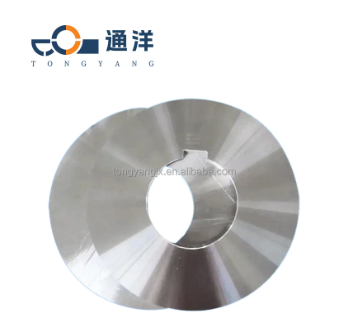
Selecting the appropriate metal cutting blade for industrial applications requires understanding the distinct characteristics, capabilities, and optimal use cases of each blade type available in the market. Metal fabrication professionals face constant pressure to balance cutting precision, operational efficiency, and cost-effectiveness while managing tool longevity and material waste. The wrong blade selection can lead to excessive downtime, compromised cut quality, accelerated wear patterns, and ultimately reduced profitability across manufacturing operations.
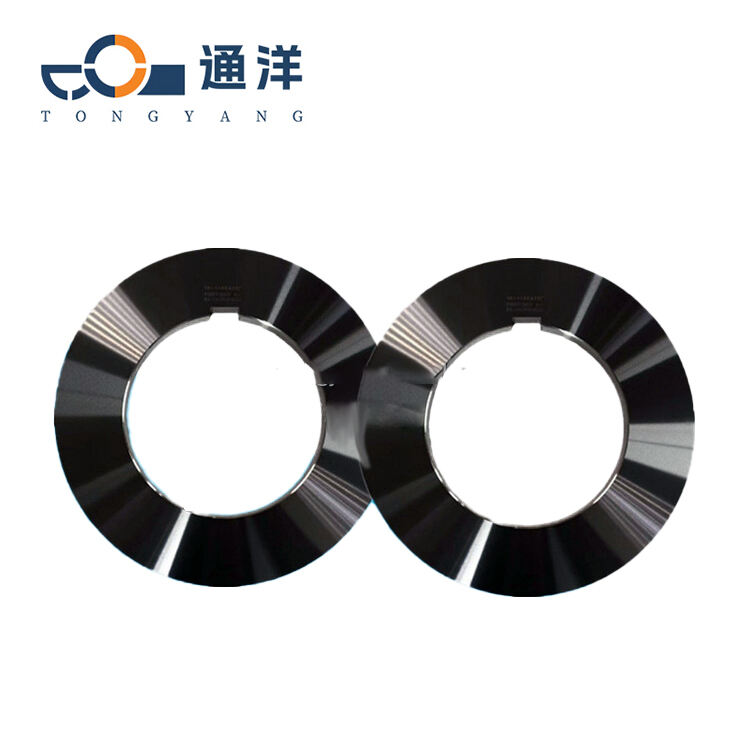
This comprehensive comparison guide examines the major categories of metal cutting blades used throughout modern fabrication environments, analyzing their construction differences, material compatibility ranges, performance characteristics under varying operating conditions, and economic considerations that influence procurement decisions. Whether you operate high-volume production lines, custom fabrication shops, or maintenance facilities, understanding these blade distinctions enables informed tooling decisions that directly impact operational outcomes and competitive positioning in your market segment.
Fundamental Metal Cutting Blade Categories and Construction Differences
High-Speed Steel Blades and Operational Parameters
High-speed steel metal cutting blade options represent the traditional choice for many general-purpose metal cutting applications, offering a balanced combination of toughness, edge retention, and affordability that makes them suitable for job shops and maintenance operations. These blades are manufactured from tool steel alloys containing tungsten, molybdenum, chromium, and vanadium in carefully controlled proportions that enable the material to maintain hardness even at elevated temperatures generated during cutting operations. The metallurgical properties of high-speed steel allow these blades to withstand significant mechanical stress without chipping or fracturing, making them particularly suitable for interrupted cuts and applications involving variable material thicknesses.
The heat treatment processes applied to high-speed steel metal cutting blade products determine their final hardness values, typically ranging from 62 to 65 HRC, which directly correlates with cutting performance and service life expectations. Manufacturers optimize tempering cycles to balance maximum hardness against brittleness, ensuring that blades maintain structural integrity under the cyclical loading patterns characteristic of reciprocating and rotary cutting equipment. High-speed steel blades demonstrate excellent dimensional stability during extended cutting operations, maintaining consistent tolerances even as temperatures fluctuate within the cutting zone.
Operational limitations of high-speed steel metal cutting blade tools become apparent when processing hardened alloys, stainless steel grades, or exotic materials that generate excessive heat during cutting. The maximum effective cutting speed for these blades remains constrained by the material's inability to maintain edge hardness above approximately 600 degrees Celsius, beyond which rapid softening and edge degradation occur. For many carbon steel, aluminum, and soft alloy applications, however, high-speed steel blades deliver reliable performance at competitive price points that justify their continued widespread use across diverse industrial sectors.
Carbide-Tipped Blade Technology and Performance Advantages
Carbide-tipped metal cutting blade designs incorporate tungsten carbide segments brazed onto steel blade bodies, creating a hybrid construction that combines the toughness of the steel substrate with the superior hardness and wear resistance of carbide cutting edges. This configuration allows manufacturers to optimize material usage by applying expensive carbide only where cutting actually occurs, while utilizing more economical steel for the blade body that primarily serves as a carrier for the cutting tips. The carbide tips typically achieve hardness values between 88 and 92 HRA, substantially exceeding the capabilities of high-speed steel and enabling much higher cutting speeds with extended service intervals.
The brazing processes used to attach carbide tips to metal cutting blade bodies require precise temperature control and metallurgical expertise to ensure robust mechanical bonds capable of withstanding the substantial forces encountered during cutting operations. Manufacturers employ silver-based or copper-based brazing alloys selected for their ability to accommodate the differential thermal expansion rates between carbide and steel without inducing stress concentrations that could lead to premature tip detachment. Quality carbide-tipped blades undergo rigorous inspection protocols to verify braze integrity, tip alignment accuracy, and geometric consistency across all cutting positions.
Performance characteristics of carbide-tipped metal cutting blade products include the ability to maintain sharp cutting edges through thousands of linear feet of material processing, particularly when cutting abrasive materials like fiberglass-reinforced composites, titanium alloys, or materials with hard surface scales. The thermal stability of tungsten carbide allows these blades to operate at cutting speeds two to three times higher than high-speed steel alternatives, directly translating to increased production throughput and reduced cycle times. However, the increased brittleness of carbide material makes these blades more susceptible to chipping when encountering material inclusions, weld seams, or other discontinuities in the workpiece.
Solid Carbide and Cermet Blade Constructions
Solid carbide metal cutting blade options represent premium tooling solutions employed in high-precision applications where dimensional accuracy, surface finish quality, and extended tool life justify the elevated initial investment. These blades are manufactured entirely from tungsten carbide powder metallurgy processes that produce extremely dense, homogeneous structures without the interface limitations inherent in tipped blade designs. The uniform material composition throughout the blade thickness enables repeated resharpening cycles that can extend total blade life to many times that of tipped alternatives, particularly in production environments with established tool maintenance programs.
Cermet metal cutting blade materials combine ceramic and metallic constituents to create cutting tools with exceptional hot hardness, chemical stability, and abrasion resistance that surpass conventional carbide grades in specialized applications. These advanced materials maintain cutting edge integrity at temperatures exceeding 1000 degrees Celsius, enabling ultra-high-speed machining operations that would quickly destroy conventional tooling. The primary limitation restricting wider cermet adoption involves material costs substantially higher than carbide, combined with increased brittleness that demands rigid machine setups and carefully controlled cutting parameters to prevent catastrophic blade failure.
Application selection for solid carbide and cermet metal cutting blade products typically focuses on high-volume production scenarios where the per-part tooling cost remains acceptable despite premium blade pricing, or in applications processing materials that rapidly destroy conventional tooling through abrasive wear mechanisms. Industries manufacturing aerospace components, automotive precision parts, and medical devices frequently specify these advanced blade materials to achieve the tight tolerances and superior surface finishes required by demanding specifications. The return on investment for premium blade materials depends heavily on proper application engineering, including appropriate cutting parameters, adequate coolant delivery, and machine tool rigidity sufficient to minimize vibration and deflection during cutting operations.
Material-Specific Blade Selection Criteria and Compatibility
Ferrous Material Cutting Requirements
Carbon steel and low-alloy steel materials represent the most common workpiece materials encountered in metal fabrication operations, and blade selection for these applications balances cutting efficiency against tool life expectations based on production volume requirements. Standard high-speed steel metal cutting blade products perform adequately for mild steel cutting in job shop environments where setup flexibility and tool cost minimization take precedence over maximum cutting speed. The relatively soft nature of low-carbon steels allows these blades to achieve acceptable tool life even at modest hardness levels, though cutting speeds remain limited compared to carbide alternatives.
Stainless steel grades present significantly greater challenges for metal cutting blade tools due to their tendency toward work hardening, high tensile strength values, and poor thermal conductivity that concentrates heat at the cutting edge. Austenitic stainless steels like 304 and 316 grades exhibit pronounced work hardening characteristics that quickly dull cutting edges and generate excessive cutting forces when inappropriate blade materials or geometries are employed. Carbide-tipped or solid carbide blades with specialized edge geometries and coatings demonstrate superior performance when processing stainless materials, maintaining sharp cutting edges through the work hardening zone and dissipating heat more effectively than high-speed steel alternatives.
Tool steels and hardened alloy steels require metal cutting blade products specifically engineered for high-hardness applications, typically featuring carbide or cermet cutting edges with negative rake angles that provide the mechanical strength necessary to resist chipping under high cutting forces. These demanding applications often necessitate reduced cutting speeds and increased feed rates compared to softer materials, with blade life expectations adjusted accordingly. Proper coolant application becomes critical when cutting hardened materials to manage the substantial heat generation and prevent thermal damage to both the blade and workpiece.
Non-Ferrous Metal Processing Considerations
Aluminum alloys and other soft non-ferrous metals present unique challenges for metal cutting blade selection due to their tendency to adhere to cutting edges, creating built-up edge formations that degrade cut quality and accelerate blade wear through micro-chipping mechanisms. Blades designed for aluminum cutting typically incorporate highly polished rake faces with steep positive rake angles that minimize contact area and reduce adhesion tendency. High-speed steel blades with appropriate geometry modifications can deliver excellent performance in aluminum cutting applications, particularly when processing pure aluminum or soft alloy grades that generate minimal heat during cutting operations.
Copper, brass, and bronze materials exhibit varying cutting characteristics depending on alloy composition and temper condition, with some grades cutting cleanly while others produce stringy chips that complicate material removal and potentially damage blade edges. Metal cutting blade selection for copper alloy processing requires consideration of the specific alloy family, with free-machining brass grades cutting easily using standard blade geometries while tough copper-nickel alloys demand more robust cutting edge configurations. Carbide blades generally outperform high-speed steel when processing copper alloys due to superior wear resistance against the mildly abrasive nature of many copper-based materials.
Titanium and exotic alloy processing represents the most demanding category of metal cutting blade applications, requiring specialized tooling engineered to withstand the extreme cutting forces, thermal loading, and chemical reactivity characteristic of these advanced materials. Titanium's low thermal conductivity concentrates heat at the cutting interface, while its chemical reactivity causes rapid cratering and diffusion wear of inappropriate blade materials. Premium carbide grades with specialized coatings or cermet blade materials demonstrate the best performance for titanium cutting, though even these advanced tools experience accelerated wear compared to conventional materials, necessitating frequent blade changes and careful cost analysis to validate economic feasibility.
Coating Technologies and Surface Treatments
Titanium nitride coatings applied to metal cutting blade surfaces provide a hard, low-friction layer that reduces adhesion, decreases cutting forces, and extends tool life across a broad range of materials through both abrasive wear resistance and reduced thermal loading of the substrate material. The characteristic gold color of TiN coatings makes wear patterns easily visible, enabling operators to monitor blade condition and schedule changes before excessive wear degrades cut quality. TiN-coated blades typically demonstrate 50 to 100 percent longer service life compared to uncoated equivalents when cutting steel, stainless steel, and many non-ferrous materials under appropriate operating conditions.
Advanced coating systems including titanium carbonitride, titanium aluminum nitride, and multi-layer nanocomposite structures offer enhanced performance for specialized metal cutting blade applications involving extreme temperatures, highly abrasive materials, or chemical attack from workpiece constituents or cutting fluids. These sophisticated coatings are engineered at the molecular level to provide specific property combinations including hot hardness values exceeding the substrate material, oxidation resistance at elevated temperatures, and extremely low friction coefficients that minimize heat generation during cutting. The economic justification for premium coatings depends on production volume, material difficulty, and the cost impact of reduced blade life or compromised part quality.
Cryogenic treatment processes applied to metal cutting blade materials modify the crystalline structure of tool steels and carbides at the molecular level, converting retained austenite to martensite and precipitating fine carbide particles that enhance wear resistance and dimensional stability. Blades subjected to proper cryogenic treatment cycles demonstrate measurably improved edge retention and reduced dimensional change during use compared to conventionally heat-treated equivalents. While the mechanisms underlying cryogenic treatment benefits remain subjects of ongoing metallurgical research, empirical results across diverse applications consistently validate performance improvements that justify the additional processing costs for demanding production environments.
Blade Geometry, Tooth Configuration, and Cutting Mechanics
Tooth Form Design and Chip Generation
The tooth geometry of metal cutting blade products fundamentally determines chip formation mechanisms, cutting force distributions, and resultant surface finish characteristics on processed parts. Rake angle selection represents the primary geometric parameter influencing cutting action, with positive rake angles reducing cutting forces and power requirements but decreasing tooth strength, while negative rake angles provide maximum edge strength at the expense of increased cutting forces and heat generation. Material hardness, toughness, and brittleness characteristics dictate appropriate rake angle ranges, with soft ductile materials accommodating steep positive rakes while hard or abrasive materials require neutral or negative rake configurations.
Clearance angle specifications on metal cutting blade teeth prevent interference between the tooth flank and newly generated workpiece surface, eliminating rubbing friction that would generate excessive heat and cause rapid blade wear. Insufficient clearance angles result in burnishing or work hardening of the cut surface, while excessive clearance weakens the cutting edge and increases chipping susceptibility. Standard clearance angles for metal cutting applications typically range from 5 to 15 degrees depending on material characteristics and cutting method, with harder materials generally requiring larger clearance values to accommodate elastic springback of the workpiece material.
Tooth pitch determination for metal cutting blade designs balances the competing requirements of adequate chip clearance volume against maintaining sufficient tooth engagement to prevent individual tooth overloading and premature failure. Fine-pitch blades with numerous small teeth generate smooth surface finishes but require lower feed rates to prevent chip packing in the gullet spaces between teeth, while coarse-pitch blades with fewer, larger teeth accommodate higher feed rates and thicker materials at the expense of potentially rougher surface texture. The optimal tooth pitch for specific applications depends on material thickness, hardness, cutting speed, and desired surface finish quality, with manufacturer selection charts providing guidance based on these parameters.
Specialized Tooth Configurations for Specific Applications
Skip-tooth or hook-tooth configurations on metal cutting blade products provide enlarged gullet capacities that facilitate efficient chip evacuation when processing thick sections, ductile materials that generate long continuous chips, or stacked material configurations where total cutting depth exceeds standard blade tooth capacity. These tooth forms incorporate aggressive rake angles and deep gullets that prioritize chip removal over surface finish quality, making them ideal for rough cutting operations where subsequent finishing processes will achieve final dimensional and surface requirements. The reduced number of teeth simultaneously engaged in the cut decreases total cutting force requirements, potentially enabling increased feed rates and productivity gains in appropriate applications.
Variable pitch metal cutting blade designs incorporate non-uniform tooth spacing patterns that disrupt the harmonic vibration frequencies generated during cutting operations, reducing noise levels and minimizing chatter tendency that can compromise surface finish and dimensional accuracy. By varying tooth pitch in carefully engineered patterns, blade designers prevent the resonance buildup that occurs when cutting force impulses arrive at regular intervals matching natural frequencies of the machine structure or workpiece. Variable pitch configurations prove particularly valuable when cutting thin-walled sections, long cantilever setups, or other geometrically challenging configurations susceptible to vibration-induced quality problems.
Specialty tooth forms including triple-chip and alternate top bevel configurations address specific material cutting challenges encountered with abrasive composites, laminates, or materials prone to edge chipping and delamination during conventional cutting operations. Triple-chip metal cutting blade designs alternate between flat-top raker teeth and chamfered teeth that perform roughing and finishing operations in sequence, reducing edge breakout and improving surface finish on problematic materials. These sophisticated tooth configurations command premium pricing but deliver measurable quality improvements in applications where conventional tooth forms produce unacceptable defect rates or require extensive secondary finishing operations.
Cutting Speed and Feed Rate Optimization
Surface cutting speed represents the velocity of blade tooth movement relative to the workpiece material, directly influencing cutting temperature, chip formation characteristics, and blade wear rates across all metal cutting blade applications. Excessive cutting speeds generate temperatures that soften cutting edges, accelerate wear through diffusion and oxidation mechanisms, and potentially cause metallurgical damage to heat-sensitive workpiece materials. Insufficient cutting speeds result in rubbing rather than clean shearing action, producing poor surface finish, excessive burr formation, and potential work hardening of the cut surface that complicates subsequent processing operations.
Feed rate selection for metal cutting blade operations determines the chip thickness produced by each tooth, influencing cutting forces, power requirements, surface finish quality, and blade life expectancy. Conservative feed rates reduce individual tooth loading and extend blade life but sacrifice productivity, while aggressive feed rates maximize material removal rates at the expense of increased tool wear and potentially compromised cut quality. The optimal feed rate for specific applications balances these competing factors based on production objectives, with high-volume operations typically favoring faster feeds that reduce per-part cutting time despite more frequent blade changes.
The interaction between cutting speed and feed rate creates complex relationships affecting overall metal cutting blade performance, with certain combinations producing synergistic benefits while others generate problematic cutting conditions including excessive heat, vibration, or premature tool failure. Blade manufacturers provide application data specifying recommended operating parameter ranges for various material types and thicknesses, though optimal settings for specific production scenarios often require empirical refinement accounting for machine tool characteristics, workpiece configuration, and quality requirements. Modern production facilities increasingly employ data acquisition systems that monitor cutting parameters and blade performance metrics, enabling continuous optimization of operating conditions that maximize productivity while maintaining acceptable tool life and quality standards.
Economic Analysis and Total Cost of Ownership Considerations
Initial Blade Procurement Costs and Budget Impact
The acquisition cost of metal cutting blade products varies dramatically across blade types, with basic high-speed steel blades representing the most economical initial investment while premium solid carbide or cermet blades command prices ten to twenty times higher for comparable sizes. Procurement decisions based solely on initial blade cost frequently result in suboptimal total ownership costs when blade life, cutting speed capabilities, and quality impacts receive inadequate consideration. Operations running high volumes of similar parts often achieve lowest total costs using premium blade materials that deliver extended service intervals and faster cutting speeds despite elevated purchase prices.
Bulk purchasing strategies and vendor partnerships provide opportunities to reduce effective metal cutting blade costs through volume discounts, consignment inventory programs, and collaborative optimization initiatives that align tooling performance with production objectives. Many blade suppliers offer technical support services including application engineering assistance, cutting parameter optimization, and blade life monitoring that deliver value exceeding simple unit price considerations. Organizations operating multiple facilities or diverse equipment types benefit from standardization initiatives that reduce inventory complexity and leverage purchasing volume across consolidated tooling specifications.
Budget allocation for metal cutting blade procurement should account for the relationship between tooling expenditure and machine utilization, recognizing that blade costs typically represent a small fraction of total manufacturing costs dominated by labor, equipment depreciation, and facility overhead. Penny-wise decisions that compromise productivity to minimize blade expenses often prove pound-foolish when fully costed, particularly in operations where machine capacity constrains output and every hour of cutting time delivers measurable revenue contribution. Progressive organizations recognize tooling as an investment rather than an expense, focusing optimization efforts on maximizing production value rather than simply minimizing blade purchase costs.
Service Life Expectations and Replacement Intervals
Blade service life represents the total material volume or cutting distance achievable before wear degradation necessitates replacement, with actual life expectancy varying substantially based on material characteristics, cutting parameters, machine condition, and operator practices. High-speed steel metal cutting blade products typically deliver service lives measured in thousands of linear inches when cutting mild steel under appropriate conditions, while carbide blades processing similar materials often achieve five to ten times longer life before requiring replacement. Accurate life expectancy data for specific applications enables reliable production planning, inventory management, and cost forecasting that supports informed procurement decisions.
Preventive blade replacement strategies that schedule changes before complete edge failure minimize quality defects, reduce scrap rates, and prevent the cascading problems associated with attempting to extend blade service beyond appropriate limits. Worn metal cutting blade tools generate excessive burrs, produce dimensional inaccuracies outside tolerance bands, and increase cutting forces that accelerate wear on machine tool components including bearings, drives, and guide systems. The incremental cost of slightly premature blade changes proves negligible compared to the expense of scrapped parts, machine repairs, or customer returns resulting from running tooling past its effective service life.
Blade resharpening services extend the economic life of certain metal cutting blade types, particularly solid carbide and high-quality carbide-tipped designs where material removal during resharpening represents a small fraction of total blade thickness. Professional sharpening operations employing precision grinding equipment and trained technicians restore cutting edges to near-original geometry, often achieving 70 to 90 percent of new blade performance at a fraction of replacement cost. The economic viability of resharpening depends on blade design, material type, wear patterns, and the availability of qualified service providers capable of maintaining critical geometric tolerances during the sharpening process.
Productivity Impact and Throughput Optimization
The cutting speed capabilities of different metal cutting blade materials directly translate to cycle time reductions and throughput improvements that generate measurable economic value in production environments where machine capacity limits output. A carbide blade capable of cutting at twice the speed of a high-speed steel equivalent reduces cutting time per part by 50 percent, potentially doubling machine capacity or halving the equipment investment required to achieve target production volumes. These productivity gains often justify substantial blade cost premiums, particularly in capital-intensive operations where equipment utilization rates significantly impact overall manufacturing economics.
Quality-related productivity impacts from metal cutting blade selection manifest through reduced scrap rates, decreased secondary finishing requirements, and improved first-pass yield that eliminates rework loops and expedites material flow through production sequences. Premium blade materials with superior wear resistance maintain dimensional accuracy and surface finish quality throughout extended cutting intervals, reducing quality variation and statistical process control interventions required to maintain specification conformance. The cumulative effect of these quality improvements often exceeds the direct productivity gains from faster cutting speeds, particularly in precision manufacturing environments serving aerospace, medical, or automotive markets with stringent quality requirements.
Unplanned downtime resulting from premature metal cutting blade failure represents a hidden cost factor that significantly impacts effective productivity and manufacturing efficiency. Unexpected blade breaks or excessive wear events force production interruptions, emergency blade changes, and potential rework of parts processed during the degradation period before failure detection. Organizations implementing structured blade management programs with predictive change intervals, condition monitoring, and adequate spare inventory minimize unplanned downtime and associated costs while achieving more consistent output and delivery performance.
FAQ
What is the primary difference between carbide-tipped and solid carbide metal cutting blade designs?
Carbide-tipped metal cutting blade products feature tungsten carbide segments brazed onto steel blade bodies, combining carbide hardness at the cutting edge with steel toughness in the blade structure, while solid carbide blades are manufactured entirely from carbide material throughout their thickness. Tipped blades offer cost advantages for larger blade sizes where solid carbide would be prohibitively expensive, whereas solid carbide designs enable complete resharpening and provide uniform material properties without braze interface limitations. The selection between these configurations depends on blade size, application precision requirements, resharpening intentions, and budget constraints specific to each operation.
How does material hardness affect metal cutting blade selection and performance?
Material hardness directly influences the cutting forces, heat generation, and wear mechanisms encountered during metal cutting operations, requiring blade materials with sufficient hardness margins to maintain cutting edge integrity throughout service intervals. Soft materials below 150 HB can be effectively processed using high-speed steel metal cutting blade tools, while materials in the 150-300 HB range benefit from carbide-tipped designs, and hardened materials above 300 HB typically require solid carbide or cermet blade materials with specialized geometries. As workpiece hardness increases, appropriate cutting speeds decrease and blade costs generally increase, making material hardness a critical factor in both blade selection and process economics evaluation.
What factors determine optimal tooth pitch for metal cutting blade applications?
Optimal tooth pitch selection balances adequate chip clearance capacity against maintaining sufficient tooth engagement to prevent overloading, with material thickness representing the primary determining factor supplemented by material hardness, ductility, and desired surface finish quality. General guidelines suggest maintaining at least three teeth engaged in the cut simultaneously to distribute cutting forces, while gullet capacity must accommodate chip volume generated without packing that causes excessive cutting forces or heat buildup. Thin materials require fine-pitch metal cutting blade configurations with numerous small teeth, while thick sections demand coarse-pitch designs with larger gullets, and manufacturer selection charts typically provide pitch recommendations based on material thickness ranges and characteristics.
How do coating technologies extend metal cutting blade service life?
Advanced coating systems applied to metal cutting blade surfaces reduce friction at the tool-chip interface, provide thermal barriers that protect substrate materials from excessive temperature, and create chemically inert surfaces that resist diffusion wear and oxidation mechanisms that accelerate tool degradation. Titanium nitride, titanium carbonitride, and aluminum titanium nitride coatings deliver measurable improvements in blade life ranging from 50 to 300 percent depending on application specifics, with greatest benefits observed when cutting materials that generate significant heat or exhibit adhesion tendency. The economic value of coated blades depends on production volume and blade cost structure, with high-volume operations typically achieving favorable returns from modest coating cost premiums through extended service intervals and reduced blade consumption.
Table of Contents
- Fundamental Metal Cutting Blade Categories and Construction Differences
- Material-Specific Blade Selection Criteria and Compatibility
- Blade Geometry, Tooth Configuration, and Cutting Mechanics
- Economic Analysis and Total Cost of Ownership Considerations
-
FAQ
- What is the primary difference between carbide-tipped and solid carbide metal cutting blade designs?
- How does material hardness affect metal cutting blade selection and performance?
- What factors determine optimal tooth pitch for metal cutting blade applications?
- How do coating technologies extend metal cutting blade service life?