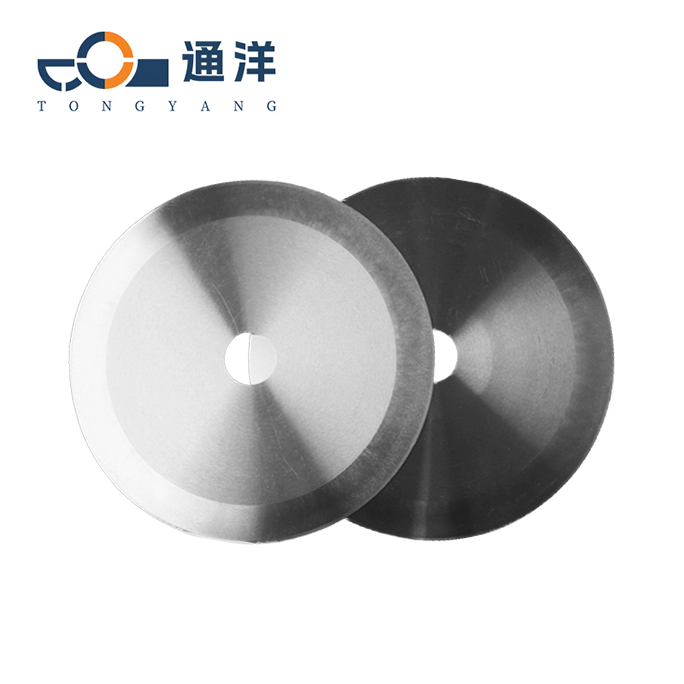
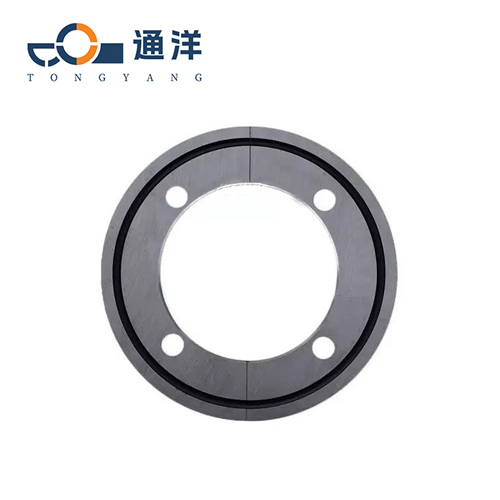
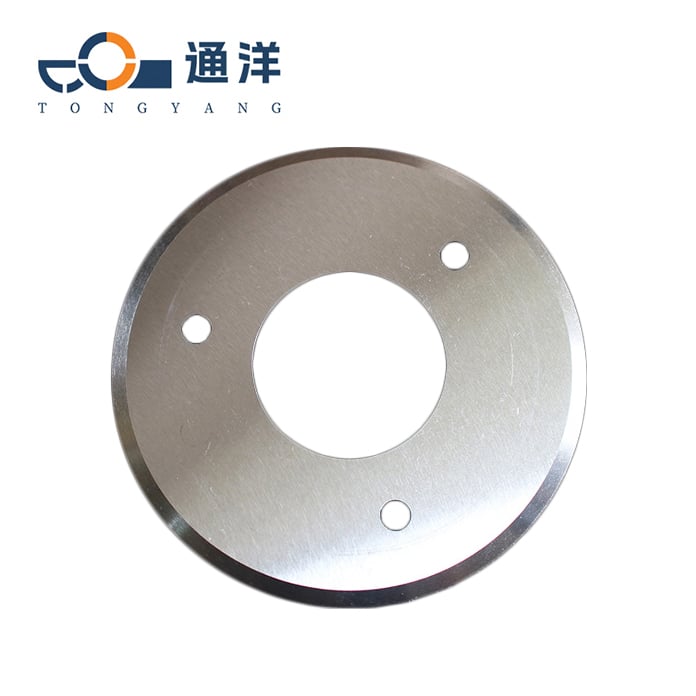
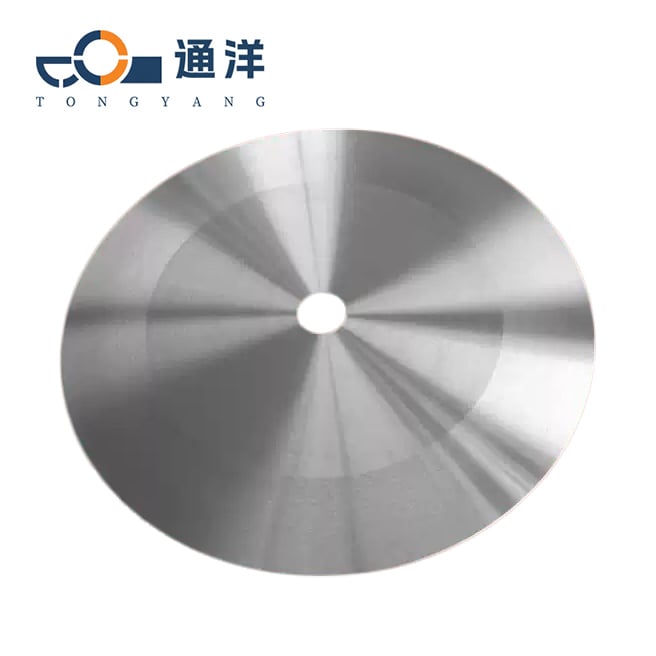
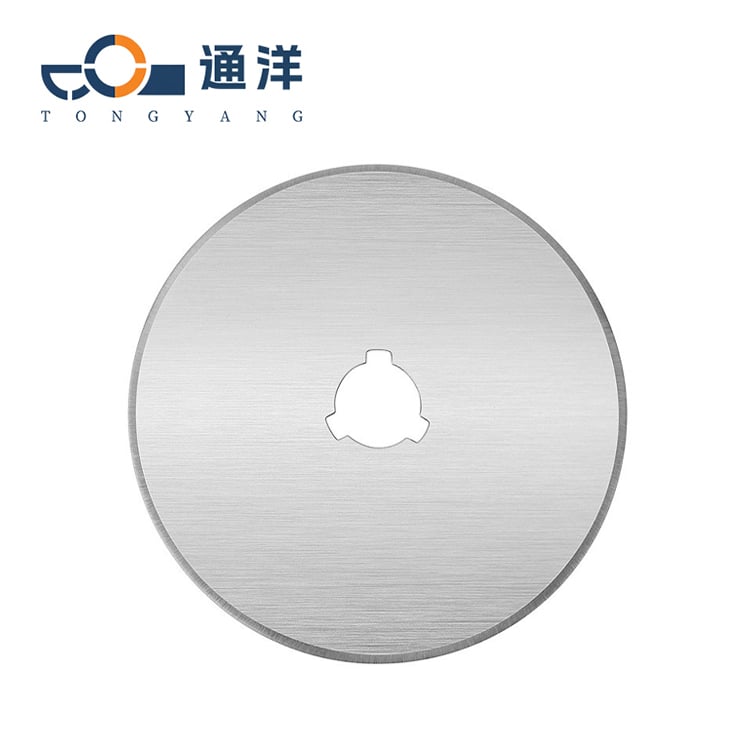
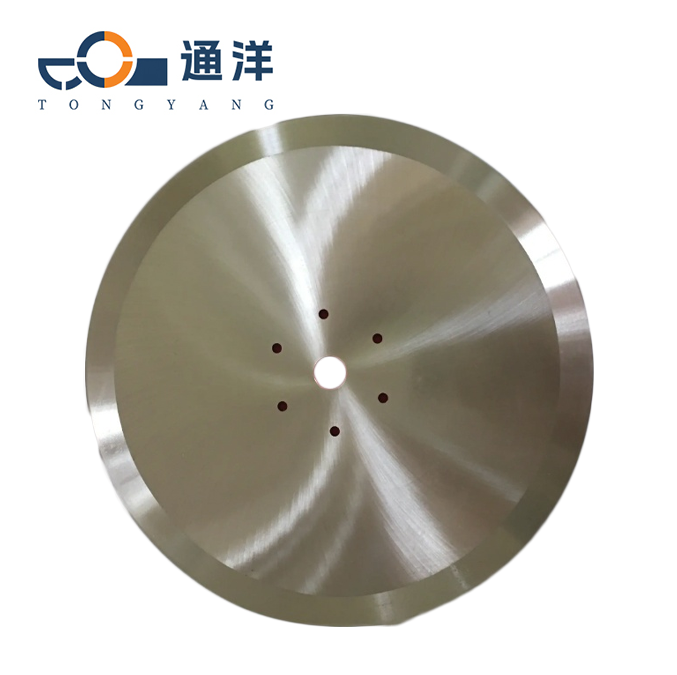
A diameter of 610 mm is a mainstream standard for circular slitting knives commonly used in toilet paper slitting equipment. Its selection directly determines slitting quality, tool service life, and production stability. Based on equipment parameters, paper characteristics, and production conditions, accurate selection can be carried out from the following aspects.
Match the spindle with conventional sizes such as φ250mm, φ300mm, and φ320mm to ensure firm installation without wobble.Select an appropriate blade thickness based on the paper thickness to be cut. Thin blades are suitable for high-speed, light-load slitting, while thick blades ensure stable slitting of thick paper under heavy load.
Selection of Cutting Edge
The flat-edge circular knife is highly versatile and suitable for slitting ordinary toilet paper rolls, featuring a neat cut, economical cost, and easy regrinding.
Bevel-edge / stepped-edge knives are suitable for slitting high-basis-weight and multi-layer base paper, with low slitting resistance that can effectively reduce burrs and continuous cutting issues.
Toothed-edge and wavy-edge knives are generally not used for conventional roll paper slitting; they are only suitable for special processes and are not recommended for routine applications.
Material and Hardness Selection
Carbon steel blades: Low in cost, suitable for low-speed, small-batch production lines. They offer average wear resistance and require frequent regrinding.
Alloy steel blades (such as 9CrSi, Cr12MoV): The mainstream choice for 610mm circular blades, with a hardness of HRC58–62. They are wear-resistant and chipping-resistant, ideal for medium-to-high speed continuous production.
Stainless steel / coated blades: Suitable for humid environments or food-grade and medical-grade sanitary paper. They have excellent rust resistance and a longer service life.
Summarize
Avoid focusing solely on price while neglecting material and precision, to prevent rapid wear and frequent replacements from increasing overall costs. The inner diameter and thickness must be strictly matched to the equipment and must not be installed by force. Meanwhile, reasonable regrinding allowance should be reserved to extend the service life of the blades.
Proper selection can effectively improve slitting quality, reduce issues such as paper breakage and burrs, lower the frequency of downtime for blade changes, and ensure efficient and stable operation of the roll paper production line.

 Hot News
 EN
EN