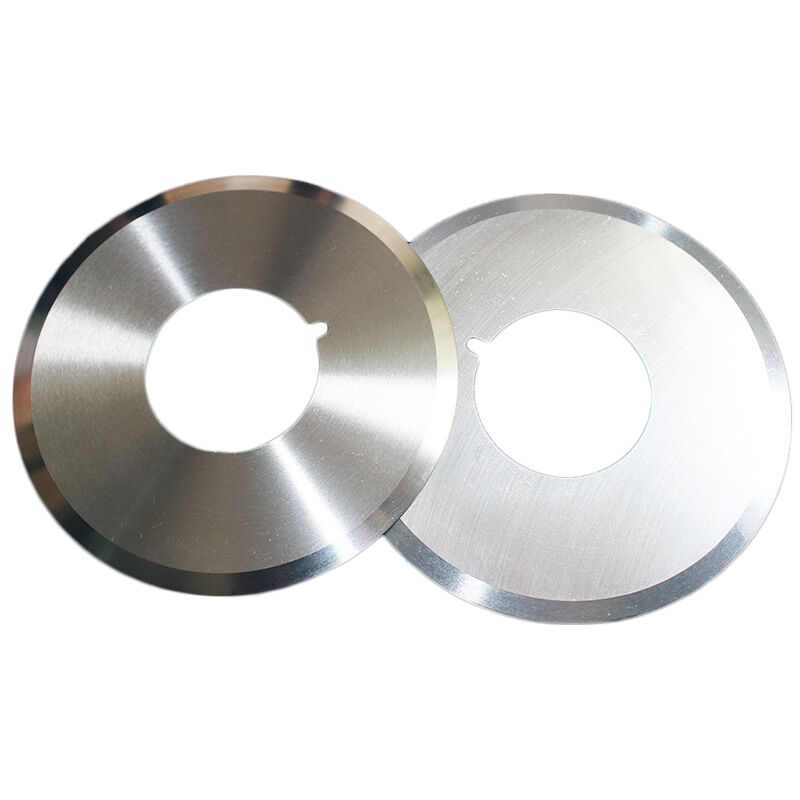
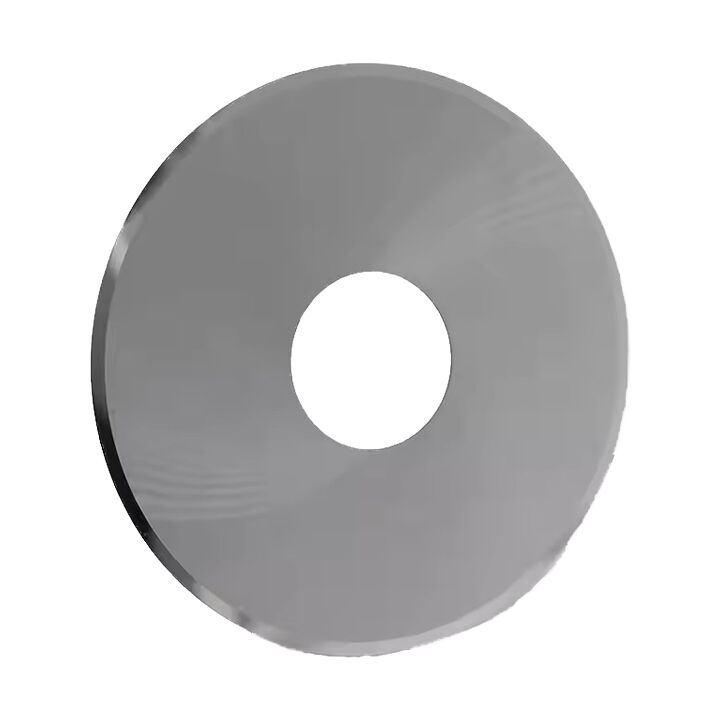
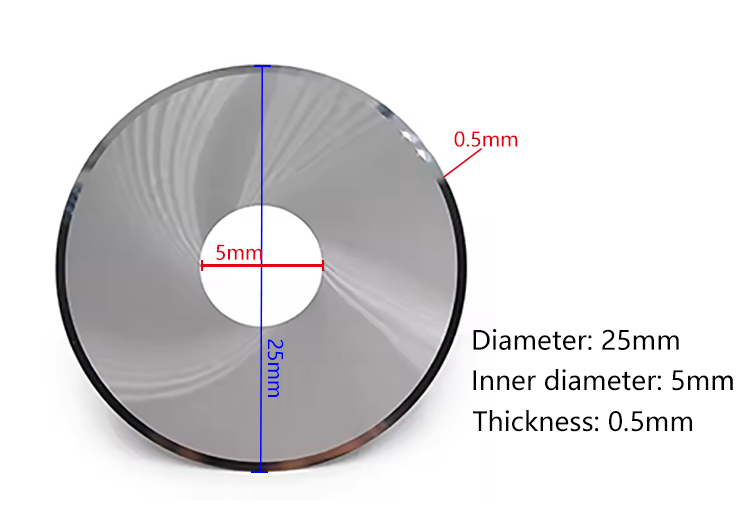
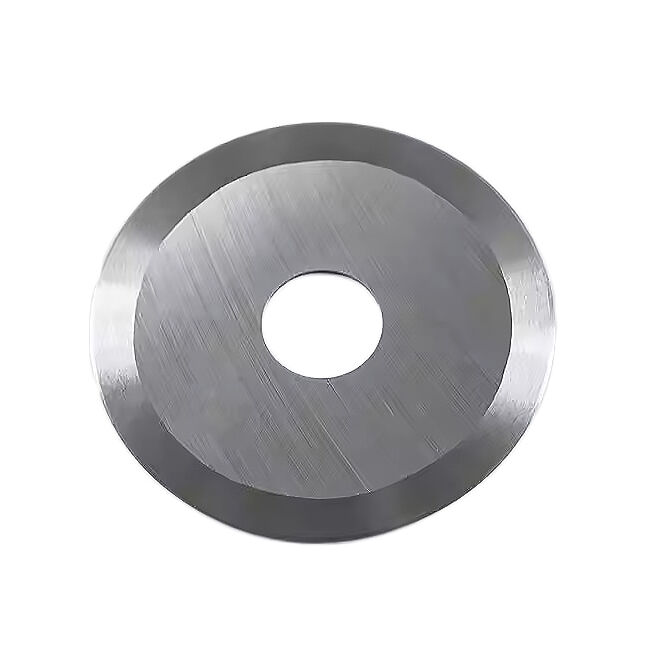
Premium Foam Paper Cutting Blade - Precision Tools for Professional Material Processing

All Categories

Get a Free Quote

Our representative will contact you soon.
Email
WhatsApp
Name
Company Name
Message
0/1000

foam paper cutting blade

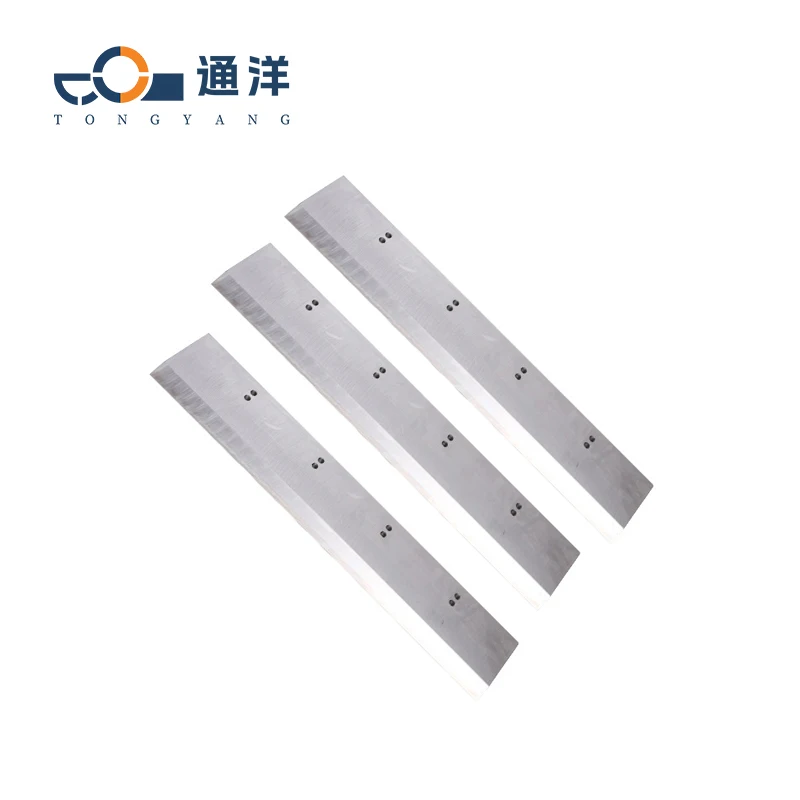
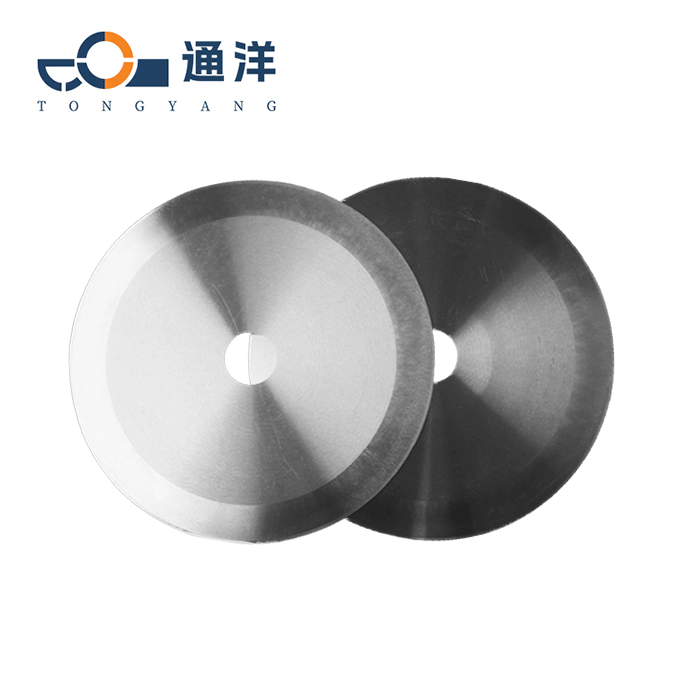
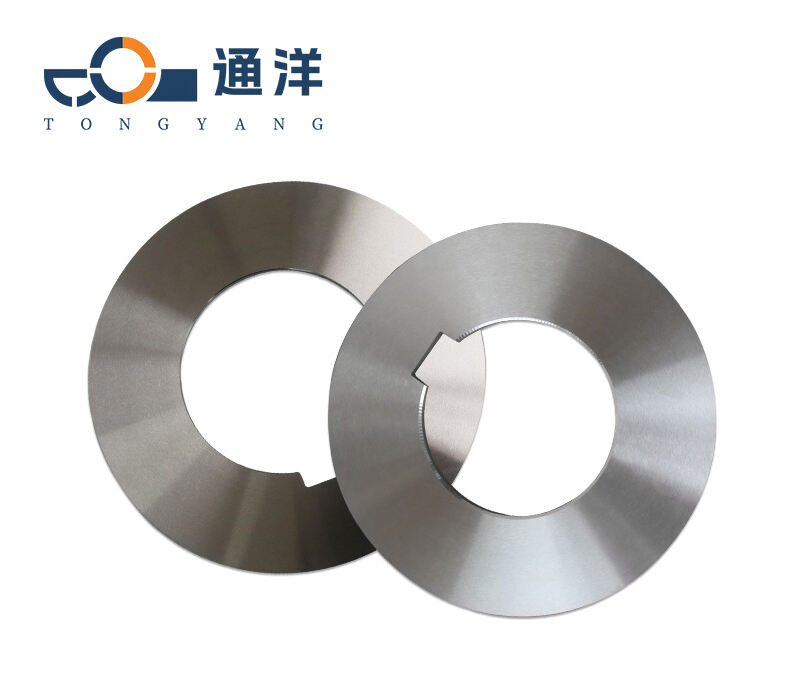
The foam paper cutting blade represents a specialized precision tool engineered specifically for processing foam materials and paper products with exceptional accuracy and efficiency. This cutting instrument features a uniquely designed edge geometry that addresses the distinct challenges presented by soft, compressible materials like foam and delicate paper substrates. Unlike conventional cutting tools, the foam paper cutting blade incorporates advanced metallurgical compositions and specialized edge treatments that prevent material compression, tearing, or deformation during the cutting process. The blade's primary function centers on delivering clean, precise cuts through various foam densities, from rigid insulation boards to flexible cushioning materials, while simultaneously handling paper stocks ranging from thin tissue to thick cardboard. Technological innovations embedded within the foam paper cutting blade include optimized blade angles that reduce cutting resistance, surface coatings that minimize friction and adhesive buildup, and tempered steel construction that maintains sharpness over extended operational periods. Manufacturing facilities, packaging operations, craft industries, and industrial fabrication centers rely heavily on these specialized blades for their daily production requirements. The foam paper cutting blade serves critical roles in furniture manufacturing where upholstery foam requires precise dimensioning, packaging industries where protective foam inserts need custom shaping, graphic arts studios where mounting boards demand accurate cutting, and educational environments where craft projects utilize both foam and paper materials. The versatility of the foam paper cutting blade extends across manual cutting systems, automated CNC machinery, rotary cutting equipment, and handheld precision tools. Material compatibility ranges from polyurethane foam, polystyrene, polyethylene foam, memory foam, to corrugated cardboard, chipboard, foam core board, and specialty papers. This comprehensive functionality makes the foam paper cutting blade an indispensable component in production workflows where material integrity, edge quality, and dimensional accuracy directly impact final product quality and customer satisfaction.

Popular Products

Investing in a quality foam paper cutting blade delivers substantial practical benefits that directly impact your operational efficiency and bottom line results. First and foremost, these specialized blades dramatically reduce material waste by creating precise cuts that eliminate the ragged edges and compression damage commonly associated with standard cutting tools. When you process foam materials with an ordinary blade, the compression often creates unusable margins that must be trimmed away, effectively increasing your raw material costs by ten to fifteen percent. The foam paper cutting blade eliminates this waste entirely, ensuring every inch of your material inventory contributes to finished products rather than scrap bins. Production speed increases significantly because operators spend less time making multiple passes or correcting imperfect cuts. A single clean pass replaces the traditional cut-and-trim approach, reducing processing time by up to forty percent in high-volume environments. This efficiency translates directly into higher throughput without requiring additional equipment or labor resources. The extended lifespan of the foam paper cutting blade compared to conventional alternatives means fewer blade changes, reduced downtime, and lower replacement costs over annual operating periods. Where standard blades might require replacement after processing five hundred linear feet of material, a quality foam paper cutting blade maintains cutting performance through two thousand feet or more, depending on material characteristics and operational conditions. Worker safety improves substantially because sharp, properly designed blades require less applied force during cutting operations, reducing operator fatigue and minimizing the risk of slippage accidents that occur when excessive pressure becomes necessary. The reduced friction characteristics inherent in foam paper cutting blade design also mean less heat generation during cutting, which prevents melting or deformation of thermoplastic foam materials and eliminates the scorching that can occur with paper products. Maintenance requirements decrease because the blade's specialized coatings resist adhesive buildup from foam manufacturing residues and paper sizing compounds that typically gum up conventional cutting edges. This resistance to contamination maintains consistent cutting performance throughout production runs and reduces the frequency of cleaning interventions. Edge quality directly affects downstream operations, and the clean cuts produced by foam paper cutting blade technology eliminate secondary finishing steps, reduce assembly complications, and improve the aesthetic appearance of visible edges in consumer-facing applications. For businesses operating multiple shifts or high-volume production schedules, the reliability and consistency of foam paper cutting blade performance eliminates the variable quality issues that plague operations using inadequate cutting tools.

Practical Tips

5 Best Metal Cutting Blade Options for DIY Projects

25

Mar

5 Best Metal Cutting Blade Options for DIY Projects

Choosing the right metal cutting blade can make the difference between a successful DIY project and a frustrating experience filled with poor cuts and damaged materials. Whether you're working on home renovations, crafting custom metalwork, or tackli...
View More
Can a Circular Blade Cut Metal? A Look at Hardened Metal Cutting Blades

25

Mar

Can a Circular Blade Cut Metal? A Look at Hardened Metal Cutting Blades

The ability to cut through metal efficiently and precisely has always been a cornerstone of modern manufacturing and fabrication industries. When professionals need to slice through various metal materials, the choice of cutting tool can make the dif...
View More
2025 Guide: Choosing the Right Slitter Blades for Your Industry

09

Apr

2025 Guide: Choosing the Right Slitter Blades for Your Industry

Selecting the appropriate slitter blades for your specific industry applications represents a critical decision that directly impacts operational efficiency, product quality, and overall production costs. Industrial cutting operations across manufact...
View More
Common Slitter Blades Problems and Solutions

30

Mar

Common Slitter Blades Problems and Solutions

Manufacturing operations that rely on slitter blades face a variety of challenges that can significantly impact production efficiency, material quality, and operational costs. Understanding the most common problems associated with slitter blades and ...
View More

Get a Free Quote

Our representative will contact you soon.
Email
WhatsApp
Name
Company Name
Message
0/1000

foam paper cutting blade

Superior Edge Retention Technology for Extended Operational Life

Superior Edge Retention Technology for Extended Operational Life

The foam paper cutting blade incorporates advanced metallurgical engineering that fundamentally transforms blade longevity and performance consistency throughout its operational lifecycle. At the core of this advantage lies a sophisticated heat treatment process that creates a crystalline structure within the blade material, producing a hardness rating that resists dulling while maintaining sufficient flexibility to prevent brittle fracture under operational stress. This balance between hardness and toughness represents a critical engineering achievement because foam and paper cutting applications subject blades to unique wear patterns that differ substantially from metal or wood cutting. The microscopic structure of the foam paper cutting blade edge features precisely controlled grain boundaries that resist the abrasive effects of paper fibers and the chemical interactions with foam additives and flame retardants commonly found in industrial foam products. Surface treatment technologies applied during manufacturing create a molecular barrier that reduces friction coefficients by nearly thirty percent compared to untreated blade surfaces. This reduction in friction delivers multiple compounding benefits throughout the blade's service life. Lower friction means less heat generation during high-speed cutting operations, which prevents the thermal softening that accelerates wear in conventional blades. The cooler operating temperatures also protect the foam and paper materials being processed, eliminating the melting, glazing, or discoloration that occurs when excessive heat transfers into thermoplastic materials. The foam paper cutting blade's edge geometry features a precisely calculated bevel angle that optimizes the relationship between cutting efficiency and edge durability. Steeper angles create sharper edges but sacrifice durability, while shallower angles improve longevity but require more cutting force. The optimized geometry specific to foam paper cutting blade design resolves this trade-off through computer-modeled angle selection that maximizes both attributes simultaneously. Real-world performance data demonstrates that this engineering approach extends blade life by two hundred to three hundred percent compared to general-purpose cutting tools, dramatically reducing the total cost of ownership and minimizing production interruptions for blade changes. For operations processing materials continuously, this extended service life translates into quantifiable savings that exceed the initial blade investment within weeks of implementation.
Precision Cutting Performance That Preserves Material Integrity

Precision Cutting Performance That Preserves Material Integrity

Material integrity preservation represents perhaps the most critical advantage that distinguishes the foam paper cutting blade from conventional cutting alternatives, directly impacting product quality, material utilization, and customer satisfaction. When cutting compressible foam materials, the blade's interaction with the cellular structure determines whether cells are cleanly severed or crushed and torn. The foam paper cutting blade achieves clean cellular severance through a combination of edge sharpness, blade thickness optimization, and cutting angle engineering that together minimize the compression zone adjacent to the cut path. This compression zone, inevitable with any cutting process, extends only fractions of a millimeter with a properly designed foam paper cutting blade, compared to several millimeters with inappropriate cutting tools. The practical significance of this difference becomes immediately apparent in applications requiring precise dimensional tolerances or where edge appearance affects product marketability. Furniture manufacturers relying on foam paper cutting blade technology achieve upholstery components that fit precisely into covers without gaps or bulges caused by compressed edges that fail to recover their original dimensions. Packaging operations produce protective foam inserts with edges that maintain uniform density right to the cut surface, ensuring consistent cushioning performance across the entire component. The blade's ability to process paper products without delamination, fiber pull-out, or edge fraying proves equally important in graphic arts, printing, and packaging applications. The foam paper cutting blade's thin profile and optimized edge geometry slice through paper fibers rather than tearing them, producing edges that appear professionally finished without additional processing. This capability eliminates costly secondary operations like sanding, trimming, or edge sealing that operations must implement when using inadequate cutting tools. Laminated materials and foam core boards present particular challenges because the cutting tool must transition between materials with vastly different properties without causing delamination or inter-layer separation. The foam paper cutting blade navigates these transitions smoothly because its reduced friction and optimized geometry minimize the lateral forces that pull layers apart during cutting. Quality control metrics improve substantially when operations implement foam paper cutting blade solutions because the consistency of cut quality eliminates the variation that creates rejected parts and rework requirements.
Versatile Application Range Across Multiple Industries and Materials

Versatile Application Range Across Multiple Industries and Materials

The exceptional versatility of the foam paper cutting blade positions it as a universal solution across diverse industrial sectors, material types, and cutting equipment configurations, delivering value that extends far beyond single-application specialization. This adaptability stems from fundamental design principles that address the common characteristics shared by foam and paper materials rather than optimizing for narrow material specifications. Manufacturing facilities benefit from inventory simplification because a single foam paper cutting blade specification handles the complete range of foam densities and paper weights encountered in typical production environments. This universal applicability eliminates the confusion, storage requirements, and potential errors associated with maintaining multiple blade types for different materials or applications. The foam paper cutting blade performs equally well in manual cutting operations, semi-automated equipment, and fully automated CNC systems, providing consistent results regardless of the mechanical platform. Craft industries and small-scale producers appreciate that the same blade technology used in industrial manufacturing delivers professional results in handheld cutting tools and manual cutting tables. Educational institutions, sign shops, and prototype development labs achieve production-quality cuts without investing in specialized industrial equipment. Material compatibility extends across closed-cell foams, open-cell foams, cross-linked polyethylene, extruded polystyrene, and specialty foam formulations including conductive, anti-static, and flame-retardant variants. Paper product processing encompasses corrugated cardboard, solid bleached sulfate board, kraft paper, tissue paper, specialty papers with coatings or laminates, and composite materials combining paper with foam, plastic films, or foil layers. The foam paper cutting blade handles thickness variations from ultra-thin tissue papers measuring fractions of a millimeter to dense foam blocks exceeding one hundred millimeters without requiring adjustment or replacement. This thickness range capability proves particularly valuable in operations processing diverse product lines or custom orders where material specifications change frequently. Industry applications span furniture and bedding manufacturing, automotive interior component production, packaging and protective materials fabrication, HVAC insulation installation, theatrical set construction, retail display manufacturing, medical device component production, sports equipment fabrication, and countless other sectors where foam or paper cutting represents a core process step. The return on investment for foam paper cutting blade implementation manifests through reduced blade inventory costs, eliminated production delays from blade changes, improved product quality consistency, reduced material waste, faster processing speeds, and expanded capability to accept diverse customer orders without process limitations.

Get a Free Quote

Our representative will contact you soon.
Email
WhatsApp
Name
Company Name
Message
0/1000
Newsletter
Please Leave A Message With Us