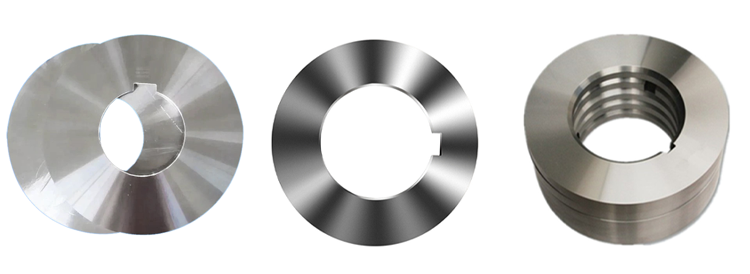
Exceptional Versatility Across Diverse Materials and Applications
The remarkable versatility of the bi metal blade establishes it as a universal cutting solution capable of handling an impressive range of materials and applications that would typically require multiple specialized blades. This adaptability stems from the balanced properties achieved through the dual-metal construction, where the hard cutting edge tackles difficult materials while the flexible backing accommodates the varying demands of different cutting scenarios. Metal fabrication shops benefit tremendously from this versatility as a single bi metal blade efficiently cuts through mild steel, stainless steel, aluminum, brass, copper, and exotic alloys without requiring blade changes between different materials. The ability to transition seamlessly from cutting structural steel beams to thin-wall tubing or from solid bar stock to metal mesh demonstrates the breadth of capability that the bi metal blade provides. Woodworkers discover that the same blade that excels at metal cutting also performs admirably when cutting hardwoods, engineered lumber, and wood composites, though dedicated wood blades may still be preferred for high-volume woodworking operations. Demolition contractors particularly value this multi-material capability when cutting through walls or structures containing unknown compositions, as the bi metal blade reliably cuts through whatever material it encounters including nails, screws, pipes, wires, and framing members without hesitation. The automotive repair industry relies heavily on bi metal blades for cutting exhaust systems, frame components, body panels, and various fasteners, appreciating the confidence that one blade type handles all these diverse cutting needs. Maintenance technicians working in manufacturing facilities, commercial buildings, or infrastructure keep bi metal blades readily available knowing they can address virtually any cutting requirement that arises during routine maintenance or emergency repairs. The versatility extends to different cutting tools as bi metal blade technology appears in band saw blades, reciprocating saw blades, hacksaw blades, and hole saws, providing consistent performance characteristics across various tool platforms. Different tooth configurations optimize the bi metal blade for specific applications, with coarse teeth providing aggressive cutting in thick materials, fine teeth delivering smooth cuts in thin materials, and variable pitch patterns reducing vibration while maintaining cutting efficiency across changing material thicknesses. This configurability allows users to fine-tune blade selection for their specific requirements while still benefiting from the fundamental advantages of bi metal construction.
 EN
EN