 EN
EN

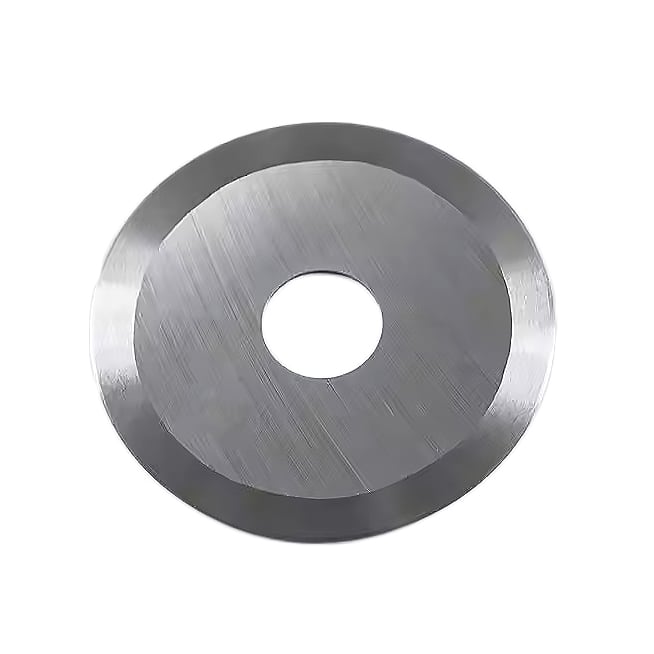
In high-speed film converting operations, the film slitting blade is one of the most performance-critical components on the production floor. When this blade performs flawlessly, operators rarely give it a second thought. But when problems arise — ragged edges, inconsistent widths, premature wear, or film tearing — the entire converting line can grind to a halt, causing costly downtime and quality rejections. Understanding what causes these issues, and how to solve them systematically, is essential for any operation that depends on precise film processing.
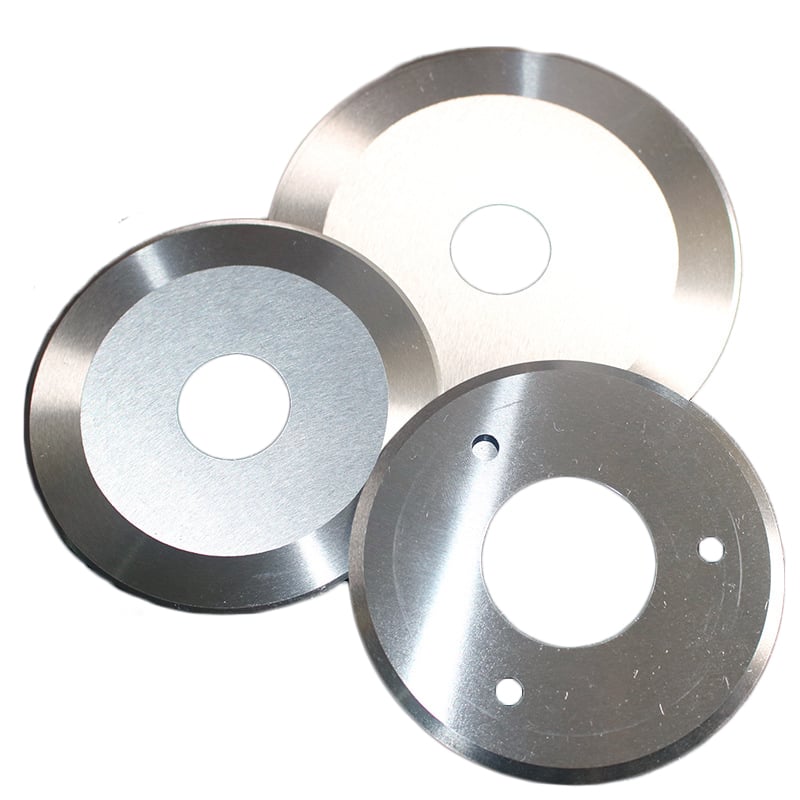
This article addresses the most frequently encountered film slitting blade problems in industrial converting environments, explains their root causes, and offers practical, actionable solutions. Whether you are running polyester, polyethylene, polypropylene, or specialty films, the diagnostic and corrective principles covered here apply broadly across film types and slitting configurations. Operators, maintenance engineers, and quality managers will find this guide useful for both troubleshooting live issues and preventing problems before they escalate.
Understanding How a Film Slitting Blade Fails
The Nature of Blade Degradation in Film Converting
Every film slitting blade undergoes wear from the moment it enters service. The cutting edge, no matter how precisely ground, gradually loses its geometry through friction, heat buildup, and micro-chipping during continuous operation. The rate at which this happens depends on multiple variables including film hardness, line speed, blade material grade, and the angle of the cutting edge. Recognizing the early signs of degradation — rather than waiting for visible failure — is the foundation of proactive blade management.
Degradation rarely happens uniformly. In most slitting operations, certain blade positions along the web width experience higher load than others due to tension variation or film thickness inconsistency. This means a film slitting blade in one position may wear out significantly faster than adjacent blades running under the same nominal conditions. Monitoring individual blade performance, rather than treating the entire set as a uniform unit, leads to better outcomes and fewer surprises during production runs.
Beyond abrasive wear, corrosion is another silent degradation pathway. When film materials contain chemical additives or when the operating environment has elevated humidity, even high-quality blade steel can develop micro-pitting on the cutting edge. This pitting compromises sharpness in ways that are difficult to detect visually but immediately apparent in cut quality. Selecting the right blade coating or material grade for the specific film chemistry is therefore not optional — it is a core engineering decision.
Identifying Early Warning Signs Before Visible Failure
The most effective way to manage film slitting blade problems is to catch them before they produce defective product. Operators who know what to look for can detect early-stage blade issues through subtle changes in cutting sound, edge quality, and static generation. A blade that is beginning to dull will often produce a slightly rougher cut edge, sometimes accompanied by a faint fibrous fringing that is only visible under magnification. Catching this stage early allows for a planned blade change rather than an emergency shutdown.
Another reliable early indicator is increased static discharge from the slit edges. When a film slitting blade loses its sharpness, it tends to drag and stretch the film slightly rather than cleanly severing it. This mechanical stretching generates additional static electricity, which in turn causes handling problems downstream — film wrapping around rollers, difficulty in winding, and attraction of dust particles to the slit edges. If your converting line starts showing unusual static behavior, the blade condition should be the first thing investigated.
Common Problems with Film Slitting Blades and Their Root Causes
Ragged or Fibrous Cut Edges
Ragged cut edges are among the most frequently reported film slitting blade problems across all film types. The immediate cause is almost always insufficient sharpness — either because the blade is worn, improperly ground, or simply the wrong geometry for the film being slit. However, the underlying root cause is often found elsewhere. Running speeds that exceed the blade's design capability, for instance, can cause even a sharp film slitting blade to produce poor edges because the cutting mechanics break down under excessive load.
Film tension inconsistency is another major contributor to ragged edges. When the incoming web has uneven tension across its width, some sections of the film slitting blade experience intermittent contact rather than continuous, controlled cutting. The result is a cut edge that alternates between clean and rough along its length. Correcting the web tension profile through better unwind brake control or tension zone management often resolves the edge quality issue without any blade change being necessary.
The bevel angle of the film slitting blade also plays a significant role. Blades with overly acute bevel angles may produce clean edges on thin films but chip or deflect when applied to thicker or filled films. Conversely, blades with overly obtuse angles tend to crush or compress the film edge rather than cleanly severing it. Matching the bevel geometry to the specific film substrate is a critical selection parameter that is often overlooked when facilities switch film specifications without updating their blade specifications.
Premature Blade Wear and Short Blade Life
When a film slitting blade wears out significantly faster than expected, the economic impact is immediate and cumulative. Every unplanned blade change means downtime, material waste during the transition, and potential for edge quality variation during the changeover period. Diagnosing the cause of premature wear requires a systematic look at the entire slitting system, not just the blade itself.
One of the most common causes of short blade life is incorrect blade-to-anvil or blade-to-blade overlap setting. In shear slitting configurations, if the female and male blade overlap is set too aggressively, the cutting forces on the film slitting blade increase dramatically, accelerating edge wear. Conversely, insufficient overlap causes a crushing rather than shearing action, which also degrades the cutting edge rapidly. Operators should verify overlap settings against the blade manufacturer's specifications whenever a new film type is introduced or after any mechanical adjustment to the slitting head.
Blade material selection relative to the film abrasiveness is equally important. Highly filled films — those containing mineral fillers, glass fibers, or certain pigments — are significantly more abrasive than unfilled base resins. Using a standard carbon steel film slitting blade on a filled film will result in wear rates that are completely unacceptable. In these applications, upgrading to a harder substrate such as high-speed steel or applying a wear-resistant coating like titanium nitride can extend blade service life by a factor of several times without any other process change.
Film Tearing, Breaking, and Web Instability During Slitting
Film tearing during the slitting process is one of the most disruptive problems an operator can face, and its causes range from obvious to surprisingly subtle. When a film slitting blade has a nick or micro-chip in its edge, it can initiate a tear rather than a clean cut, especially at the start of a slit or when processing thin gauge films. Even a single microscopic notch in the cutting edge is sufficient to create a stress concentration point that propagates into a full-width tear under web tension.
Beyond blade condition, web instability caused by flutter or vibration in the film path can cause intermittent contact issues with the film slitting blade. When the film bounces or oscillates at the cutting point, the blade is essentially cutting into a moving, unstable substrate. This increases the likelihood of blade deflection, which initiates small tears that quickly escalate. Improving web path geometry, adding stabilizing bars or vacuum platens near the cut point, and ensuring that all idler rollers are properly aligned and free-spinning are all worthwhile interventions when tearing is the primary symptom.
Uneven Slit Width and Lane Deviation
Uneven slit widths are a quality problem that often goes undetected until the finished rolls are measured or rejected by a customer. The film slitting blade is frequently blamed when this problem occurs, but the root cause is more often found in the blade positioning system or the web guidance setup. Blade holders that have developed mechanical play due to wear can allow the film slitting blade to shift laterally under cutting forces, producing slit widths that vary from the nominal specification.
Thermal expansion of the slitting shaft or blade holder during extended production runs is another underappreciated contributor to slit width variation. As the shaft heats up, its length increases slightly, causing the blade positions to drift from their cold-start settings. Operations that run long continuous shifts without accounting for thermal growth will often notice that slit widths are accurate at the start of a run but drift out of tolerance as the machine reaches thermal equilibrium. Building a thermal compensation step into the setup procedure — by allowing the machine to reach operating temperature before final blade positioning is locked — significantly reduces this source of width variation.
Practical Solutions for Film Slitting Blade Performance Issues
Establishing a Proactive Blade Replacement Schedule
One of the most effective solutions to chronic film slitting blade problems is the transition from reactive to proactive blade management. Rather than waiting for visible quality failures to trigger a blade change, proactive operations establish replacement intervals based on running hours, linear meters processed, or material-specific wear curves developed through historical data. This approach eliminates the unpredictability of blade performance and allows maintenance to be scheduled during planned downtime rather than during production crises.
Building a blade performance log is the starting point for this transition. Each time a film slitting blade is changed, the reason for the change, the blade's running history, and the quality observations from the preceding run should be recorded. Over several cycles, patterns emerge that allow prediction of blade life with increasing accuracy. This data also provides a factual basis for evaluating whether a blade upgrade — to a harder material grade or a coated variant — would be cost-effective given the documented wear rates.
Optimizing Machine Setup for Better Blade Performance
Machine setup has a profound effect on how long a film slitting blade lasts and how well it performs throughout its service life. Correct setup begins with verifying that the blade is properly seated in its holder and that the holder itself has no detectable runout or lateral play. A film slitting blade that is not running true — even by a few hundredths of a millimeter — will experience uneven loading that dramatically shortens its life and degrades cut quality.
Cutting angle and overlap settings should be verified and documented for each film type that runs on the machine. When a new film specification is introduced, it is worth investing the time to run a short setup trial with different overlap and angle settings to identify the combination that produces the best edge quality and the lowest blade wear rate. These optimized parameters should then be recorded in a setup sheet and referenced consistently for future production runs of the same material.
Lubrication is often overlooked in film slitting but can make a meaningful difference, particularly when slitting adhesive films or films with high tack surfaces. A controlled application of a compatible lubricant at the cut point reduces friction on the film slitting blade, decreases heat buildup, and extends the time between blade changes. The lubricant type and application rate must be compatible with the film chemistry and the intended end use of the slit rolls, so this should be validated before routine application begins.
Selecting the Right Film Slitting Blade for Each Application
Blade selection is perhaps the single most impactful decision in managing film slitting blade performance. A blade that is well-suited to one film type may be completely inappropriate for another, even if the two films appear similar at a glance. The key selection parameters include blade material, hardness, edge geometry, surface finish, and any coating treatment. Each of these parameters interacts with the specific film properties — thickness, stiffness, surface texture, filler content, and adhesive characteristics — to determine the overall cutting performance.
For operations that run a wide variety of film types on the same slitting equipment, it may be practical to maintain a small library of blade specifications — each optimized for a different film category — and to switch blade types when the product mix changes. While this adds some complexity to the blade management process, it typically results in significantly better edge quality, longer blade life, and lower total cost of operation than trying to find a single compromise blade that handles all film types adequately.
Preventive Maintenance Practices to Extend Film Slitting Blade Life
Cleaning and Inspection Protocols
Regular cleaning of the film slitting blade and its holder is a fundamental maintenance task that is frequently deprioritized during busy production periods. Film residues, adhesive deposits, and fine debris can accumulate on the blade edge and in the holder slot, altering the blade's running geometry and accelerating wear. Establishing a structured cleaning protocol — with defined frequency, tools, and inspection criteria — ensures that this task is performed consistently rather than only when problems become obvious.
During cleaning, each film slitting blade should be visually inspected under adequate lighting — and ideally under low-power magnification — for chips, notches, or visible dullness. Blades showing any edge damage should be removed from service immediately, regardless of their accumulated running time. The cost of running a damaged film slitting blade in terms of scrap, downtime, and potential damage to downstream equipment far exceeds the cost of the blade itself. A culture of inspection-first maintenance pays dividends that are disproportionate to the effort involved.
Storage and Handling Best Practices
The condition of a film slitting blade when it enters service is directly affected by how it was stored and handled before installation. Blades stored improperly — in humid environments, without protective packaging, or stacked in ways that allow edge-to-edge contact — can arrive at the installation point with corrosion, edge damage, or geometric distortion that makes them unsuitable for service even before they have processed a single meter of film. Proper storage means keeping unused blades in their original protective packaging in a clean, dry environment, organized in a way that prevents physical contact between cutting edges.
Handling during installation requires equal care. A film slitting blade should be handled with clean gloves to prevent skin oils from contacting the cutting edge, and it should be transported and mounted using appropriate tooling rather than bare hands. Dropping a blade, even from a short height, can create edge chips that are not visible to the naked eye but will immediately compromise cut quality and accelerate further edge damage once the blade enters service.
FAQ
How often should a film slitting blade be replaced?
Replacement frequency depends on the film type, line speed, blade material, and acceptable quality thresholds. Rather than following a fixed time interval, it is better to establish a replacement schedule based on linear meters processed or running hours, calibrated against your quality monitoring data. A proactive replacement log helps develop accurate predictions over time. As a general principle, replacing a film slitting blade before quality problems appear is always more cost-effective than reacting after defects have already been produced.
What causes a film slitting blade to produce a rough or fibrous cut edge?
Rough or fibrous cut edges are typically caused by a dull or damaged blade edge, an incorrect bevel angle for the film substrate, insufficient or uneven web tension, or a line speed that exceeds the blade's design range. Diagnosing the root cause requires a systematic check of blade condition, machine setup parameters, and incoming web tension profile. Changing only the blade without addressing setup or tension issues will often result in the same problem recurring within a short time.
Can the same film slitting blade be used for different film materials?
In some cases, a single film slitting blade specification can handle a range of similar film types adequately. However, when film properties vary significantly — for example, switching from a thin unfilled polyester to a thick mineral-filled polypropylene — the blade geometry and material requirements change substantially. Using a blade optimized for one film type on a very different substrate usually results in compromised edge quality, accelerated wear, or both. Evaluating and qualifying blade specifications for each major film category you run is a worthwhile investment in consistency and operational efficiency.
How does blade overlap setting affect film slitting blade performance?
In shear slitting, the overlap between the upper and lower film slitting blade directly controls the cutting force and the shear angle applied to the film. Too little overlap produces a crushing or tearing action rather than a clean shear cut, resulting in rough edges and rapid blade wear. Too much overlap increases mechanical stress on both blades, accelerating wear and potentially causing deflection or chatter. The optimal overlap setting is material-specific and should be determined through setup trials for each film type, then documented and applied consistently to maintain stable, repeatable cutting performance.