 EN
EN

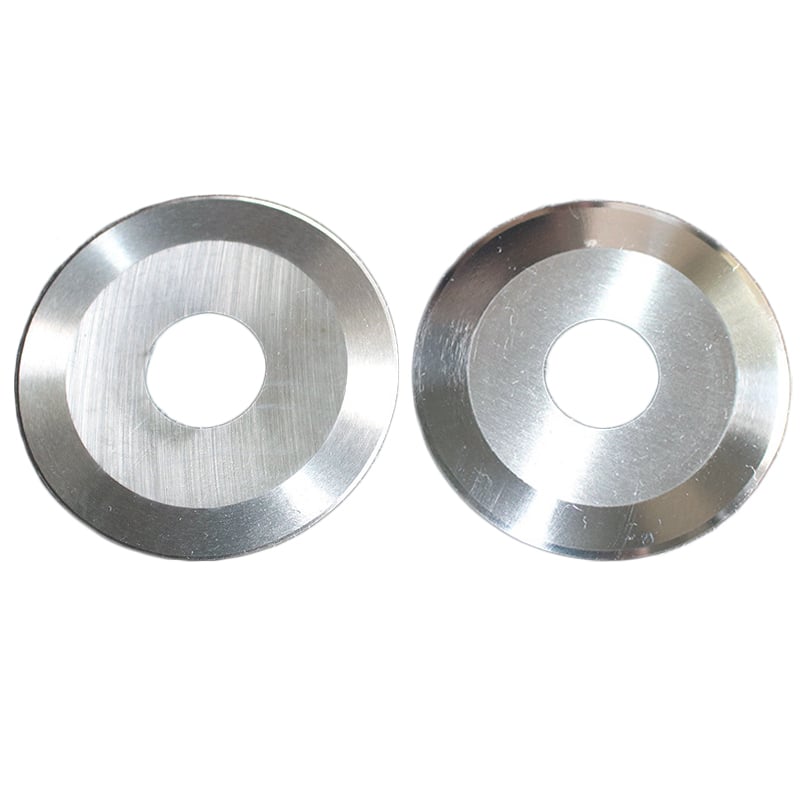
Selecting the right material for a film slitting blade is critical to achieving clean cuts, extending blade life, and maintaining consistent performance in high-speed converting operations. The material composition directly influences edge retention, wear resistance, and the blade's ability to handle various film substrates without causing defects such as burrs, dust, or irregular edges. For manufacturers in packaging, label production, and flexible materials processing, understanding the strengths and limitations of different blade materials enables informed decisions that balance performance with operational costs.
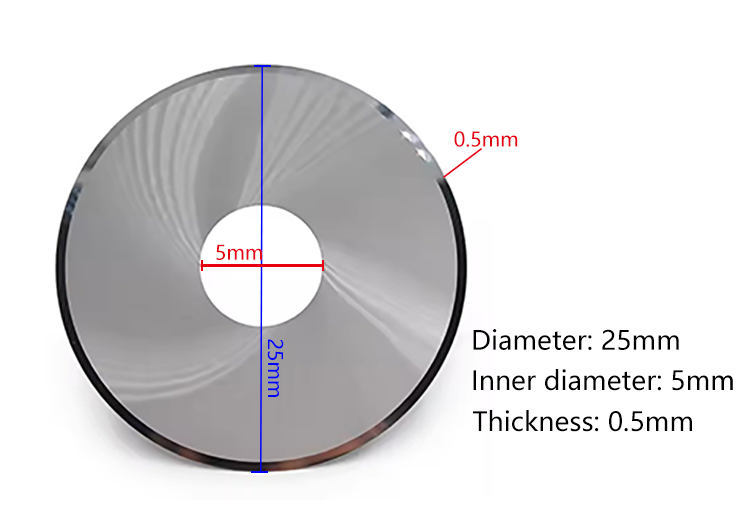
This article examines the top five material choices for film slitting blade applications, exploring their metallurgical properties, performance characteristics, and ideal use cases. Each material presents distinct advantages depending on film type, production volume, cutting speed, and environmental conditions. By analyzing tungsten carbide, high-speed steel, ceramic composites, tool steel alloys, and specialized coated materials, converters can optimize blade selection to maximize throughput, reduce downtime, and ensure superior edge quality across diverse slitting operations.
Tungsten Carbide Film Slitting Blade Excellence
Unmatched Hardness and Wear Resistance
Tungsten carbide represents the pinnacle of hardness among film slitting blade materials, offering exceptional wear resistance that translates into extended service intervals and reduced blade change frequency. This material maintains its cutting edge integrity even when processing abrasive film substrates such as metalized films, barrier coatings, or filled polymers that rapidly degrade softer blade materials. The extreme hardness of tungsten carbide, typically ranging from 1500 to 2000 HV on the Vickers scale, ensures minimal edge deformation during continuous high-speed slitting operations.
The microstructure of tungsten carbide consists of hard carbide particles bonded within a metallic matrix, creating a composite material that resists abrasive wear while maintaining sufficient toughness to prevent catastrophic fracture. For film slitting blade applications involving high-volume production runs, tungsten carbide delivers consistent cut quality over tens of thousands of linear meters, significantly reducing the total cost of ownership despite higher initial investment. The material's thermal stability also permits operation at elevated temperatures generated by high-speed friction without compromising edge geometry.
Production facilities processing polyester films, oriented polypropylene, and other engineered plastics benefit substantially from tungsten carbide film slitting blade performance, particularly when tight dimensional tolerances and minimal edge defects are required. The material's resistance to chemical degradation further extends its suitability to applications involving films with aggressive additives or surface treatments that would corrode conventional steel blades.
Application Considerations and Limitations
While tungsten carbide excels in wear resistance, its brittleness requires careful handling and precise blade mounting to prevent chipping or cracking during installation and operation. Film slitting blade assemblies using tungsten carbide must incorporate proper support systems and maintain accurate blade alignment to distribute cutting forces evenly across the edge. Any impact loading or lateral deflection can initiate microfractures that propagate through the carbide structure, leading to premature blade failure.
The grinding and sharpening of tungsten carbide film slitting blade edges demands specialized equipment and diamond abrasives, increasing maintenance costs and requiring trained personnel. Additionally, the material's high density and rigidity may not suit applications involving very thin or delicate films where excessive blade stiffness could induce substrate distortion. Converters must weigh these operational considerations against the substantial performance benefits when specifying tungsten carbide for their film slitting blade requirements.
High-Speed Steel Versatility in Film Cutting
Balanced Performance Characteristics
High-speed steel offers an excellent balance of hardness, toughness, and edge retention that makes it a widely adopted material for film slitting blade applications across diverse converting environments. This alloy family, typically containing tungsten, molybdenum, chromium, and vanadium, achieves hardness levels between 62 and 66 HRC through heat treatment, providing sufficient wear resistance for most commodity and specialty film substrates while maintaining edge stability under varying cutting conditions.
The toughness of high-speed steel surpasses that of tungsten carbide, reducing susceptibility to chipping when encountering occasional thickness variations, splices, or contaminants within the film web. This resilience translates into more forgiving operation and lower risk of catastrophic blade failure during production. High-speed steel film slitting blade edges can be resharpened multiple times using conventional grinding equipment, extending overall blade life through reconditioning cycles that restore cutting performance at relatively low cost.
For operations processing polyethylene, polypropylene, and polyvinyl chloride films at moderate production volumes, high-speed steel provides reliable performance without the premium cost associated with carbide alternatives. The material's thermal properties allow sustained operation at moderate cutting speeds while its alloy composition can be optimized for specific applications through variations in composition and heat treatment protocols.
Grade Selection and Heat Treatment Impact
Different high-speed steel grades offer varying performance profiles for film slitting blade applications, with molybdenum-based grades typically providing better toughness while tungsten-rich compositions deliver enhanced wear resistance. M2 and M42 grades represent common choices, with M42 offering superior hot hardness for high-speed cutting operations where frictional heating becomes significant. The powder metallurgy variants of high-speed steel exhibit finer carbide distribution and improved edge stability compared to conventionally produced materials.
Proper heat treatment critically influences high-speed steel film slitting blade performance, with austenitizing temperature, quenching method, and tempering cycles all affecting final hardness, retained austenite content, and dimensional stability. Cryogenic treatment following initial hardening can further refine microstructure and enhance wear resistance by converting retained austenite to martensite and precipitating fine carbides. Converters should specify heat treatment parameters based on their specific film substrates and cutting conditions to optimize blade longevity and cut quality.
Ceramic Composite Innovations
Advanced Material Properties
Ceramic composite materials represent an emerging category for specialized film slitting blade applications where extreme hardness and chemical inertness are paramount. These materials, typically based on aluminum oxide, silicon nitride, or zirconia matrices, offer hardness values exceeding tungsten carbide while maintaining excellent resistance to chemical attack and thermal degradation. The non-metallic nature of ceramic composites eliminates concerns about rust or oxidation in humid operating environments.
For film slitting blade applications involving chemically aggressive substrates or environments where contamination from metallic blade wear particles is unacceptable, ceramic composites provide unique advantages. The material's low friction coefficient reduces heat generation during cutting, potentially enabling higher processing speeds without thermal degradation of heat-sensitive films. Ceramic blades also maintain sharp edges longer when slitting abrasive-filled films or coated substrates that rapidly wear conventional materials.
The electrical insulation properties of ceramic film slitting blade materials prevent static buildup and discharge issues that can occur with metallic blades when processing insulating polymer films at high speeds. This characteristic proves particularly valuable in electronics manufacturing and other applications where electrostatic discharge could damage sensitive products or create safety hazards.
Implementation Challenges
Despite their impressive hardness, ceramic materials exhibit extreme brittleness that limits their applicability in standard film slitting blade configurations. The material's low fracture toughness makes it highly susceptible to impact damage, requiring exceptionally rigid mounting systems and vibration-free operation to prevent catastrophic failure. Any blade deflection or shock loading can initiate cracks that propagate rapidly through the ceramic structure.
Manufacturing ceramic film slitting blade components demands specialized sintering processes and diamond grinding capabilities, resulting in significantly higher production costs compared to metallic alternatives. The difficulty of achieving precise edge geometries and the inability to plastically deform during sharpening operations further complicate maintenance procedures. These factors currently restrict ceramic blade use to niche applications where their unique properties justify the premium cost and operational constraints.
Tool Steel Alloy Practicality
Cost-Effective Performance
Tool steel alloys, particularly those in the D-series such as D2 and D3, offer practical film slitting blade solutions for operations prioritizing cost efficiency without sacrificing acceptable performance levels. These chromium-rich steels achieve hardness values between 58 and 62 HRC, providing adequate wear resistance for many standard film substrates while remaining economically accessible for budget-conscious converters. The material's widespread availability and compatibility with conventional machining processes reduce both initial procurement costs and lead times.
Tool steel film slitting blade edges deliver satisfactory service life when processing non-abrasive films such as oriented polypropylene, low-density polyethylene, and cast polypropylene at moderate production volumes. The material's combination of hardness and toughness handles typical operating conditions reliably while permitting straightforward resharpening using standard grinding equipment. For converters operating multiple slitting lines or processing diverse film types, tool steel blades provide operational flexibility through readily available replacement inventory.
The machinability of tool steel alloys facilitates customization of film slitting blade profiles and dimensions to match specific slitter configurations and film characteristics. This adaptability enables cost-effective solutions for specialized applications where standard blade geometries prove suboptimal. Heat treatment responsiveness allows processors to tailor hardness levels based on their particular balance between wear resistance and edge toughness requirements.
Performance Boundaries and Optimization
Tool steel film slitting blade materials demonstrate performance limitations when confronted with highly abrasive substrates, extended production runs, or extremely thin films requiring ultra-sharp edges. The relatively lower hardness compared to carbide or ceramic alternatives necessitates more frequent blade changes to maintain consistent cut quality, potentially offsetting initial cost savings through increased downtime and labor expenses in high-volume operations.
Surface treatments such as nitriding or various physical vapor deposition coatings can substantially enhance tool steel film slitting blade performance by increasing surface hardness and reducing friction. These treatments create hard, wear-resistant surface layers while preserving the tougher substrate beneath, combining the benefits of hard materials with tool steel's inherent resilience. Converters should evaluate whether enhanced tool steel variants offer better overall value than upgrading to premium base materials for their specific applications.
Specialized Coated Blade Technologies
Surface Engineering Advantages
Advanced coating technologies have revolutionized film slitting blade performance by applying ultra-hard surface layers to various substrate materials, combining optimal surface properties with favorable bulk characteristics. Titanium nitride, titanium carbonitride, diamond-like carbon, and chromium nitride coatings deposit extremely hard, low-friction surfaces that dramatically extend blade life while improving cut quality. These coatings typically range from one to ten micrometers in thickness, providing substantial wear resistance without significantly altering blade dimensions or geometry.
The reduced friction coefficient of coated film slitting blade surfaces minimizes heat generation during cutting, enabling higher processing speeds and reducing thermal stress on both the blade and film substrate. Lower cutting temperatures prevent heat-induced film distortion and extend blade edge retention by reducing thermal softening of the underlying material. The chemical inertness of many coating materials also prevents adhesive buildup when slitting films with tacky coatings or pressure-sensitive adhesive layers.
Coating selection for film slitting blade applications should consider the specific tribological demands of the film substrate, with harder coatings suited to abrasive materials and lower-friction coatings optimal for adhesive or soft polymer films. Multi-layer coating architectures can combine different materials to provide gradient properties that transition from the substrate to the working surface, optimizing both adhesion and performance.
Application-Specific Coating Selection
Diamond-like carbon coatings excel in film slitting blade applications involving soft, adhesive, or chemically active substrates due to their extremely low surface energy and chemical stability. These amorphous carbon coatings prevent material buildup on the blade edge while providing excellent wear resistance, making them particularly valuable for slitting pressure-sensitive label stocks, adhesive-coated films, and chemically modified polymers.
Titanium-based coatings offer superior hardness and are preferred for film slitting blade operations processing abrasive-filled films, metalized substrates, or barrier-coated materials that rapidly wear uncoated edges. The golden appearance of titanium nitride coatings also provides a visual indicator of coating integrity, allowing operators to detect localized coating failure before it significantly impacts cut quality. Converters must ensure proper substrate preparation and coating process control to achieve adequate coating adhesion, as delamination can create edge defects worse than uncoated blade performance.
FAQ
How does film substrate type influence film slitting blade material selection?
Film substrate characteristics directly determine optimal blade material choice, with abrasive-filled or metalized films requiring harder materials like tungsten carbide or ceramic composites to resist rapid edge wear, while soft polymer films perform well with high-speed steel or coated tool steel blades that provide adequate sharpness without excessive brittleness. Chemical composition of the film also matters, as certain additives or coatings may react with specific blade materials, necessitating chemically inert options such as ceramic or coated blades to prevent corrosion or material buildup on the cutting edge.
What operational factors beyond material affect film slitting blade longevity?
Blade life depends significantly on proper blade mounting, alignment precision, and tension control within the slitter assembly, as misalignment or excessive deflection accelerates wear regardless of material quality. Cutting speed, blade angle, and clearance between blades directly influence heat generation and mechanical stress, with optimal parameters varying by material and film type. Environmental conditions including temperature, humidity, and airborne contaminants also impact blade performance, particularly for materials susceptible to oxidation or thermal expansion.
Can different film slitting blade materials be combined in a single slitting operation?
Multi-material blade configurations are feasible and sometimes advantageous when processing film webs with varying properties across their width or when balancing performance requirements against cost constraints. For example, critical edge cuts requiring maximum precision might employ tungsten carbide blades while intermediate slits use high-speed steel alternatives, though such arrangements demand careful attention to blade height matching and consistent sharpening protocols to maintain uniform cutting pressure across all blade positions.
How frequently should film slitting blade materials be resharpened or replaced?
Replacement or resharpening intervals vary dramatically based on material hardness, film abrasiveness, and production volume, with tungsten carbide blades potentially operating for hundreds of thousands of linear meters before requiring attention while tool steel may need service after tens of thousands of meters. Rather than relying on fixed schedules, converters should monitor cut quality indicators such as edge raggedness, dust generation, and dimensional accuracy to implement condition-based maintenance that maximizes blade utilization while preventing quality defects from worn edges.
Table of Contents
- Tungsten Carbide Film Slitting Blade Excellence
- High-Speed Steel Versatility in Film Cutting
- Ceramic Composite Innovations
- Tool Steel Alloy Practicality
- Specialized Coated Blade Technologies
-
FAQ
- How does film substrate type influence film slitting blade material selection?
- What operational factors beyond material affect film slitting blade longevity?
- Can different film slitting blade materials be combined in a single slitting operation?
- How frequently should film slitting blade materials be resharpened or replaced?