 EN
EN

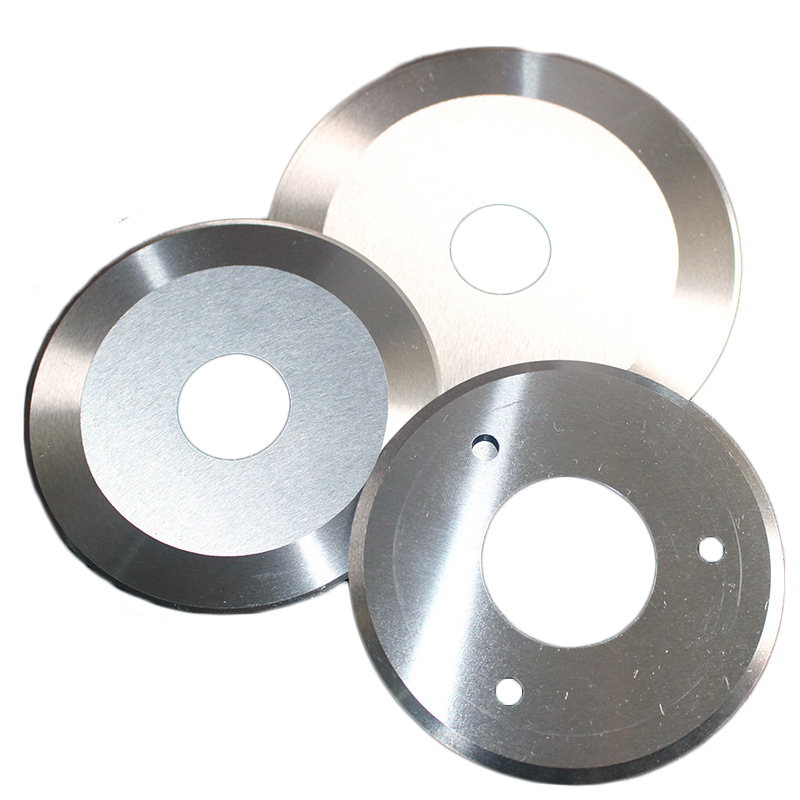
A circular blade is one of the most versatile and widely used cutting tools in modern manufacturing and industrial processing. Whether you are cutting paper, film, metal, rubber, or textile, the circular blade delivers precision, consistency, and long service life when properly selected. Understanding what makes each circular blade type different — and how to choose the right one — is essential for any production engineer, procurement specialist, or plant manager working with slitting, trimming, or cutting equipment.
This guide covers the core circular blade categories, their practical industrial applications, and the key selection criteria that determine cutting performance and tool longevity. By the end, you will have a clear framework for identifying the right circular blade for your specific operation, reducing downtime, waste, and replacement costs.
Main Types of Circular Blades
Flat and Sharpened-Edge Circular Blades
The flat circular blade is the most common configuration in slitting and converting operations. This circular blade type features a precisely ground flat body with a sharpened outer edge, making it ideal for clean straight cuts through materials such as paper, plastic film, aluminum foil, and nonwoven fabrics. The thickness, diameter, and edge bevel angle of a flat circular blade all influence cut quality. A thinner circular blade reduces material drag but may flex under high tension, while a thicker circular blade offers rigidity for demanding industrial applications.
Scored, Serrated, and Specialty Circular Blades
Beyond the flat profile, a circular blade can be manufactured with serrated edges, scored profiles, or beveled geometries tailored to specific substrates. A serrated circular blade grips and tears fibrous materials like corrugated board and thick textiles. A scored circular blade is used in creasing and perforating applications where partial cutting is required rather than full separation. Specialty profiles, such as convex or hollow-ground circular blade designs, are used in food processing, foam cutting, and medical product manufacturing where edge geometry directly affects product quality.
Industrial Applications of Circular Blades
Slitting and Converting Industries
The circular blade is the primary cutting tool in roll-to-roll slitting machines used across the paper, film, foil, and label industries. In these environments, a circular blade operates at high rotational speeds, continuously cutting wide master rolls into narrower finished rolls. The performance of each circular blade in this setting depends on its hardness, grind tolerance, and surface finish. A circular blade with insufficient hardness wears quickly and produces burrs or ragged edges, reducing product quality and increasing scrap rates. Selecting the right circular blade for slitting operations is therefore a direct factor in production efficiency.
Metal Processing and Sheet Cutting
In metal processing, the circular blade takes on a more demanding role. A circular blade used for slitting steel coils, copper strips, or stainless sheets must withstand extreme contact pressures and thermal stress. These circular blade variants are typically made from high-speed steel or tungsten carbide, offering hardness values far exceeding those used in lighter converting applications. The circular blade in metal slitting must also maintain a precise side clearance to prevent material deformation and burr formation. Poor clearance on a circular blade leads to edge quality defects that require secondary processing and add cost.
Packaging, Rubber, and Textile Cutting
Packaging lines rely on the circular blade to score, trim, and slit flexible packaging materials at high speed. In rubber processing, a circular blade must resist chemical exposure and maintain sharpness through abrasive contact. Textile cutting machines use a circular blade to achieve clean, fray-free edges on woven and nonwoven fabrics. Each of these sectors demands a circular blade with a specific combination of material composition, edge geometry, and coating. A circular blade intended for packaging film will not perform reliably in rubber slitting, even if the dimensions appear compatible. Application-specific selection is not optional — it is fundamental to safe and efficient circular blade use.
How to Select the Right Circular Blade
Material Compatibility and Hardness
The first selection factor for any circular blade is material compatibility. The substrate being cut determines the required hardness, toughness, and edge retention of the circular blade. Softer materials like paper and film can be cut effectively with a circular blade made from tool steel or high-carbon steel. Harder materials like metal strip demand a circular blade made from high-speed steel, powder metallurgy steel, or tungsten carbide. Hardness is measured on the Rockwell scale, and a well-specified circular blade will balance hardness with toughness to prevent chipping during high-impact contact. Choosing a circular blade that is too hard for the application can cause brittle fracture, while one that is too soft wears rapidly.
Diameter, Thickness, and Edge Geometry
The physical dimensions of a circular blade must match the machine it operates in. Diameter affects cutting speed and the depth of engagement with the material. A larger-diameter circular blade covers more surface area per revolution but requires more torque. Thickness affects the rigidity and the slit width produced by the circular blade. Edge geometry — whether single bevel, double bevel, or flat grind — determines how the circular blade enters and exits the material. A circular blade with the wrong bevel angle for a given material will produce angled cuts, increased friction, and accelerated wear. Always verify machine specifications before selecting a circular blade to ensure dimensional and geometric compatibility.
Coatings and Surface Treatments
Modern circular blade manufacturing includes a wide range of surface coatings designed to extend service life and improve cutting performance. Titanium nitride (TiN) coating on a circular blade reduces friction and improves wear resistance in film and foil cutting. Chrome plating on a circular blade resists corrosion in wet or chemically aggressive environments. DLC (diamond-like carbon) coating is applied to circular blade tools used in high-speed precision applications where surface smoothness and hardness are critical. Selecting the right coating for your circular blade can significantly reduce replacement frequency and total cost of ownership, making it a factor that deserves as much attention as base material selection.
FAQ
What is the difference between a circular blade and a rotary blade?
The terms are often used interchangeably, but in industrial contexts, a circular blade typically refers to a precision-ground tool mounted on a machine arbor for continuous cutting operations, while a rotary blade may refer to handheld or lighter-duty tools. The circular blade used in slitting machines has tighter dimensional tolerances and higher hardness specifications than most consumer-grade rotary blades.
How often should a circular blade be replaced or resharpened?
The service interval for a circular blade depends on material hardness, cutting speed, and production volume. In high-volume paper or film slitting, a circular blade may require resharpening every few days. In metal slitting, a circular blade may last weeks between service intervals. Monitoring edge quality and cut finish is the most reliable indicator that a circular blade needs attention. Many circular blade types can be reground multiple times before full replacement is necessary.
Can the same circular blade be used for different materials?
In general, using the same circular blade across different material types is not recommended unless the substrates have similar hardness and cutting resistance. A circular blade optimized for plastic film will dull quickly when used on metal foil, and a circular blade designed for steel slitting may produce poor edge quality on soft paper. Matching the circular blade specification to the target material ensures consistent cut quality, longer tool life, and safer machine operation.