 EN
EN

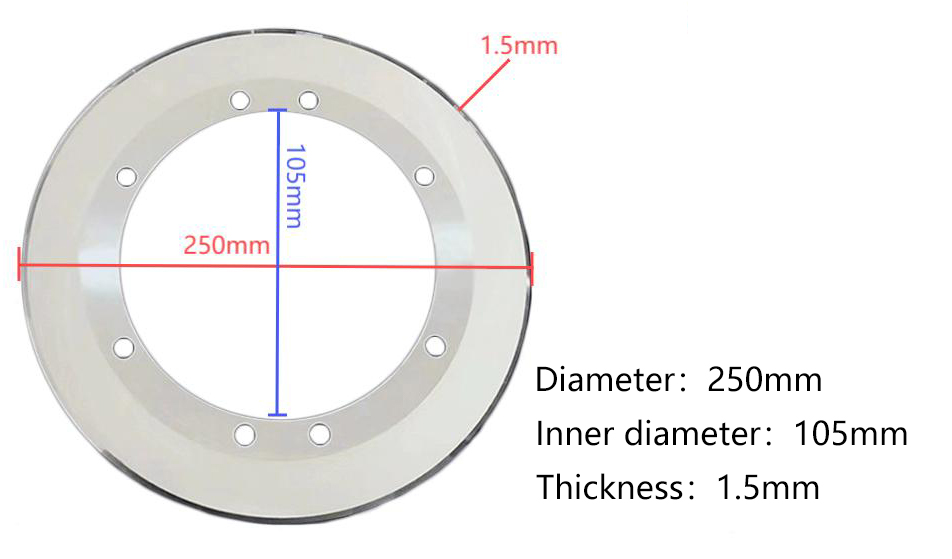
In high-volume packaging and converting environments, the performance of a corrugated cardboard cutting blade directly determines how efficiently a production line runs. A blade that dulls quickly, deflects under pressure, or tears the fluting inside corrugated board creates waste, slows throughput, and drives up operating costs. Choosing the right corrugated cardboard cutting blade is therefore not a minor procurement decision — it is a foundational efficiency lever for any operation that processes corrugated materials at scale.
This article explores what makes a corrugated cardboard cutting blade perform at its best, which material and geometry factors matter most, and how production managers can align blade selection with their specific output goals. Whether you are running a rotary die-cutter, a flatbed system, or a slitting line, understanding the mechanics behind corrugated cardboard cutting blade performance will help you reduce downtime, lower blade replacement frequency, and maintain consistent cut quality across every shift.
Why Blade Design Matters for Corrugated Cutting
The Structural Challenge of Corrugated Board
Corrugated board is not a uniform material. It consists of a fluted inner medium bonded between two flat linerboards, creating a structure that resists compression but responds unpredictably to cutting forces. When a corrugated cardboard cutting blade contacts this composite structure, it must cleanly sever both the dense liner surfaces and the hollow flute channels in a single controlled motion. Any corrugated cardboard cutting blade that lacks sufficient rigidity or sharpness will compress the fluting rather than cutting through it, resulting in crushed edges and dimensional inaccuracy.
The thickness and flute profile of corrugated board also vary significantly across product types — from thin E-flute microwave boxes to heavy-duty double-wall export cartons. A corrugated cardboard cutting blade optimized for light single-wall board may struggle with triple-wall stock. This is why blade selection must be matched to board specification, not treated as a universal fit-all decision.
Geometry and Edge Profile
The bevel angle and edge geometry of a corrugated cardboard cutting blade play a critical role in cut cleanliness. A blade with a fine, acute bevel angle cuts with less force but may chip faster on abrasive recycled liners. A corrugated cardboard cutting blade with a more robust bevel angle holds its edge longer under heavy-duty conditions but requires greater cutting force. Production teams should evaluate bevel geometry alongside board density and liner abrasiveness when specifying a corrugated cardboard cutting blade for their line.
Material Selection for Long-Running Efficiency
High-Speed Steel vs. Carbide Options
The material composition of a corrugated cardboard cutting blade determines how long it stays sharp under continuous industrial use. High-speed steel blades offer a cost-effective entry point and can be re-sharpened multiple times, making them suitable for operations with in-house grinding capabilities. However, a corrugated cardboard cutting blade made from tungsten carbide or carbide-tipped alloy outperforms standard steel in abrasion resistance, especially when cutting boards with high recycled fiber content that carry embedded grit and contaminants.
Carbide corrugated cardboard cutting blade variants typically deliver two to four times the service life of standard steel equivalents under comparable conditions. While the upfront cost is higher, the reduced frequency of blade changes, lower downtime, and more consistent cut quality often make the carbide corrugated cardboard cutting blade the more economical choice at scale. For continuous run operations that cannot afford frequent stoppages, carbide is generally the preferred material class.
Surface Treatments and Coatings
Beyond base material, surface treatments can further extend the operational life of a corrugated cardboard cutting blade. Titanium nitride coatings, for example, reduce surface friction and heat buildup during high-speed cutting, helping the corrugated cardboard cutting blade maintain edge integrity over longer production cycles. Some operations apply specialized polymer coatings to reduce adhesive contamination when cutting printed or laminated corrugated board. Each coating choice should be evaluated based on the specific substrate being cut and the speed of the converting line using that corrugated cardboard cutting blade.
Matching Blade Type to Machine Configuration
Rotary and Slitting Configurations
Rotary slitting systems use circular corrugated cardboard cutting blade formats that engage the board continuously as the web feeds through. In these configurations, the corrugated cardboard cutting blade must maintain concentric accuracy and consistent edge sharpness across the full circumference. Any runout or edge irregularity causes score line deviation that accumulates over long production runs. Selecting a corrugated cardboard cutting blade with precision-ground geometry and tight dimensional tolerances is essential in rotary applications.
For straight-line slitting, a corrugated cardboard cutting blade with a straight or slightly trapezoidal profile is typically used. These blades are mounted in ganged holders and must remain co-planar to prevent skewing the cut. The corrugated cardboard cutting blade in these setups experiences high lateral stress, so rigidity and mount compatibility are critical selection factors alongside material hardness.
Flatbed Die-Cutting Systems
Flatbed die-cutters use rule-based tooling embedded in wooden dies, but the cutting rule itself functions as a corrugated cardboard cutting blade in a linear press motion. The corrugated cardboard cutting blade rule must be tall enough to fully penetrate the board stack while maintaining enough body stiffness to prevent buckling under press force. Operators managing flatbed systems should audit corrugated cardboard cutting blade rule height, bevel type, and hardness specification each time the board grade changes, as even modest differences in caliper or density can affect cut completeness.
FAQ
How often should a corrugated cardboard cutting blade be replaced?
Replacement frequency depends on blade material, board type, and line speed. A corrugated cardboard cutting blade in a high-volume operation cutting abrasive recycled liners may need replacement or re-sharpening every few shifts, while a carbide corrugated cardboard cutting blade on lighter board grades may run for weeks before performance degrades. Monitoring cut edge quality is the most reliable indicator — when edges show compression, tearing, or dimensional drift, the corrugated cardboard cutting blade has reached its service limit.
Can one corrugated cardboard cutting blade work across multiple board grades?
A single corrugated cardboard cutting blade can handle multiple board grades if the range of caliper and density differences is moderate. However, using a corrugated cardboard cutting blade optimized for heavy double-wall board on light single-wall stock can cause over-cutting or edge crumbling, while a blade set up for light board may not fully penetrate heavier grades. For operations running a wide range of specifications, having at least two corrugated cardboard cutting blade configurations — one for lighter and one for heavier stock — is the more reliable approach.
What maintenance practices extend corrugated cardboard cutting blade life?
Regular cleaning to remove paper dust, adhesive residue, and grit buildup is the most impactful maintenance practice for any corrugated cardboard cutting blade. Periodic inspection under magnification helps identify micro-chipping before it causes visible cut defects. Re-sharpening a corrugated cardboard cutting blade at the correct bevel angle restores edge geometry without removing excessive material. Proper storage — keeping each corrugated cardboard cutting blade protected from contact with other metal surfaces — also prevents edge damage between production runs.