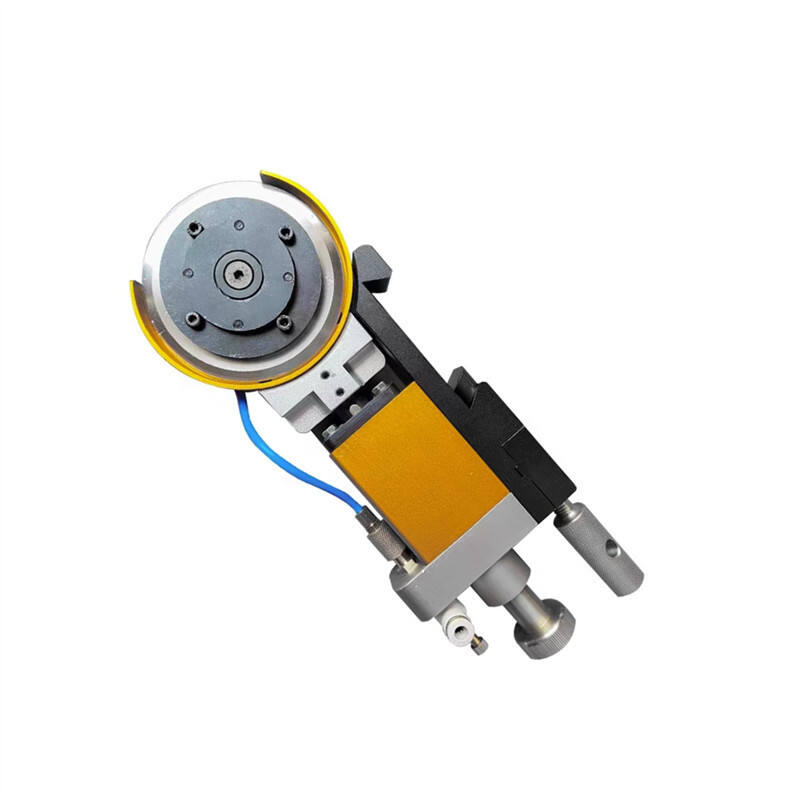
Premium Pneumatic Blade Holder Spare Parts - Enhanced Performance and Reliability for Industrial Cutting Systems

All Categories

Get a Free Quote

Our representative will contact you soon.
Email
WhatsApp
Name
Company Name
Message
0/1000

pneumatic blade holder spare parts

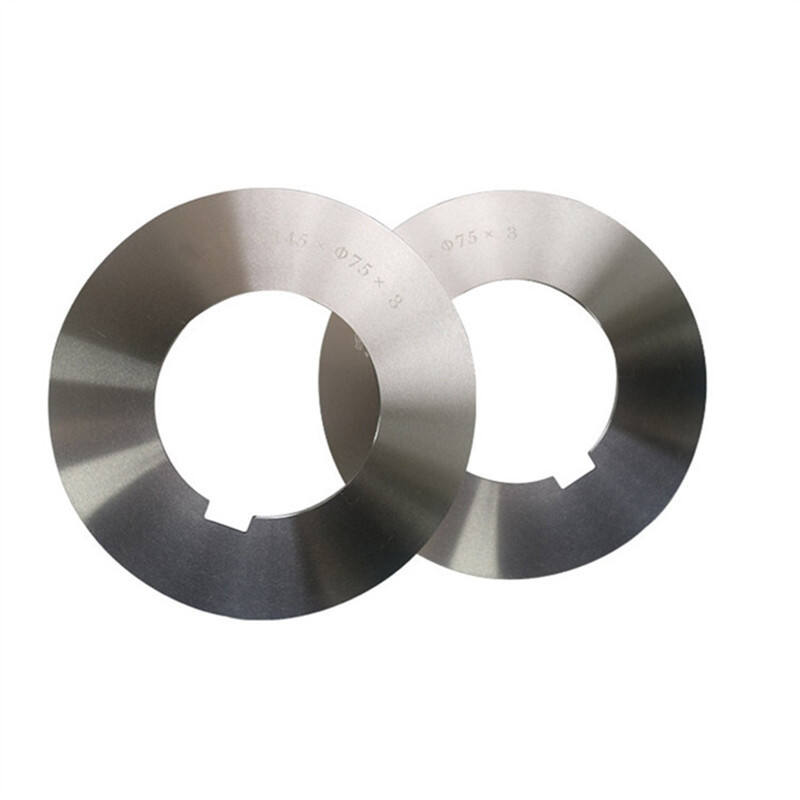
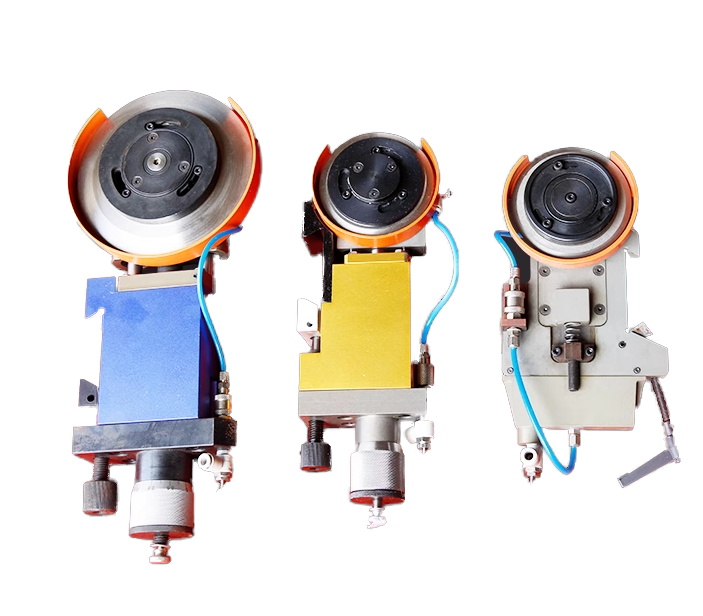
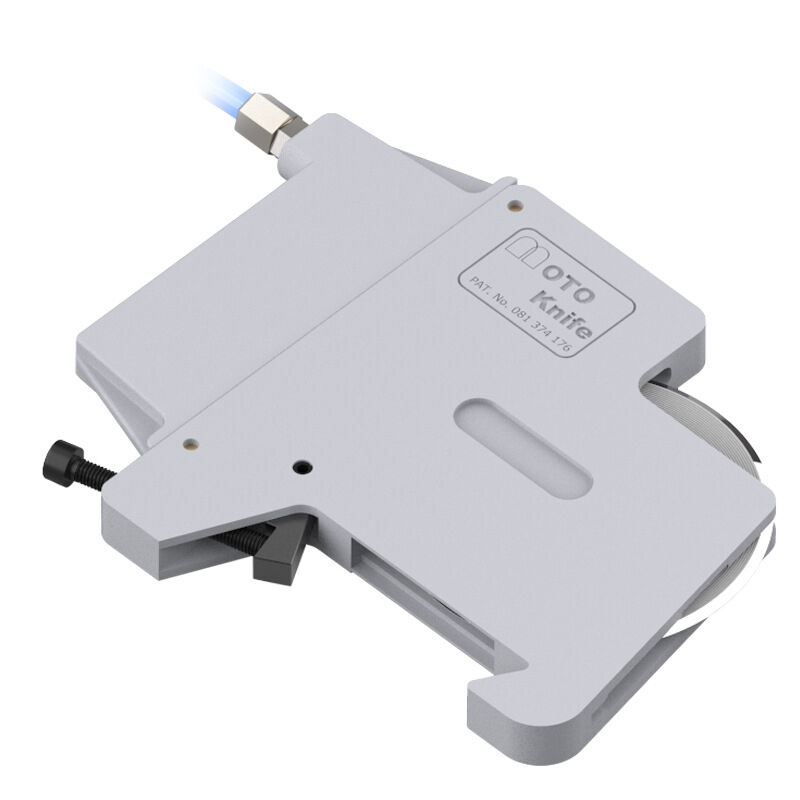
Pneumatic blade holder spare parts represent essential components in modern industrial cutting and processing equipment, serving as critical elements that ensure precision, reliability, and operational efficiency across diverse manufacturing environments. These specialized parts are engineered to work seamlessly within pneumatic blade holding systems, where compressed air power delivers consistent clamping force to secure cutting blades firmly in position during high-speed operations. The pneumatic blade holder spare parts include various elements such as seals, gaskets, pistons, springs, air chambers, mounting brackets, and clamping mechanisms that collectively form a robust system for blade retention and quick changeover capabilities. The main function of pneumatic blade holder spare parts centers on maintaining optimal blade positioning while allowing rapid tool changes without manual adjustments or complex procedures. These components operate through compressed air pressure that activates internal mechanisms to grip and release cutting tools with remarkable speed and accuracy. The technological features embedded within pneumatic blade holder spare parts showcase advanced engineering principles, including precision-machined surfaces that minimize air leakage, corrosion-resistant materials that withstand harsh industrial conditions, and ergonomic designs that facilitate maintenance procedures. Applications for pneumatic blade holder spare parts span numerous industries including packaging, printing, paper converting, textile manufacturing, metal fabrication, and food processing sectors where consistent cutting quality and minimal downtime are paramount. In packaging operations, these pneumatic blade holder spare parts enable continuous production runs with quick blade replacements between different material types or cutting patterns. Printing facilities utilize these components to maintain registration accuracy and blade sharpness throughout extended production schedules. The versatility of pneumatic blade holder spare parts makes them indispensable for operations requiring frequent tool changes, diverse material handling, and stringent quality control standards that demand repeatable positioning accuracy and reliable performance across millions of cutting cycles.

New Products

The advantages of pneumatic blade holder spare parts deliver tangible benefits that directly impact your production efficiency, operational costs, and overall manufacturing quality. First and foremost, these components provide exceptional speed during blade changeovers, allowing operators to swap cutting tools in seconds rather than minutes, which translates to increased production uptime and reduced labor costs associated with setup procedures. The pneumatic actuation mechanism eliminates the need for manual tightening or mechanical adjustments, reducing operator fatigue and minimizing the risk of improper blade installation that could compromise cutting quality or create safety hazards. Another significant advantage lies in the consistent clamping force delivered by pneumatic blade holder spare parts, ensuring that every blade receives identical holding pressure regardless of operator technique or experience level, which promotes uniform cutting results and extends blade life by preventing premature wear caused by inadequate or excessive clamping. The pneumatic system responds instantly to pressure changes, maintaining optimal blade security even during high-speed operations or when processing materials with varying densities and thicknesses. Cost savings emerge through multiple channels when utilizing pneumatic blade holder spare parts, beginning with reduced maintenance requirements compared to mechanical alternatives that suffer from wear on threads, cam surfaces, or lever mechanisms. The simplicity of pneumatic operation means fewer moving parts subject to mechanical failure, resulting in lower replacement part expenses and extended service intervals between major overhauls. Energy efficiency represents another practical benefit, as pneumatic blade holder spare parts consume air only during activation cycles rather than requiring continuous power input like electric systems, contributing to lower utility costs and reduced environmental impact. Safety improvements accompany the adoption of pneumatic blade holder spare parts because the hands-free operation keeps operators away from sharp cutting edges during tool changes, while the secure clamping action prevents blade slippage that could cause material damage or workplace injuries. The pneumatic blade holder spare parts also accommodate various blade sizes and styles without requiring different holders or extensive adjustments, providing operational flexibility that allows manufacturers to respond quickly to changing production requirements or customer specifications. Durability stands out as a key advantage, with quality pneumatic blade holder spare parts manufactured from premium materials that resist corrosion, withstand temperature extremes, and maintain dimensional stability throughout millions of operational cycles, ensuring long-term reliability and predictable performance that production managers can depend upon for meeting delivery schedules and quality commitments.

Latest News

Industrial Corrugated Cardboard Cutting Blade Selection Tips

25

Mar

Industrial Corrugated Cardboard Cutting Blade Selection Tips

Selecting the right cutting blade for corrugated cardboard processing operations represents a critical decision that directly impacts production efficiency, product quality, and operational costs. Industrial facilities handling large volumes of corru...
View More
Maximizing ROI with Quality Corrugated Cardboard Cutting Blade

25

Mar

Maximizing ROI with Quality Corrugated Cardboard Cutting Blade

In today's competitive packaging industry, maximizing return on investment requires strategic investments in high-quality equipment and tools. The efficiency of your corrugated cardboard production line directly impacts your bottom line, and selectin...
View More
How to Choose the Perfect Metal Cutting Blade: Pro Guide

06

May

How to Choose the Perfect Metal Cutting Blade: Pro Guide

Selecting the right metal cutting blade is a critical decision that directly impacts production efficiency, cut quality, blade lifespan, and overall operational costs in industrial metalworking operations. Whether you're processing thin gauge steel, ...
View More
Leather Cutting Blade Maintenance: Essential Tips

30

Apr

Leather Cutting Blade Maintenance: Essential Tips

Proper maintenance of your leather cutting blade directly determines the quality of your cuts, the longevity of your equipment, and the efficiency of your production workflow. Whether you operate a small leather workshop or manage a large-scale manuf...
View More

Get a Free Quote

Our representative will contact you soon.
Email
WhatsApp
Name
Company Name
Message
0/1000

pneumatic blade holder spare parts

Rapid Tool Change Capability Maximizes Production Efficiency

Rapid Tool Change Capability Maximizes Production Efficiency

The rapid tool change capability inherent in pneumatic blade holder spare parts stands as a transformative feature that fundamentally alters production workflow dynamics and operational efficiency metrics. This characteristic addresses one of the most persistent challenges in manufacturing environments where frequent blade changes are necessary due to material variations, wear progression, or product changeovers. Traditional mechanical blade holders require operators to manually loosen fasteners, remove worn blades, position new cutting tools, and carefully retighten clamping mechanisms while ensuring proper alignment and adequate holding force. This labor-intensive process consumes valuable production time, introduces variability based on operator skill levels, and creates bottlenecks that interrupt material flow through processing lines. Pneumatic blade holder spare parts revolutionize this procedure by incorporating compressed air actuation that opens and closes the blade clamping mechanism with simple valve control, typically accomplished through a button press or lever activation. The entire blade exchange sequence completes in mere seconds, allowing operators to maintain production rhythm and minimize idle machine time. This speed advantage multiplies across production shifts, accumulating significant additional output capacity without requiring equipment purchases or facility expansion. The financial implications prove substantial when calculated across annual operations, as even modest reductions in changeover duration translate to hundreds of additional production hours available for revenue-generating activities. Beyond raw speed, the consistency of pneumatic actuation ensures that every blade change follows identical procedures with repeatable positioning accuracy, eliminating the variables introduced by manual techniques where tightening force, alignment judgment, and installation sequence differ between operators or even between successive changes by the same individual. This consistency directly impacts product quality by maintaining precise cutting depths, edge positions, and blade angles that determine final product specifications. Manufacturers serving quality-sensitive markets particularly value this reliability, as it reduces inspection requirements, minimizes material waste from out-of-specification products, and strengthens customer confidence through consistent delivery of products meeting exact requirements. The ergonomic benefits accompanying rapid pneumatic tool changes also merit consideration, as operators avoid repetitive stress associated with manual tightening actions that strain wrists, hands, and shoulders over thousands of blade changes annually. Improved workplace safety emerges naturally from pneumatic systems that eliminate the need for operators to apply leverage near sharp cutting edges or work with tools that could slip and cause injuries.
Consistent Clamping Force Ensures Superior Cutting Performance

Consistent Clamping Force Ensures Superior Cutting Performance

Consistent clamping force delivered by pneumatic blade holder spare parts represents a critical performance parameter that directly influences cutting quality, blade longevity, and operational reliability across diverse manufacturing applications. Understanding the importance of this feature requires recognizing how blade holding force affects the cutting process at both macroscopic and microscopic levels. Insufficient clamping pressure allows blade movement during cutting operations, creating vibration that manifests as rough cut edges, dimensional inaccuracies, and accelerated blade wear as the cutting edge impacts material at inconsistent angles and with variable engagement depths. Conversely, excessive clamping force can deform blade mounting surfaces, stress blade materials beyond design limits, and create uneven pressure distribution that promotes premature failure through cracking or breaking. Achieving the optimal clamping force consistently proves challenging with mechanical systems where human operators must judge proper tightness through tactile feedback, torque application, or observation of mechanical indicator positions. Pneumatic blade holder spare parts eliminate this variability by employing regulated air pressure that delivers mathematically predictable force according to piston area and supply pressure specifications. Once system pressure is established during initial setup, every subsequent blade change receives identical clamping force without operator intervention or judgment, ensuring that the first blade of the production day performs identically to the last blade of the night shift. This consistency extends blade operational life because cutting edges maintain optimal geometry relative to workpiece materials throughout their service duration, avoiding the uneven wear patterns that develop when blades shift position or vibrate during use. Material waste decreases correspondingly, as consistent clamping produces uniform cuts that meet dimensional tolerances without requiring extra material allowances to compensate for variable cutting performance. The pneumatic system automatically compensates for minor variations in blade thickness or mounting surface conditions by distributing clamping force evenly across contact areas, accommodating real-world manufacturing tolerances without compromising holding security. This adaptive characteristic proves particularly valuable when using blades from different suppliers or when processing materials that subject blades to thermal expansion during extended cutting runs. Quality control personnel appreciate the predictable performance enabled by consistent clamping force from pneumatic blade holder spare parts, as statistical process control becomes more meaningful when mechanical variables are eliminated from the equation. Troubleshooting procedures simplify dramatically when blade holding force remains constant, allowing technicians to focus investigation efforts on material properties, blade sharpness, or machine alignment rather than questioning whether clamping pressure contributed to quality deviations.
Maintenance Simplicity Reduces Operational Costs and Downtime

Maintenance Simplicity Reduces Operational Costs and Downtime

Maintenance simplicity inherent in pneumatic blade holder spare parts delivers substantial operational advantages that extend far beyond the immediate convenience of straightforward servicing procedures, encompassing cost reductions, improved equipment availability, and enhanced production reliability that collectively strengthen competitive positioning. The fundamental design philosophy underlying pneumatic systems favors simplicity and accessibility, with pneumatic blade holder spare parts typically incorporating modular construction that allows individual component replacement without disassembling entire assemblies or removing equipment from production lines. This architecture contrasts sharply with mechanical blade holders featuring complex cam mechanisms, multiple threaded fasteners, or integrated components that require complete replacement when any single element fails. When maintenance becomes necessary for pneumatic blade holder spare parts, technicians can quickly identify affected components through visual inspection or simple pressure testing, eliminating the time-consuming diagnostic procedures required for mechanical systems where wear may not be immediately apparent until complete failure occurs. Component replacement procedures typically involve disconnecting air lines, removing a few mounting fasteners, installing new parts, and reconnecting air supply, with total elapsed time measured in minutes rather than hours. This efficiency minimizes production interruptions, allowing maintenance activities to occur during brief scheduled breaks or shift changes rather than requiring dedicated downtime that impacts delivery schedules and customer commitments. The cost implications of simplified maintenance prove significant when examined across equipment lifecycle periods, as pneumatic blade holder spare parts generally feature lower individual component costs compared to precision mechanical assemblies requiring specialized machining or heat treatment. Inventory management benefits emerge from the relatively small number of distinct spare parts required to support pneumatic systems, reducing capital tied up in spare parts stock while ensuring that necessary components remain available when needed. Training requirements for maintenance personnel decrease substantially with pneumatic systems, as the straightforward operating principles and accessible component layouts allow technicians to develop proficiency quickly without extensive specialized instruction or certification programs. This accessibility proves particularly valuable for facilities operating multiple shifts or remote locations where immediate access to highly specialized technicians may not be practical. Preventive maintenance schedules for pneumatic blade holder spare parts typically extend longer intervals compared to mechanical alternatives because fewer components experience wear from friction or repeated stress cycling, with primary maintenance activities limited to seal replacement, lubrication checks, and air pressure verification. The predictable wear patterns of pneumatic components enable condition-based maintenance strategies where replacement occurs based on actual component condition rather than arbitrary time intervals, optimizing maintenance spending while avoiding premature replacement of serviceable parts or unexpected failures from extended service beyond recommended limits.

Get a Free Quote

Our representative will contact you soon.
Email
WhatsApp
Name
Company Name
Message
0/1000
Newsletter
Please Leave A Message With Us