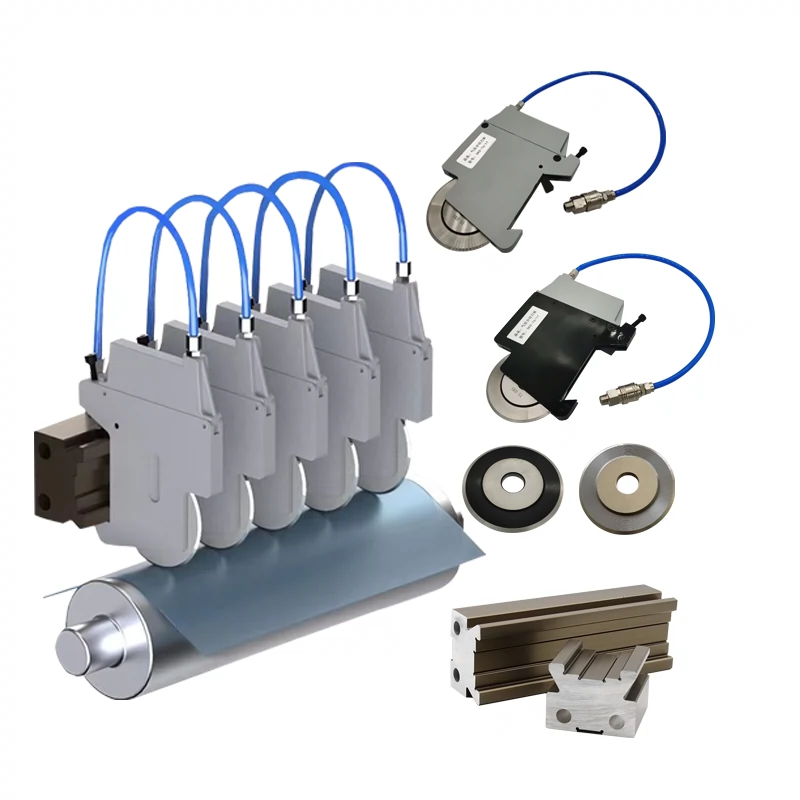
Pneumatic Air Blade Systems: Energy-Efficient Industrial Drying and Cleaning Solutions

All Categories

Get a Free Quote

Our representative will contact you soon.
Email
WhatsApp
Name
Company Name
Message
0/1000

pneumatic air blade

The pneumatic air blade represents a sophisticated solution in industrial drying, cleaning, and material handling applications. This innovative device harnesses compressed air to generate a powerful, uniform curtain of high-velocity air that effectively removes water, debris, dust, and contaminants from various surfaces and products. Unlike traditional blower systems, the pneumatic air blade operates without mechanical moving parts in the air delivery section, relying instead on precisely engineered nozzles that convert compressed air into a laminar, high-impact airflow. The fundamental design incorporates a manifold chamber connected to a compressed air source, distributing pressure evenly across multiple discharge points or a continuous slot opening. This configuration creates a consistent air knife effect capable of covering wide surface areas with remarkable efficiency. Manufacturing facilities across diverse sectors have adopted pneumatic air blade technology to enhance production line performance, improve product quality, and reduce operational costs. The versatility of the pneumatic air blade extends to applications ranging from drying bottles and containers in beverage production to removing coolant from machined parts in metalworking operations. Food processing plants utilize these systems to eliminate excess moisture from packaged goods before labeling or packaging. The pneumatic air blade also proves invaluable in electronics manufacturing, where removing particulate contamination is critical to maintaining product integrity. The compact footprint and modular design allow for easy integration into existing production lines without requiring extensive modifications. Modern pneumatic air blade systems incorporate adjustable air pressure controls, enabling operators to optimize performance based on specific application requirements. The absence of heating elements in most configurations makes the pneumatic air blade an energy-efficient alternative to thermal drying methods, significantly reducing energy consumption while maintaining high throughput rates. Installation flexibility permits mounting in horizontal, vertical, or angled orientations to accommodate diverse production environments and spatial constraints.

Popular Products

Implementing a pneumatic air blade system delivers substantial operational benefits that directly impact your bottom line and production efficiency. The most immediate advantage is the dramatic reduction in energy consumption compared to conventional drying methods. Because the pneumatic air blade uses ambient temperature compressed air rather than heated air, it eliminates the substantial electrical load associated with heating elements, translating to lower utility bills month after month. Your maintenance schedule becomes simpler and more predictable since the pneumatic air blade contains no motors, belts, or rotating components that require regular replacement or lubrication. This reliability means fewer unexpected breakdowns and less production downtime, allowing your operation to maintain consistent output levels. The system operates quietly compared to traditional blowers, creating a more comfortable working environment for your staff while still delivering powerful drying and cleaning performance. You gain precise control over air pressure and flow patterns, enabling customization for different products or surfaces without changing equipment. This adaptability proves especially valuable in facilities that handle multiple product lines or frequently adjust production parameters. The pneumatic air blade generates a uniform air curtain across its entire length, ensuring consistent results regardless of product positioning within the treatment zone. This uniformity eliminates the hot spots and uneven drying patterns common with other technologies, reducing quality control issues and product rejection rates. Installation requires minimal infrastructure changes, as the system connects directly to your existing compressed air supply without demanding dedicated electrical circuits or complex ventilation arrangements. The compact profile fits into tight spaces where bulky blower assemblies would prove impractical, maximizing your available floor space for revenue-generating equipment. Cleaning and maintenance take minutes rather than hours, with accessible nozzle designs that allow quick inspection and debris removal without specialized tools. Your environmental footprint shrinks as the pneumatic air blade operates without chemicals, produces no emissions, and consumes significantly less energy than thermal alternatives. The initial investment pays for itself through reduced operating costs, extended equipment lifespan, and improved product quality that enhances customer satisfaction and reduces waste.

Tips And Tricks

What is the difference between a combination blade and a ripping or crosscutting blade?

25

Mar

What is the difference between a combination blade and a ripping or crosscutting blade?

What is the Difference Between a Combination Blade and a Ripping or Crosscutting Blade? In woodworking, the type of saw blade you use directly affects the quality of your cuts, the efficiency of your work, and even the lifespan of your tools. Three c...
View More
Maximizing ROI with Quality Corrugated Cardboard Cutting Blade

25

Mar

Maximizing ROI with Quality Corrugated Cardboard Cutting Blade

In today's competitive packaging industry, maximizing return on investment requires strategic investments in high-quality equipment and tools. The efficiency of your corrugated cardboard production line directly impacts your bottom line, and selectin...
View More
Paper Cutting Blade Safety: Essential Guidelines

23

Apr

Paper Cutting Blade Safety: Essential Guidelines

Workplace safety incidents involving paper cutting blade equipment account for thousands of injuries annually across commercial and industrial facilities. From minor cuts to severe lacerations requiring medical attention, these incidents often stem f...
View More
Choosing the Best Circular Knife for Fabric Cutting

30

Mar

Choosing the Best Circular Knife for Fabric Cutting

Selecting the right circular knife for fabric cutting represents one of the most critical decisions in textile manufacturing and processing operations. The precision, efficiency, and quality of your fabric cutting directly impacts production costs, m...
View More

Get a Free Quote

Our representative will contact you soon.
Email
WhatsApp
Name
Company Name
Message
0/1000

pneumatic air blade

Superior Energy Efficiency and Cost Savings

Superior Energy Efficiency and Cost Savings

The pneumatic air blade stands out in industrial settings primarily because of its exceptional energy efficiency that directly reduces operational expenses while maintaining superior performance standards. Traditional drying and cleaning systems often rely on electrically powered blowers or heating elements that consume substantial amounts of electricity, sometimes requiring dedicated high-capacity circuits and contributing significantly to monthly utility bills. The pneumatic air blade transforms this equation by utilizing compressed air that many facilities already generate for other pneumatic tools and processes. This approach eliminates redundant energy conversion steps and capitalizes on existing infrastructure investments. The system operates at ambient temperature in most applications, completely removing the energy demand associated with heating large volumes of air to elevated temperatures. When you calculate the cumulative energy savings over months and years of continuous operation, the difference becomes substantial enough to impact overall facility profitability. Beyond the direct energy savings, the pneumatic air blade reduces thermal load in your facility, potentially decreasing air conditioning requirements in climate-controlled environments. The absence of heat generation also means safer working conditions around the equipment, as operators face no burn hazards from hot surfaces or superheated air streams. Maintenance costs drop dramatically because the simple construction includes fewer components that wear out or fail compared to motor-driven systems. You avoid the recurring expenses of replacing bearings, belts, motors, and electrical components that plague conventional blowers. The longevity of pneumatic air blade systems extends for years with minimal intervention, providing predictable operating costs that simplify budget planning. When compressed air supply is properly managed and efficiently generated, the overall cost per unit of product dried or cleaned often falls below alternative methods. The return on investment accelerates in high-volume production environments where the equipment operates continuously throughout multiple shifts, maximizing the cumulative savings from reduced energy consumption and maintenance requirements.
Consistent Performance and Quality Assurance

Consistent Performance and Quality Assurance

Manufacturing excellence demands unwavering consistency in every process step, and the pneumatic air blade delivers precisely this reliability through its engineered approach to air delivery and surface treatment. The fundamental design principle centers on creating a uniform laminar airflow across the entire working width, ensuring that every portion of your product receives identical treatment regardless of position within the processing zone. This uniformity eliminates the quality variations that plague systems with uneven airflow distribution, where some areas receive excessive treatment while others remain inadequately processed. The precision-machined nozzles or slot openings in a pneumatic air blade maintain consistent gap dimensions and air discharge angles, producing predictable results that remain stable throughout extended production runs. Unlike mechanical blowers whose performance can drift as components wear or become contaminated, the pneumatic air blade maintains specifications because it lacks moving parts in the air delivery section. Your quality control metrics improve as product-to-product variation decreases, reducing rejection rates and rework requirements that waste materials and labor. The adjustability built into modern pneumatic air blade systems allows fine-tuning of air pressure and flow characteristics to match specific product requirements, then locking those settings to ensure repeatability across production batches. This capability proves invaluable when regulatory compliance or customer specifications demand tight tolerances on moisture content, cleanliness levels, or surface finish characteristics. The laminar flow pattern generated by the pneumatic air blade prevents turbulence that could redeposit contaminants onto cleaned surfaces or create uneven drying patterns. The consistent standoff distance and air velocity profile mean that delicate products receive gentle treatment while robust items experience vigorous cleaning action, all through simple pressure adjustments rather than equipment changes. Temperature stability represents another quality advantage, as the pneumatic air blade operates at ambient temperature without fluctuations caused by heating element cycling or thermal lag in startup conditions. This temperature consistency matters particularly in applications involving heat-sensitive products or where dimensional stability depends on maintaining specific thermal conditions. The reliable performance translates directly to customer satisfaction, as your delivered products meet specifications consistently without the quality excursions that damage reputation and trigger complaints.
Versatile Applications and Easy Integration

Versatile Applications and Easy Integration

The adaptability of the pneumatic air blade across diverse industrial applications represents one of its most compelling advantages, offering solutions to challenges in numerous manufacturing environments and process configurations. From food and beverage production lines where hygiene and sanitation requirements are stringent, to heavy industrial metalworking operations involving cutting fluids and metal chips, the pneumatic air blade adjusts to meet vastly different operational demands. In packaging operations, the system removes excess moisture from containers before labeling, ensuring adhesives bond properly and labels remain securely attached throughout distribution and storage. Pharmaceutical manufacturing facilities employ pneumatic air blade technology to maintain the cleanliness standards essential for product safety and regulatory compliance, removing particulate contamination from vials, bottles, and packaging materials. Electronics assembly operations depend on these systems to eliminate static-attracting dust particles that could compromise circuit board functionality or create defects in sensitive components. The printing industry uses pneumatic air blade installations to dry inks and coatings, control web tension, and remove paper dust that would otherwise cause quality defects or equipment jams. Automotive manufacturers integrate these systems into painting processes, parts washing stations, and final assembly operations where cleanliness directly affects product performance and customer satisfaction. The modular construction of pneumatic air blade systems facilitates integration into existing production lines without requiring extensive downtime or costly infrastructure modifications. Mounting brackets and adjustment mechanisms accommodate various installation angles and positions, allowing engineers to optimize placement for maximum effectiveness within space constraints. The connection to compressed air supplies uses standard fittings and hose sizes, simplifying installation and enabling quick repositioning when production layouts change. Control integration options range from simple manual valves to sophisticated automated systems that adjust air pressure based on line speed, product type, or quality sensor feedback. This flexibility means the pneumatic air blade grows with your operation, adapting to evolving production requirements rather than becoming obsolete when processes change. The ability to cascade multiple units or create custom lengths by joining modular sections ensures that the system scales appropriately whether treating narrow products or wide web materials spanning several meters.

Get a Free Quote

Our representative will contact you soon.
Email
WhatsApp
Name
Company Name
Message
0/1000
Newsletter
Please Leave A Message With Us