 EN
EN

Selecting the appropriate leather cutting blade is fundamental to achieving precision, efficiency, and quality in leather processing operations. Whether you operate a small craft workshop or manage an industrial leather goods manufacturing facility, understanding the distinct characteristics, applications, and performance parameters of different blade types directly impacts your production outcomes, material utilization rates, and overall operational costs. The diversity of leather types—from soft garment leather to thick saddle leather—combined with varying cutting techniques and machinery configurations necessitates a comprehensive understanding of blade options to match specific processing requirements.
This comprehensive guide explores the full spectrum of leather cutting blade types available in modern leather processing, examining their design principles, material compositions, edge geometries, and optimal application contexts. By understanding how blade characteristics align with specific leather properties and cutting operations, you can make informed procurement decisions that enhance cut quality, extend blade service life, reduce material waste, and improve worker safety. The classification system presented here encompasses manual craft blades, industrial machine blades, and specialized cutting tools, providing practical guidance for matching blade selection to your specific leather processing needs.
Straight Edge Leather Cutting Blades
Fixed Straight Blade Construction and Applications
Fixed straight leather cutting blade designs represent the most traditional and widely used configuration in both craft and industrial leather processing. These blades feature a rigid, non-folding construction with a straight cutting edge that extends from the handle or mounting system, offering maximum stability and control during cutting operations. The straight edge geometry enables consistent pressure distribution along the entire cutting line, making these blades particularly effective for long, continuous cuts through both soft and medium-weight leathers. Manufacturing facilities commonly employ fixed straight blades in manual cutting tables, guided cutting systems, and semi-automated equipment where operator control and cut precision are paramount.
The blade length in fixed straight configurations typically ranges from compact utility sizes of four to six inches for detailed work up to industrial lengths exceeding twelve inches for cutting large leather panels and hides. Longer blade lengths provide extended reach and reduce the number of repositioning movements required during cutting, improving operational efficiency in high-volume production environments. The thickness of the blade stock influences both rigidity and cutting characteristics, with thicker blades offering greater resistance to flexing under pressure but requiring more force to penetrate thicker leather materials. Professional leather processors often maintain multiple fixed straight blade lengths to accommodate different cutting tasks and leather dimensions within their production workflow.
Replaceable Straight Blade Systems
Replaceable straight blade systems incorporate disposable or easily exchangeable cutting edges into ergonomic handle assemblies, combining the precision of straight edge cutting with operational convenience and safety. These systems allow operators to quickly swap dull blades for sharp replacements without specialized sharpening equipment or extended downtime, maintaining consistent cut quality throughout production shifts. The standardized blade dimensions and mounting mechanisms in replaceable systems ensure precise positioning and secure retention during cutting operations, eliminating the performance variability that can occur with individually sharpened tools. Industrial leather cutting operations particularly value replaceable blade systems for their contribution to worker safety, as handling and disposing of pre-packaged blades reduces direct contact with sharp edges compared to traditional sharpening procedures.
Modern replaceable leather cutting blade designs incorporate advanced safety features including retractable mechanisms, blade guards, and secure locking systems that prevent accidental blade exposure during handling and storage. The economic considerations of replaceable versus resharpenable blades depend on production volume, labor costs, and quality consistency requirements. High-volume operations often find that the labor savings and consistent performance of replaceable blade systems offset the higher per-blade material costs, while smaller workshops with lower cutting volumes may prefer traditional resharpenable blades. The selection between these approaches should account for total cost of ownership including blade purchase costs, sharpening equipment investment, labor time allocation, and the value of maintaining uniform cut quality across production batches.
Curved and Specialized Edge Configurations
Hook Blade Geometry for Controlled Cutting
Hook-style leather cutting blade configurations feature a curved cutting edge with the sharpened surface positioned on the concave interior of the curve, creating a controlled cutting action that pulls the blade through the material rather than pushing it forward. This geometry proves particularly advantageous when cutting softer leathers and delicate materials where excessive forward pressure could cause stretching, distortion, or unintended material compression. The hook shape naturally guides the cutting path and reduces the lateral force required from the operator, resulting in less fatigue during extended cutting sessions and improved precision when following complex pattern contours. Upholstery work, garment leather cutting, and detailed craft applications frequently utilize hook blade configurations for their combination of control and reduced material stress.
The radius of curvature in hook blade designs significantly influences cutting characteristics and application suitability. Tighter curve radiuses create more aggressive cutting action suitable for thicker materials and faster cutting speeds, while gentler curves provide enhanced control for intricate pattern work and delicate materials. Professional leather workers often select hook blade curvature based on the primary leather weight they process, with separate tools designated for heavy harness leather versus lightweight garment materials. The sharpening and maintenance of hook blades requires specialized techniques to preserve the precise curve geometry and interior edge angle, as improper sharpening can alter the blade's cutting characteristics and reduce effectiveness. Industrial facilities processing diverse leather types typically maintain an inventory of hook blades with varying curve radiuses to accommodate their full range of cutting requirements.
Rotary Blade Technology for Continuous Cutting
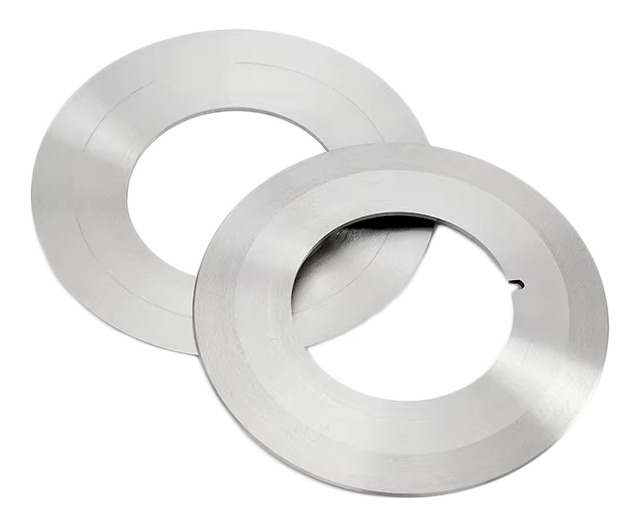
Rotary leather cutting blade systems employ circular cutting discs that rotate during the cutting operation, presenting a continuously fresh cutting edge to the material and enabling extended cutting paths without blade repositioning. This configuration excels in applications requiring long, straight cuts through leather materials, such as strap cutting, belt manufacturing, and large panel dimensioning. The rolling action of rotary blades reduces friction compared to dragging a straight edge through material, resulting in cleaner cut edges with minimal material compression or distortion. Motorized rotary cutting equipment further enhances these advantages by maintaining consistent blade speed and pressure, delivering uniform cut quality across production runs and reducing operator fatigue in high-volume manufacturing environments.
The diameter of rotary leather cutting blade discs influences both cutting capacity and operational characteristics. Larger diameter blades can cut through thicker leather materials and maintain sharpness longer due to the greater circumference distributing wear across more cutting edge, while smaller diameter blades offer enhanced maneuverability for curved cutting paths and detailed work. Blade thickness and edge geometry in rotary configurations must be precisely matched to leather characteristics and cutting equipment specifications. Thinner rotary blades produce narrower kerfs with less material waste but may lack the rigidity required for thick, dense leathers. The selection of appropriate leather cutting blade diameter and thickness should consider material properties, desired cutting speed, equipment compatibility, and the balance between blade service life and cut quality requirements specific to your production application.
Industrial Machine Blade Configurations
Beam Press and Die Cutting Blades
Beam press and die cutting operations utilize specialized leather cutting blade forms integrated into steel rule dies that stamp precise shapes from leather materials in a single pressing action. These blade configurations consist of continuous steel strips formed into the desired cutting pattern and mounted within a die base, with the cutting edge positioned to penetrate the leather when hydraulic or mechanical pressure is applied. The blade height, thickness, and edge geometry must be precisely engineered to achieve clean separation of the cut piece from surrounding material without excessive die penetration that could damage cutting surfaces or create ragged edges. Industrial leather goods manufacturing relies heavily on die cutting systems for high-volume production of consistent components including shoe uppers, bag panels, wallet pieces, and decorative leather elements.
The steel rule blade material used in die construction significantly impacts cutting performance and die service life. Hardened tool steel provides excellent edge retention and dimensional stability under repeated high-pressure cutting cycles, making it the preferred choice for long production runs and dense leather materials. The blade cross-sectional profile varies based on leather characteristics and cutting requirements, with standard rectangular profiles suitable for most applications and specialized profiles including beveled edges or tapered configurations for specific material behaviors. Die cutting blade height must be carefully calculated to provide sufficient penetration through the thickest portions of the leather without extending so far that excessive force is required or cutting platform damage occurs. Professional die manufacturers consider leather compressibility, thickness variation, and cutting equipment specifications when engineering blade dimensions for optimal performance.
Band Knife and Straight Knife Machine Blades
Band knife cutting systems employ continuous loop leather cutting blade configurations that run over rotating wheels, presenting a constantly moving cutting edge to stationary or guided leather materials. The endless band design eliminates the reciprocating motion and associated vibration of straight knife systems, enabling smoother cuts through thick leather materials and improved edge quality on difficult-to-cut leathers including those with adhesive backing or multiple laminated layers. Band knife blade width, thickness, and tooth configuration must be matched to the cutting equipment's wheel diameter and the specific leather processing application. Wider blades provide greater cutting stability for thick materials but reduce the minimum curve radius that can be cut, while narrower blades enable tighter curves at the expense of reduced rigidity for straight cutting operations.
Straight knife machine configurations utilize reciprocating vertical blade motion to cut through stacked leather layers or thick single pieces positioned on the cutting table. These leather cutting blade systems feature rigid, straight-edged blades mounted in a powered carriage that moves vertically at high frequency while the operator guides the cutting head along the desired cutting path. The blade length in straight knife machines typically ranges from six to fourteen inches depending on the maximum material thickness the equipment is designed to process. Edge geometry and sharpening angles for straight knife blades require optimization based on leather density and cutting speed, with more acute angles providing easier penetration through soft materials but reduced edge durability, while larger sharpening angles offer extended service life in dense, heavy leathers. Regular blade maintenance including proper sharpening, tension adjustment in band systems, and alignment verification ensures consistent cutting performance and extends blade service life in industrial production environments.
Blade Material Composition and Treatment
Carbon Steel Blade Properties
Carbon steel represents the traditional material choice for leather cutting blade manufacturing, offering an optimal balance of hardness, edge retention, and sharpening ease that suits diverse leather processing applications. High-carbon steel formulations typically contain between 0.6 and 1.4 percent carbon content, with higher carbon levels producing harder blades capable of maintaining sharp edges through extended cutting operations. The metallurgical structure of carbon steel allows craftsmen and tool maintenance personnel to achieve extremely sharp edges using conventional sharpening equipment and techniques, making these blades particularly popular in workshops and facilities with established sharpening capabilities. Carbon steel blades can be repeatedly sharpened throughout their service life, with proper maintenance enabling thousands of cutting cycles before material loss reduces blade dimensions beyond usable parameters.
The primary limitation of carbon steel leather cutting blade construction involves susceptibility to corrosion when exposed to moisture, certain leather tanning chemicals, and humid environmental conditions common in leather processing facilities. Unprotected carbon steel surfaces rapidly develop rust that degrades cutting performance and can transfer staining to light-colored leather materials. Protective measures including regular oil coating, storage in controlled humidity environments, and prompt cleaning after contact with wet or chemically treated leathers help mitigate corrosion issues. Some manufacturers apply protective coatings including chrome plating or specialized corrosion-resistant treatments to carbon steel blades, though these coatings may reduce the ultimate sharpness achievable compared to bare steel edges. The selection of carbon steel blades remains appropriate for many leather cutting applications where their superior sharpening characteristics and cost-effectiveness outweigh corrosion management requirements.
Stainless Steel and Specialty Alloy Options
Stainless steel leather cutting blade formulations incorporate chromium and other alloying elements that provide inherent corrosion resistance, eliminating the rust formation issues associated with carbon steel in humid or chemically active leather processing environments. Modern martensitic stainless steel grades including 440C and proprietary formulations achieve hardness levels and edge retention capabilities approaching or matching carbon steel performance while maintaining the corrosion resistance advantages of stainless construction. These materials prove particularly valuable when cutting wet blue or chrome-tanned leathers containing residual chemicals that accelerate corrosion, in high-humidity tropical manufacturing facilities, and in applications where blade contact with light-colored leathers makes any rust staining unacceptable. The additional material cost of stainless steel blades is often justified by extended service life in corrosive environments and elimination of protective coating maintenance requirements.
Advanced blade materials including powder metallurgy tool steels and carbide-tipped configurations represent specialized options for demanding leather cutting applications requiring maximum edge retention or processing of particularly abrasive materials. Powder metallurgy steels feature extremely fine, uniform grain structures that enable superior sharpness combined with excellent wear resistance, extending the interval between sharpening operations in high-volume production environments. Carbide-tipped leather cutting blade designs position ultra-hard carbide material at the cutting edge while maintaining a tougher steel body, combining edge durability with resistance to blade fracture under impact or lateral stress. These premium blade materials command significantly higher initial costs but may deliver favorable total cost of ownership in specific applications through reduced sharpening frequency, extended replacement intervals, and improved cut quality consistency. Material selection should consider the specific leather types processed, production volume, environmental conditions, and the balance between blade acquisition costs and operational performance requirements unique to your facility.
Blade Edge Geometry and Sharpening Considerations
Cutting Edge Angle Optimization
The sharpening angle of a leather cutting blade fundamentally determines its penetration characteristics, edge durability, and suitability for different leather types and cutting operations. Acute edge angles typically ranging from fifteen to twenty degrees create extremely sharp cutting edges that slice through soft, thin leathers with minimal force, reducing material distortion and operator fatigue during detailed cutting work. These fine edge angles prove ideal for garment leather, glove materials, and delicate decorative applications where cut quality and material handling sensitivity are paramount. However, the reduced material supporting the cutting edge in acute angle configurations results in faster edge degradation and increased susceptibility to chipping or rolling when cutting dense, thick leathers or encountering hard inclusions within the material.
Larger sharpening angles in the twenty-five to thirty-five degree range sacrifice some initial sharpness to create more durable cutting edges suitable for heavy leathers, high-volume production environments, and industrial cutting equipment. The additional material supporting the edge in these configurations resists deformation under the substantial forces involved in cutting thick saddle leather, belting materials, and stacked leather layers. Professional leather processors often maintain separate blade inventories with different edge angles optimized for their range of materials and applications, using acute-angle blades for detailed work on soft leathers and more obtuse angles for heavy production cutting. The optimal edge angle for any specific leather cutting blade application depends on material characteristics, cutting equipment configuration, production volume, and the acceptable balance between initial sharpness and edge longevity in your operational context.
Edge Profile and Bevel Configuration
Beyond the primary sharpening angle, the complete edge profile of a leather cutting blade including bevel configuration, edge thickness, and micro-geometry significantly influences cutting performance and maintenance requirements. Single-bevel edge designs feature sharpening on only one side of the blade, creating an asymmetric edge that naturally pulls the blade in one direction during cutting. This characteristic can be advantageous for specific applications including strap cutting where the directional bias helps maintain straight cutting paths, but may prove problematic in freehand cutting where neutral tracking is desired. Double-bevel or symmetric edge configurations sharpen both sides of the blade equally, producing a centered cutting edge that tracks neutrally through materials and suits general-purpose leather cutting applications.
The transition from the sharpened edge to the main blade body, often termed the edge relief or back bevel, affects how smoothly the blade moves through leather materials after the initial edge penetration. Properly executed edge relief grinding reduces friction between the blade sides and cut material surfaces, enabling cleaner separation and reduced cutting resistance. Industrial leather cutting blade specifications often include detailed edge profile requirements including primary bevel angle, secondary micro-bevel dimensions, and relief geometry to ensure consistent performance across blade batches. Maintaining these precise edge characteristics during sharpening operations requires appropriate equipment, skilled technique, and quality control verification. Facilities lacking specialized sharpening capabilities may achieve better results using professional blade sharpening services or replaceable blade systems rather than attempting to maintain complex edge geometries with inadequate equipment or training.
Blade Selection Criteria for Specific Applications
Matching Blade Type to Leather Characteristics
Successful leather cutting blade selection requires systematic analysis of the specific leather materials being processed including thickness, density, surface finish, and structural characteristics that influence cutting behavior. Soft, pliable leathers including garment materials, glove leather, and upholstery grades respond best to sharp, thin-profile blades with acute edge angles that slice cleanly without compressing or distorting the material. These leathers typically have sufficient flexibility that excessive blade thickness or dull edges cause the material to deflect or bunch ahead of the cutting edge rather than separating cleanly. Hook blade configurations prove particularly effective with soft leathers, as the pulling cutting action minimizes forward pressure that could stretch or distort these materials during cutting operations.
Dense, thick leathers including saddle leather, heavy belting materials, and sole leather demand more robust blade construction with larger edge angles and greater blade rigidity to withstand the substantial cutting forces involved. Straight-edge leather cutting blade designs with reinforced spines and thicker cross-sections provide the necessary stability to maintain straight cutting paths through these challenging materials without blade flexing or deflection. Vegetable-tanned leathers tend to be firmer and more resistant to cutting than chrome-tanned materials of equivalent thickness, requiring sharper blade edges and sometimes specialized cutting techniques to achieve clean separation. Leathers with applied surface finishes including heavy pigmented coatings or plastic films may accelerate blade dulling compared to natural grain surfaces, necessitating more frequent sharpening or the use of premium blade materials with superior edge retention characteristics.
Production Volume and Operational Considerations
The production volume and operational context of your leather cutting activities fundamentally influence appropriate blade selection, balancing initial acquisition costs against service life, maintenance requirements, and performance consistency. Low-volume craft operations and custom leather goods manufacturers often prefer traditional resharpenable blade designs that can be maintained with basic sharpening equipment and provide excellent cutting performance when properly cared for. The relatively modest blade replacement costs in low-volume contexts make premium materials and specialized configurations economically accessible, allowing craftsmen to select optimal blade types for each specific project or material without concern for per-unit blade costs across thousands of cutting operations.
High-volume industrial leather processing demands blade solutions that prioritize consistency, minimize production interruptions, and deliver predictable cost structures across extended production runs. Replaceable blade systems, despite higher per-blade material costs, often prove more economical in these contexts by eliminating sharpening downtime, reducing labor allocation to maintenance activities, and ensuring uniform cut quality throughout production shifts. Industrial facilities may implement systematic blade replacement schedules based on cutting hours or piece counts rather than reactive replacement when performance degrades, maintaining optimal cutting conditions and preventing quality issues associated with dull blades. The total cost analysis for leather cutting blade selection in production environments should encompass blade purchase costs, sharpening or replacement labor, equipment downtime during blade changes, quality consistency impacts, and material waste from suboptimal cutting performance to identify the truly most economical solution for your specific operational parameters.
FAQ
What is the most important factor when selecting a leather cutting blade?
The most critical factor in leather cutting blade selection is matching the blade's edge geometry and material characteristics to your specific leather type and cutting application. The leather's thickness, density, and surface treatment determine the optimal blade edge angle, thickness, and construction material required for clean, efficient cutting. A blade perfectly suited for soft garment leather will perform poorly on thick vegetable-tanned materials, while heavy-duty blades designed for saddle leather prove unnecessarily difficult to control when cutting delicate materials. Successful blade selection requires understanding both your material characteristics and the available blade options to achieve optimal matching.
How often should leather cutting blades be replaced or sharpened?
Blade replacement or sharpening frequency depends on multiple factors including blade material, leather characteristics, cutting volume, and acceptable performance standards. In typical craft applications cutting soft to medium leathers, carbon steel blades may require sharpening every few hours of active cutting to maintain optimal performance, while premium stainless or tool steel blades might extend this interval significantly. Industrial operations often establish replacement schedules based on piece counts or production hours rather than waiting for noticeable performance degradation. Monitoring cut quality and required cutting force provides practical indicators that sharpening or replacement is needed, with proactive maintenance generally delivering better results than reactive approaches that allow quality to deteriorate.
Can the same blade type be used for all leather cutting operations?
While versatile blade designs can handle multiple leather types and applications reasonably well, optimal cutting performance requires matching blade characteristics to specific materials and operations. The significant differences between soft garment leather and thick sole leather, or between straight production cutting and intricate pattern work, create performance requirements that no single blade type can fully satisfy across all scenarios. Professional leather operations typically maintain several blade types optimized for their range of materials and cutting tasks, selecting the most appropriate option for each specific job. This approach delivers better cut quality, extends blade service life by avoiding applications that accelerate wear, and improves operator efficiency compared to attempting universal blade use.
What safety considerations apply to leather cutting blade use?
Leather cutting blade safety encompasses proper handling procedures, appropriate personal protective equipment, secure storage practices, and regular equipment maintenance to prevent accidental injuries. Sharp blades demand careful handling with cut-resistant gloves when performing tasks beyond normal cutting operations, proper blade guards or sheaths during storage and transport, and secure mounting in cutting equipment to prevent blade dislodgment during use. Operators should receive training in correct cutting techniques that keep hands and body positioned away from potential blade paths, with particular attention to the increased injury potential when blades become dull and require excessive force that can result in sudden slippage. Regular inspection of blade mounting systems, handle integrity, and safety features ensures equipment remains in safe operating condition throughout its service life.