 EN
EN

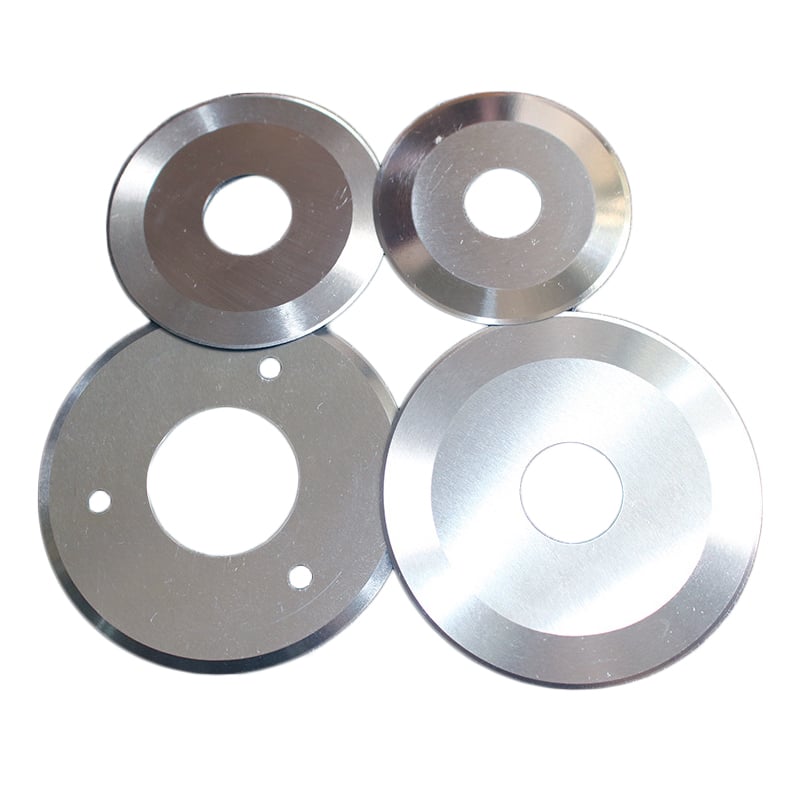
Selecting the right film slitting blade in 2025 requires a strategic approach that balances precision engineering, material compatibility, and operational efficiency. As manufacturing processes evolve and substrate materials become more sophisticated, the decision-making framework for film slitting blade procurement has shifted from simple cost comparison to comprehensive performance evaluation. This guide provides industrial buyers, production managers, and quality engineers with the critical selection criteria needed to identify blades that deliver consistent edge quality, extended service life, and optimal return on investment across diverse film converting applications.
The film slitting blade market in 2025 presents both opportunities and challenges for converters seeking to maximize production throughput while maintaining strict tolerances. Modern film substrates ranging from biaxially oriented polypropylene to multilayer barrier films demand blade geometries and coatings that were unthinkable just five years ago. Understanding how blade material composition, edge geometry, and surface treatment interact with specific film characteristics determines whether your slitting operation achieves clean separation or generates costly edge defects. This comprehensive selection framework eliminates guesswork by establishing measurable performance benchmarks that align blade capabilities with your actual production requirements.
Understanding Film Slitting Blade Fundamentals for 2025 Applications
Core Blade Material Selection and Performance Implications
The foundation of any effective film slitting blade begins with substrate material selection, which directly influences cutting performance, edge retention, and operational longevity. High-speed steel remains prevalent for general-purpose applications due to favorable cost-performance ratios, while tungsten carbide grades dominate high-volume production environments where blade changes disrupt manufacturing schedules. Advanced ceramic composites have emerged as viable alternatives for specialized applications involving abrasive films or environments where metal contamination poses quality risks. Each material category exhibits distinct hardness profiles, fracture toughness characteristics, and thermal stability ranges that determine suitability for specific film types and production speeds.
Material hardness measured on the Rockwell C scale provides initial guidance, with most industrial film slitting blade options ranging from HRC 58 to HRC 65 depending on composition. Higher hardness values correlate with extended edge retention but may increase brittleness risk during impact loading or when processing films with embedded particles. Toughness becomes the critical balancing factor, as blades must withstand microscopic edge deflection during high-speed rotation while maintaining geometric integrity. Modern powder metallurgy techniques enable manufacturers to achieve hardness-toughness combinations previously unattainable through conventional steel processing, resulting in blade substrates that resist both gradual wear and sudden failure modes.
Edge Geometry Configuration and Cutting Mechanics
The microscopic geometry of the film slitting blade cutting edge determines how force distributes during material separation and directly affects edge quality outcomes. Bevel angles typically range from 18 to 25 degrees for film applications, with narrower angles producing cleaner cuts but requiring more frequent maintenance. Compound bevel designs incorporate primary and secondary facets that optimize initial penetration while providing structural support to prevent premature edge collapse. The transition radius between bevel surfaces and the apex must be controlled within micrometers to achieve consistent performance across varying film thicknesses and tension conditions.
Cutting force requirements increase exponentially as edge radius enlarges through normal wear progression, making initial edge sharpness and retention characteristics equally important selection factors. Blades manufactured through precision grinding processes achieve edge radii below 5 micrometers, enabling clean separation of thin gauge films without inducing material deformation. However, ultra-sharp edges prove susceptible to accelerated dulling when processing films containing mineral fillers or reinforcement fibers. Understanding this performance trade-off allows buyers to match edge geometry specifications to actual substrate characteristics rather than pursuing maximum sharpness without consideration for operational durability requirements.
Surface Treatment Technologies and Coating Systems
Advanced surface engineering has revolutionized film slitting blade performance by creating protective barriers that reduce friction, prevent adhesive buildup, and extend operational intervals between maintenance cycles. Physical vapor deposition coatings such as titanium nitride and chromium nitride provide hardness enhancement at the surface layer while maintaining substrate toughness in the core structure. These ceramic coatings typically measure between 2 and 8 micrometers thick, offering substantial improvements in wear resistance without significantly altering blade dimensions or requiring equipment modifications to accommodate geometry changes.
Low-friction coatings based on diamond-like carbon or fluoropolymer compounds address the specific challenge of adhesive migration during slitting operations. Films incorporating pressure-sensitive adhesive layers or tackifying agents tend to transfer material onto blade surfaces, gradually degrading cut quality and requiring frequent cleaning interventions. Properly selected coatings reduce surface energy to levels where adhesive materials cannot establish mechanical bonds, maintaining consistent cutting performance throughout extended production runs. The selection process must account for coating adhesion strength to the substrate, as delamination during operation creates edge irregularities more problematic than running uncoated blades.
Matching Blade Specifications to Film Material Characteristics
Polyester and Polyethylene Film Considerations
Polyester films including polyethylene terephthalate exhibit high tensile strength and elastic recovery that demands specific film slitting blade characteristics for optimal results. These materials tend to work-harden at the cut edge when processed with dull or improperly configured blades, creating rough edges that compromise subsequent lamination or printing operations. Blade selection for polyester applications prioritizes sustained sharpness through appropriate material hardness and coating systems that minimize frictional heating during the cutting cycle. Operating speeds for polyester converting often exceed 500 meters per minute, generating substantial thermal energy at the blade interface that must be dissipated to prevent localized melting or material distortion.
Polyethylene films represent the opposite end of the mechanical property spectrum, with lower tensile strength and greater elongation characteristics that create different blade performance requirements. The softer nature of polyethylene increases the tendency for material to compress rather than separate cleanly when blade edges lose their initial sharpness. This behavior makes edge retention the primary selection criterion, favoring harder substrate materials and wear-resistant coatings even when initial cost considerations might suggest alternatives. Gauge variation within polyethylene film rolls can reach 10 percent or more in commodity grades, requiring blades that maintain cutting effectiveness across this thickness range without requiring tension or clearance adjustments.
Specialized Film Substrates and Technical Requirements
Biaxially oriented polypropylene films incorporate molecular orientation in two perpendicular directions, creating internal stress patterns that influence cutting behavior and edge quality outcomes. The film slitting blade must penetrate cleanly without inducing stress concentrations that propagate as edge splits or delamination in multilayer constructions. Blade clearance settings become particularly critical with BOPP materials, as excessive clearance allows the film to deflect between upper and lower blade edges rather than achieving clean shearing action. Precision-ground blades with tight dimensional tolerances enable converters to maintain optimal clearance specifications throughout the blade service life, preventing the gradual performance degradation common with less precisely manufactured alternatives.
Metallized films and barrier structures incorporating aluminum or silicon oxide layers introduce abrasive wear mechanisms that accelerate blade dulling compared to uncoated polymer substrates. The microscopic metal particles created during slitting act as lapping compounds that gradually enlarge edge radius and degrade cut quality. Film slitting blade selection for these applications emphasizes maximum substrate hardness combined with wear-resistant coating systems that create protective barriers against abrasive attack. Some converters processing predominantly metallized materials implement blade rotation schedules that redistribute wear across the circumference, extending total blade life even when individual cutting edges experience accelerated degradation.
Adhesive-Coated Materials and Contamination Management
Films incorporating adhesive layers present unique challenges related to material transfer onto blade surfaces and subsequent quality degradation. Pressure-sensitive adhesives formulated for tape and label applications tend to migrate onto cutting edges when blade temperature exceeds adhesive softening points, building up deposits that act as insulation and further elevate operating temperatures. This self-reinforcing degradation cycle can progress rapidly during high-speed production, requiring emergency blade cleaning that disrupts manufacturing schedules. The film slitting blade specification process for adhesive-coated materials prioritizes low-friction coatings and blade geometries that minimize contact area while maintaining cutting effectiveness.
Some adhesive systems exhibit greater migration tendency than others based on base polymer chemistry, tackifier loading, and crosslinking density. Acrylic adhesives generally demonstrate better high-temperature stability than rubber-based formulations, reducing but not eliminating transfer potential. Understanding the specific adhesive chemistry in your production mix allows for more informed blade selection, potentially identifying coating systems optimized for particular adhesive families. External cooling systems that direct air streams onto blade edges provide supplementary contamination control by maintaining surface temperatures below adhesive softening points, complementing rather than replacing appropriate blade specification choices.
Operational Performance Factors and Selection Criteria
Production Speed Requirements and Dynamic Stability
Operating velocity fundamentally affects film slitting blade performance through dynamic forces, frictional heating, and vibration susceptibility. Modern converting lines commonly operate between 300 and 800 meters per minute depending on substrate type and finished product specifications. At these speeds, rotational balance becomes critical as even minor mass asymmetries generate centrifugal forces sufficient to induce vibration and edge quality degradation. Premium blade manufacturers employ dynamic balancing procedures during production, ensuring rotational symmetry that maintains stable operation throughout the specified speed range without requiring field balancing operations.
Higher operating speeds increase the rate of frictional energy generation at the cutting interface, elevating blade temperature and potentially affecting both substrate and coating integrity. The film slitting blade material must maintain hardness and dimensional stability at operating temperatures, which can reach 150 degrees Celsius or higher during sustained high-speed production. Some advanced blade designs incorporate thermal management features such as ventilation holes or modified geometry that enhances convective cooling, though these modifications must be carefully engineered to avoid creating stress concentrations that compromise structural integrity. Understanding your typical and maximum operating speed requirements enables selection of blades engineered for appropriate thermal conditions rather than over-specifying for extreme scenarios unlikely to occur in actual production.
Expected Service Life and Replacement Economics
Total cost of ownership rather than initial purchase price determines the true economic value of any film slitting blade investment. A blade costing three times the price of a commodity alternative but delivering five times the operational life provides superior value despite higher upfront expenditure. Quantifying expected service life requires understanding both gradual wear mechanisms and potential sudden failure modes for your specific application. Blades processing abrasive films or operating at extreme speeds typically require replacement based on edge degradation, while those handling less demanding materials may reach dimensional limits from regrinding before edge quality becomes unacceptable.
Maintenance intervals and associated labor costs contribute substantially to total ownership expenses, making extended-life blade options attractive even when per-unit costs appear elevated. Calculate the fully loaded cost of a blade change including direct labor, indirect supervision, quality verification, and production downtime to establish the true cost baseline. Many operations discover that blade expenses represent only 15 to 25 percent of total slitting-related costs, with the majority attributable to change frequency and associated disruptions. This economic reality shifts optimal blade selection toward premium options that extend operational intervals, even in price-sensitive manufacturing environments where initial cost considerations typically dominate purchasing decisions.
Edge Quality Standards and Defect Prevention
The film slitting blade must consistently deliver edge characteristics that meet downstream process requirements and final product specifications. Clean cuts without hanging chad, edge roughness, or stress whitening represent baseline expectations for most applications. More demanding end uses such as capacitor films or optical laminates impose tighter edge quality standards measured through microscopic examination and quantitative roughness parameters. Understanding your specific quality requirements prevents both over-specification that wastes resources on unnecessary precision and under-specification that generates scrap and customer complaints.
Edge defects typically manifest in recognizable patterns that indicate specific blade performance issues. Hanging chad suggests insufficient blade sharpness or improper clearance settings, while stress whitening indicates excessive deformation during cutting caused by blunt edges or incorrect blade angles. Periodic burrs along the edge often result from vibration or blade runout rather than fundamental sharpness issues, pointing toward mechanical problems requiring different solutions than blade replacement. Establishing clear cause-and-effect relationships between observed defects and underlying causes enables more effective blade selection and troubleshooting, reducing trial-and-error approaches that waste time and materials.
Vendor Qualification and Technical Support Considerations
Manufacturing Capabilities and Quality Control Systems
The blade manufacturer's production capabilities and quality assurance protocols directly influence product consistency and reliability across multiple orders. Premium blade suppliers employ CNC grinding centers with closed-loop dimensional control, achieving tolerances measured in micrometers rather than the wider variations common in manually supervised operations. Statistical process control systems monitor critical parameters throughout manufacturing, identifying trends before they produce out-of-specification product. Request documentation of manufacturing capabilities including equipment specifications, inspection procedures, and typical dimensional tolerances to assess whether a potential supplier can consistently deliver the precision required for your application.
Material traceability and certification documentation provide assurance that blade substrate composition meets specifications and maintains consistency between production lots. Reputable manufacturers maintain complete traceability from raw material suppliers through finished blade delivery, enabling investigation of any performance anomalies through correlation with production records. Certification documents should include chemical composition analysis, hardness testing results, and dimensional inspection data specific to your order rather than generic product specifications. This level of documentation proves particularly important for converters serving regulated industries where material traceability requirements extend throughout the supply chain.
Technical Support and Application Engineering Resources
Blade suppliers offering comprehensive technical support provide value beyond the physical product through application assistance, troubleshooting guidance, and process optimization recommendations. Experienced application engineers can analyze your specific slitting challenges and recommend blade specifications tailored to actual operating conditions rather than generic solutions. This consultative approach often identifies performance improvements or cost reductions unavailable through catalog product selection alone. Evaluate potential suppliers based on technical staff qualifications, responsiveness to inquiries, and willingness to engage in detailed application discussions rather than simply processing orders.
Field service capabilities including on-site blade inspection, clearance verification, and operator training enhance the value proposition for blade suppliers serving geographically dispersed converter operations. Local technical presence reduces response time when production issues arise and enables periodic audits that identify optimization opportunities before they impact quality or efficiency. Some suppliers offer blade management programs that monitor usage patterns, predict replacement requirements, and maintain appropriate inventory levels to prevent stockouts. These value-added services justify premium pricing for converters seeking to minimize internal technical resources while maintaining optimal slitting performance.
Customization Options and Lead Time Management
Standard catalog offerings serve many film slitting blade applications effectively, but specialized requirements may necessitate custom geometries, coatings, or dimensional specifications. Assess potential suppliers based on willingness and capability to produce custom designs when application demands exceed standard product capabilities. Custom blade development typically involves engineering consultation, prototype production, and field validation before committing to volume production. This process requires several weeks to months depending on modification complexity, making early engagement essential when project timelines impose constraints on development cycles.
Standard product lead times vary significantly among suppliers based on manufacturing capacity, inventory policies, and geographic location relative to your facility. Domestic suppliers often provide shorter lead times but may command premium pricing compared to offshore alternatives requiring extended shipping durations. Balance lead time requirements against total cost and quality considerations rather than optimizing any single factor in isolation. Emergency replacement needs argue for maintaining strategic inventory of critical blade specifications, converting lead time from an operational constraint into a manageable planning factor through appropriate stock policies.
Implementation Strategy and Performance Validation
Trial Evaluation Protocols and Success Metrics
Implementing new film slitting blade specifications requires structured evaluation protocols that generate objective performance data rather than subjective impressions. Establish baseline measurements using current blade specifications including edge quality assessments, operational life duration, and cost per unit of production. Introduce candidate blades in controlled trials processing representative substrate mix under normal operating conditions while maintaining detailed performance records. This methodical approach eliminates bias and provides quantitative evidence supporting procurement decisions rather than relying on anecdotal observations subject to confirmation bias.
Define success metrics aligned with operational priorities whether maximizing blade life, optimizing edge quality, or minimizing total cost. Different metrics may favor different blade options, requiring explicit prioritization of competing objectives before evaluation begins. Some operations prioritize consistency over absolute performance, preferring blades that deliver predictable results even if theoretical maximums remain unachieved. Others operate in environments where peak performance justifies increased variability and management attention. Understanding your organizational priorities and operational constraints guides selection toward options providing optimal value within your specific context rather than pursuing abstract performance ideals.
Transition Planning and Change Management
Transitioning to new film slitting blade specifications impacts multiple operational areas including purchasing, inventory management, maintenance procedures, and operator training. Develop comprehensive transition plans that address each affected function rather than treating blade changes as simple part substitutions. Update maintenance documentation with new specifications, clearance settings, and change intervals to prevent confusion during implementation. Conduct operator training emphasizing any differences in handling, installation, or performance characteristics compared to previous specifications to ensure consistent execution of proper procedures.
Phased implementation approaches reduce risk by limiting initial exposure while building organizational experience with new blade specifications. Begin trials on less critical production lines or during periods of reduced demand when any unexpected issues create minimal business impact. Gradually expand usage as confidence builds and any initial problems receive resolution. This conservative approach requires extended timelines but reduces the probability of widespread disruptions from unforeseen complications. Aggressive organizations with greater risk tolerance may implement broader changes more rapidly, accepting higher short-term risk in exchange for faster realization of anticipated benefits.
Continuous Improvement and Performance Monitoring
Blade performance monitoring should continue beyond initial implementation to identify gradual changes in operational characteristics or emerging issues requiring attention. Establish routine inspection schedules that assess edge quality, measure key dimensions, and document any observed anomalies. Trend analysis of performance data often reveals degradation patterns before they produce obvious quality problems, enabling proactive intervention rather than reactive crisis management. Simple control charts tracking blade life duration or edge quality metrics provide early warning of process drift requiring investigation and correction.
Periodic supplier performance reviews ensure continued delivery of expected quality and service levels throughout the business relationship. Document and discuss any performance variations, delivery issues, or support concerns during scheduled reviews rather than allowing minor problems to accumulate into major dissatisfaction. Most reputable blade suppliers welcome performance feedback and actively engage in problem-solving when issues arise. This collaborative approach builds relationships that deliver value beyond transactional product supply, creating partnerships that contribute to continuous operational improvement and competitive advantage in increasingly demanding market environments.
FAQ
How often should industrial film slitting blades be replaced?
Replacement frequency depends on multiple factors including substrate abrasiveness, operating speed, and edge quality requirements. Most film slitting blade applications require replacement every 50,000 to 500,000 linear meters of processed material. Abrasive films such as metallized substrates or filled polymers typically necessitate more frequent changes at the lower end of this range, while clean polymer films under moderate operating conditions may achieve extended life approaching the upper limit. Monitor edge quality through periodic microscopic inspection rather than relying solely on predetermined schedules, as actual wear rates vary based on specific operating conditions and material characteristics.
What causes rough edges during film slitting operations?
Rough or serrated edges typically result from insufficient blade sharpness, improper clearance between upper and lower blades, or excessive vibration during the cutting process. As the film slitting blade edge radius increases through normal wear, cutting force requirements rise and the material tends to tear rather than shear cleanly. Clearance settings outside optimal ranges allow the film to deflect excessively before separation occurs, producing ragged edges regardless of blade sharpness. Vibration from unbalanced blades, worn bearings, or resonance conditions creates periodic variations in cutting force that manifest as edge roughness. Systematic troubleshooting examining each potential cause enables accurate diagnosis and appropriate corrective action.
Can the same blade specification work for different film types?
A single film slitting blade specification may provide acceptable performance across multiple substrate types if material characteristics fall within similar ranges for properties affecting cutting behavior. Operations processing exclusively commodity polyethylene or polypropylene films of comparable gauge often successfully employ uniform blade specifications throughout their facilities. However, converters handling diverse material portfolios including both soft and rigid films, abrasive and clean substrates, or materials with significantly different thickness ranges typically achieve better overall results through multiple blade specifications optimized for specific material families. The cost and complexity of maintaining multiple blade types must be weighed against performance improvements and reduced scrap from optimized specifications.
What blade hardness level provides the best combination of sharpness and durability?
Optimal hardness depends on balancing edge retention against fracture resistance for your specific application requirements. Film slitting blade hardness between HRC 60 and HRC 63 provides effective compromise for most general film converting applications, offering good edge retention without excessive brittleness. Processing highly abrasive films may justify harder substrates approaching HRC 65 despite increased fracture risk, while impact-prone applications with frequent web breaks benefit from slightly softer blades around HRC 58 that better tolerate shock loading. Modern coating technologies partially decouple this trade-off by providing surface hardness enhancement while maintaining tougher substrate cores, enabling combinations of wear resistance and durability previously unattainable through substrate selection alone.