 EN
EN

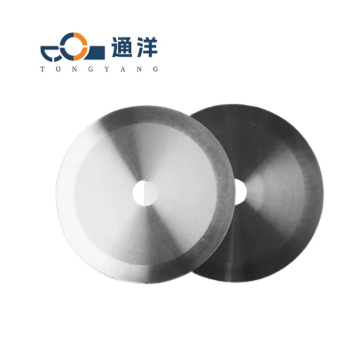
The industrial cutting landscape has evolved dramatically in recent years, with precision tools becoming essential for maintaining competitive manufacturing standards. A round cutting knife stands as one of the most versatile and efficient tools in modern industrial applications, offering superior cutting performance across various materials. These specialized blades have revolutionized how manufacturers approach material processing, delivering consistent results that meet the demanding requirements of today's production environments. Understanding the capabilities and applications of these cutting tools is crucial for businesses seeking to optimize their operational efficiency and product quality.
Understanding Round Cutting Knife Technology
Advanced Blade Design Principles
The engineering behind a modern round cutting knife incorporates sophisticated metallurgical principles to achieve optimal performance characteristics. These blades feature carefully calculated geometry that maximizes cutting efficiency while minimizing material waste and operator fatigue. The circular design distributes cutting forces evenly across the blade surface, reducing stress concentrations that could lead to premature failure or inconsistent cutting results. Advanced heat treatment processes ensure these tools maintain their sharp edges throughout extended use periods, providing reliable performance in demanding industrial environments.
Material selection plays a critical role in determining the effectiveness of any round cutting knife system. High-carbon steel alloys offer exceptional hardness and edge retention, while specialized coatings can enhance corrosion resistance and reduce friction during cutting operations. The precise balance between hardness and toughness ensures these blades can withstand the mechanical stresses encountered in high-volume production scenarios without compromising cutting quality or dimensional accuracy.
Manufacturing Quality Standards
Contemporary round cutting knife manufacturing adheres to stringent quality control protocols that ensure consistent performance across production batches. Precision grinding techniques create uniform edge geometry that translates into predictable cutting characteristics, allowing operators to achieve repeatable results across different material types and thicknesses. Advanced inspection methods, including optical measurement systems and hardness testing, verify that each blade meets established performance specifications before reaching end users.
Quality certification standards have evolved to encompass not only dimensional accuracy but also surface finish requirements and material properties. These comprehensive standards ensure that industrial users receive cutting tools capable of meeting their specific application requirements while maintaining operational safety and efficiency. The implementation of traceability systems allows manufacturers to track blade performance throughout their service life, providing valuable data for continuous improvement initiatives.
Industrial Applications and Performance Benefits
Rubber and Polymer Processing
The rubber processing industry has embraced the round cutting knife as an indispensable tool for achieving precise cuts in various elastomeric materials. These specialized blades excel at processing synthetic and natural rubber compounds, delivering clean cuts that maintain material integrity without generating excessive heat or causing deformation. The circular design eliminates the directional cutting issues often encountered with linear blade systems, enabling consistent results regardless of material grain orientation or compound composition.
Modern rubber manufacturing facilities rely on these cutting tools to process materials ranging from thin gaskets to thick industrial belting. The ability to maintain sharp cutting edges throughout extended production runs reduces downtime associated with blade changes and ensures consistent product quality. Advanced round cutting knife designs incorporate specialized edge geometries optimized for different rubber hardness levels, allowing manufacturers to select tools specifically matched to their material processing requirements.
Textile and Fabric Cutting Operations
Textile manufacturing operations have discovered significant advantages in utilizing round cutting knife systems for fabric processing applications. These tools provide exceptional control over cutting forces, enabling precise cuts through multiple fabric layers without causing fraying or material distortion. The smooth cutting action reduces the mechanical stress applied to delicate fibers, preserving fabric integrity and ensuring clean edge quality that meets demanding garment manufacturing standards.
The versatility of round cutting knife technology extends to synthetic fabrics, natural fibers, and composite materials used in technical textile applications. Manufacturing facilities processing materials for automotive, aerospace, and medical applications benefit from the consistent cutting performance these tools provide. The ability to process varying material thicknesses with a single blade configuration streamlines production workflows and reduces inventory requirements for cutting tool management.
Selection Criteria for Optimal Performance
Material Compatibility Assessment
Selecting the appropriate round cutting knife requires careful evaluation of the materials being processed and their specific cutting requirements. Different materials present unique challenges that influence blade selection, from the abrasive nature of certain composites to the heat-sensitive characteristics of thermoplastic materials. Understanding these material properties enables users to choose cutting tools with appropriate hardness levels, edge geometries, and coating options that optimize cutting performance while maximizing blade service life.
The thickness range of materials being processed significantly impacts round cutting knife selection decisions. Thicker materials require blades with enhanced structural integrity to resist deflection during cutting operations, while thinner materials benefit from ultra-sharp edge geometries that minimize cutting forces and material distortion. Consideration of material density and fiber orientation helps determine the optimal blade configuration for achieving consistent cutting results across production runs.
Operational Environment Considerations
Environmental factors in the production workshop can significantly impact the performance and lifespan of circular saws. Temperature variations, humidity levels, and the presence of contaminants all affect the selection criteria and maintenance requirements for circular saw blades. High-temperature environments may require the use of special sawn lumber or coatings to maintain their performance characteristics under thermal stress; while corrosive environments require more refined surface treatments (coatings) to prevent performance degradation.
Production volume requirements and cutting frequency patterns also influence round cutting knife selection processes. High-volume operations benefit from blades designed for extended service intervals, featuring enhanced wear resistance and dimensional stability. Understanding the relationship between cutting parameters and blade performance enables users to optimize tool selection for their specific operational requirements while minimizing total cost of ownership.
Installation and Maintenance Best Practices
Proper Installation Techniques
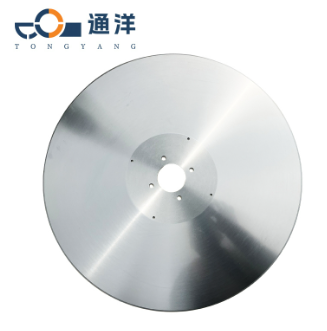
Correct installation procedures are essential for maximizing round cutting knife performance and ensuring operator safety throughout the service life of the blade. Proper mounting techniques involve verifying blade compatibility with existing cutting equipment, ensuring accurate alignment with guide systems, and applying appropriate mounting torque specifications. The installation process must account for thermal expansion considerations that could affect blade positioning during operation, particularly in applications involving elevated temperatures.
Pre-installation inspection procedures help identify potential issues that could compromise cutting performance or operational safety. These checks include verifying blade dimensions, examining edge condition, and confirming that mounting surfaces are clean and free from damage. Proper installation documentation provides a reference for maintenance activities and helps establish baseline performance parameters for monitoring blade condition throughout its service life.
Maintenance Schedule Development
Establishing comprehensive maintenance schedules ensures round cutting knife systems deliver consistent performance while minimizing unexpected downtime. Regular inspection intervals should be tailored to production volume and material characteristics, with more frequent checks required for demanding applications or abrasive materials. Maintenance protocols should include visual inspections, dimensional measurements, and cutting performance assessments that provide early warning of blade wear or damage.
Preventive maintenance activities extend beyond blade inspection to encompass supporting equipment and cutting system components. Regular cleaning removes accumulated debris that could interfere with blade performance, while lubrication of moving components ensures smooth operation and reduces mechanical wear. Documentation of maintenance activities provides valuable data for optimizing replacement schedules and identifying opportunities for performance improvements.
Cost Analysis and Return on Investment
Total Cost of Ownership Evaluation
Evaluating the financial impact of round cutting knife implementation requires comprehensive analysis of both direct and indirect costs associated with cutting operations. Initial blade costs represent only a fraction of total ownership expenses, with factors such as replacement frequency, downtime costs, and quality improvements significantly impacting overall economic performance. Understanding these cost relationships enables informed decision-making when selecting cutting tools for industrial applications.
Productivity improvements achieved through enhanced cutting performance often justify premium blade investments through reduced cycle times and improved material utilization. The ability of high-quality round cutting knife systems to maintain consistent performance throughout their service life translates into predictable production schedules and reduced quality control expenses. These operational benefits compound over time, delivering substantial returns on cutting tool investments.
Performance Metrics and Benchmarking
Establishing key performance indicators enables accurate assessment of round cutting knife effectiveness and provides data for continuous improvement initiatives. Metrics such as cutting speed, edge retention, and material waste rates provide quantitative measures of blade performance that can be compared across different tool options and suppliers. Regular performance monitoring identifies trends that indicate optimal replacement timing and helps optimize cutting parameters for maximum efficiency.
Benchmarking cutting performance against industry standards provides context for evaluating round cutting knife investments and identifying opportunities for operational improvements. Comparative analysis of different blade technologies and suppliers helps establish realistic performance expectations while identifying the most cost-effective solutions for specific applications. This data-driven approach ensures cutting tool selections align with broader operational objectives and financial targets.
Future Trends in Cutting Technology
Advanced Material Innovations
The evolution of round cutting knife technology continues to be driven by advances in metallurgy and surface engineering that enhance performance capabilities and extend service life. New alloy compositions provide improved combinations of hardness, toughness, and wear resistance that enable these tools to handle increasingly demanding applications. Nanostructured coatings offer enhanced surface properties that reduce friction, improve corrosion resistance, and maintain sharp edges throughout extended use periods.
Research into novel blade geometries and edge configurations promises to further optimize round cutting knife performance for specific material types and cutting conditions. Computer modeling and simulation technologies enable designers to predict blade behavior under various loading conditions, leading to more efficient designs that maximize cutting performance while minimizing material usage and manufacturing costs.
Integration with Smart Manufacturing
The integration of round cutting knife systems with Industry 4.0 technologies is revolutionizing how manufacturers monitor and optimize cutting operations. Sensor technologies embedded within cutting systems provide real-time data on blade condition, cutting forces, and material properties that enable predictive maintenance and process optimization. This connectivity allows manufacturers to maximize blade utilization while maintaining consistent product quality throughout production runs.
Artificial intelligence and machine learning algorithms are being developed to analyze cutting performance data and provide recommendations for optimizing blade selection and cutting parameters. These systems can identify subtle patterns in performance data that human operators might miss, leading to improved efficiency and reduced operational costs. The continued evolution of these technologies promises to further enhance the value proposition of round cutting knife systems in modern manufacturing environments.
FAQ
What materials can be effectively cut using a round cutting knife
Round cutting knife systems are highly versatile and can effectively process a wide range of materials including rubber compounds, synthetic polymers, natural and synthetic textiles, leather, paper products, and various composite materials. The key to successful material processing lies in selecting the appropriate blade configuration, edge geometry, and cutting parameters for the specific material characteristics and application requirements.
How often should round cutting knife blades be replaced
Replacement frequency depends on several factors including production volume, material characteristics, cutting conditions, and blade quality. High-volume operations processing abrasive materials may require more frequent replacements, while applications involving softer materials and proper maintenance can extend blade service life significantly. Regular performance monitoring and established inspection schedules help determine optimal replacement timing for each specific application.
What safety considerations are important when operating round cutting knife systems
Safety protocols for round cutting knife operations should include proper training for all operators, regular inspection of blade condition and mounting systems, adherence to recommended cutting parameters, and use of appropriate personal protective equipment. Emergency stop procedures should be clearly established, and maintenance activities should only be performed by qualified personnel following established lockout procedures.
How do environmental factors affect round cutting knife performance
Environmental conditions such as temperature, humidity, and atmospheric contaminants can significantly impact blade performance and service life. High temperatures may require specialized blade materials or cooling systems, while corrosive environments necessitate enhanced surface treatments. Understanding these environmental impacts enables proper blade selection and maintenance practices that optimize performance in challenging operating conditions.