Pneumatic Blade Holder for Nonwoven - Precision Cutting Solutions for Textile Manufacturing

All Categories

Get a Free Quote

Our representative will contact you soon.
Email
WhatsApp
Name
Company Name
Message
0/1000

pneumatic blade holder for nonwoven

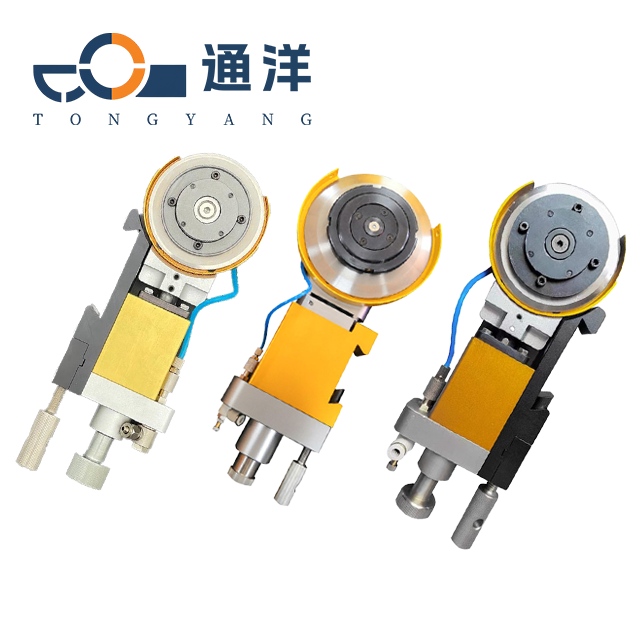
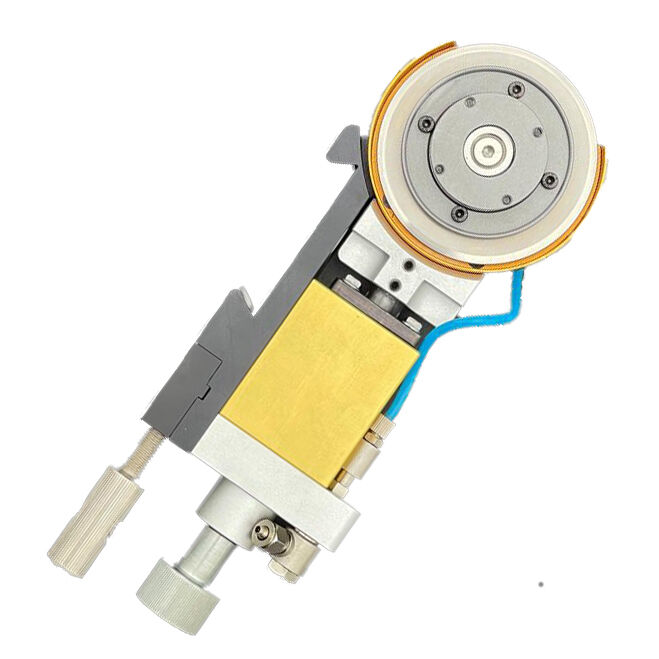
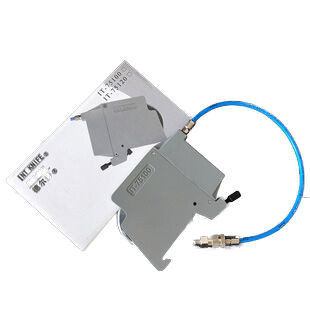
The pneumatic blade holder for nonwoven represents a crucial component in modern fabric production machinery, designed specifically to secure and control cutting blades with precision during nonwoven material processing operations. This sophisticated device utilizes compressed air technology to grip and release cutting blades, offering manufacturers an automated solution that significantly enhances production efficiency and safety standards. The pneumatic blade holder for nonwoven operates through an air-powered clamping mechanism that provides consistent pressure distribution across the blade surface, ensuring stable cutting performance throughout extended production runs. Within the nonwoven manufacturing sector, this equipment has become indispensable for facilities producing materials such as medical textiles, hygiene products, automotive components, and filtration media. The core functionality revolves around providing rapid blade changes without requiring manual tools, thereby reducing downtime and increasing operational throughput. Modern pneumatic blade holder for nonwoven systems incorporate advanced sealing technologies that prevent air leakage and maintain optimal clamping force even under demanding production conditions. These holders are engineered to accommodate various blade dimensions and thicknesses, making them versatile solutions for diverse cutting applications. The pneumatic actuation system responds instantly to control signals, enabling precise timing coordination with other machinery components in automated production lines. Material compatibility is another essential consideration, as the pneumatic blade holder for nonwoven must withstand exposure to various chemicals, temperatures, and environmental conditions common in textile manufacturing facilities. The design typically features corrosion-resistant materials such as anodized aluminum or stainless steel construction, ensuring long service life and minimal maintenance requirements. Integration capabilities with existing production equipment make the pneumatic blade holder for nonwoven an attractive upgrade option for manufacturers seeking to modernize their facilities without complete system overhauls. Safety features built into these devices include pressure monitoring systems, emergency release mechanisms, and fail-safe designs that prevent accidental blade disengagement during operation.

New Product Recommendations

Manufacturers who implement a pneumatic blade holder for nonwoven in their production facilities experience immediate improvements in operational efficiency and product quality. The foremost advantage centers on the dramatic reduction in blade change time, as pneumatic systems allow operators to swap blades in seconds rather than the minutes required with manual fastening systems. This time savings translates directly into increased production capacity and reduced labor costs, making the investment highly attractive from a financial perspective. The consistent clamping force provided by the pneumatic blade holder for nonwoven eliminates variations in blade positioning that often occur with manual tightening methods, resulting in more uniform cutting quality across all produced materials. Workers appreciate the ergonomic benefits, as they no longer need to exert physical force or use heavy tools to secure blades, reducing fatigue and workplace injury risks. The automated nature of pneumatic systems contributes to safer working environments by minimizing direct operator contact with sharp cutting edges during blade installation and removal procedures. Production managers value the enhanced repeatability that pneumatic blade holder for nonwoven systems deliver, as each blade change achieves identical positioning and tension, ensuring predictable cutting performance that maintains tight quality tolerances. The reduced mechanical wear on blade mounting surfaces represents another significant benefit, as pneumatic clamping distributes forces evenly without creating stress concentrations that can damage expensive blade holder components over time. Maintenance requirements decrease substantially compared to mechanical fastening systems, as pneumatic blade holder for nonwoven devices contain fewer moving parts subject to wear and require only periodic seal inspections and lubrication. The integration capabilities with modern factory automation systems enable remote monitoring and control, allowing operators to manage blade changes from central control stations and collect valuable performance data for continuous improvement initiatives. Energy efficiency is noteworthy, as pneumatic systems consume air only during brief actuation periods rather than continuously, reducing operational costs compared to hydraulic or electromechanical alternatives. The pneumatic blade holder for nonwoven adapts easily to different production speeds and material types, providing flexibility that helps manufacturers respond quickly to changing customer demands without equipment modifications. Temperature stability is superior because pneumatic systems generate minimal heat during operation, preventing thermal expansion issues that can affect blade alignment in systems using electric motors or hydraulic fluids. The clean operation of pneumatic systems aligns perfectly with the stringent hygiene requirements of nonwoven products used in medical and food contact applications, as compressed air systems avoid contamination risks associated with hydraulic fluids.

Tips And Tricks

How to Extend Your Film Slitting Blade Lifespan

25

Mar

How to Extend Your Film Slitting Blade Lifespan

Manufacturing operations that rely on precise film cutting know that blade performance directly impacts production efficiency and product quality. A well-maintained film slitting blade can significantly reduce downtime, minimize material waste, and e...
View More
Can a Circular Blade Cut Metal? A Look at Hardened Metal Cutting Blades

25

Mar

Can a Circular Blade Cut Metal? A Look at Hardened Metal Cutting Blades

The ability to cut through metal efficiently and precisely has always been a cornerstone of modern manufacturing and fabrication industries. When professionals need to slice through various metal materials, the choice of cutting tool can make the dif...
View More
Paper Cutting Blade Safety: Essential Guidelines

23

Apr

Paper Cutting Blade Safety: Essential Guidelines

Workplace safety incidents involving paper cutting blade equipment account for thousands of injuries annually across commercial and industrial facilities. From minor cuts to severe lacerations requiring medical attention, these incidents often stem f...
View More
How to Sharpen Your Circular Knife: Step-by-Step Guide

30

Apr

How to Sharpen Your Circular Knife: Step-by-Step Guide

Maintaining the sharpness of your circular knife is essential for achieving clean, precise cuts in industrial and commercial applications. Whether you work in rubber processing, textile manufacturing, paper cutting, or food production, a dull circula...
View More

Get a Free Quote

Our representative will contact you soon.
Email
WhatsApp
Name
Company Name
Message
0/1000

pneumatic blade holder for nonwoven

Instant Blade Exchange Technology for Maximum Production Uptime

Instant Blade Exchange Technology for Maximum Production Uptime

The revolutionary instant blade exchange capability of the pneumatic blade holder for nonwoven fundamentally transforms how manufacturers approach production scheduling and maintenance planning. Traditional blade changing methods require operators to manually loosen multiple fasteners, carefully remove the worn blade, position a new blade precisely, and then tighten all fasteners to specific torque values, a process that can consume five to ten minutes per change and requires production stoppage. In contrast, the pneumatic blade holder for nonwoven reduces this entire procedure to a simple two-step process taking less than thirty seconds: releasing air pressure to open the holder and inserting or removing the blade. This dramatic time reduction becomes particularly valuable in high-volume production environments where blade changes occur multiple times per shift, potentially saving several hours of downtime weekly. The economic impact extends beyond direct time savings, as faster blade changes enable manufacturers to implement more aggressive preventive maintenance schedules, replacing blades before they become excessively worn rather than waiting for quality problems to emerge. This proactive approach results in more consistent product quality, fewer rejected materials, and reduced waste disposal costs. The pneumatic blade holder for nonwoven also eliminates the skill variation between different operators, as the automated clamping mechanism applies identical pressure regardless of who performs the blade change, ensuring consistent results across all shifts and personnel. Production planners gain flexibility to schedule blade changes during natural breaks in material flow rather than waiting for extended downtime windows, improving overall equipment effectiveness metrics. The reduced physical demands of pneumatic systems allow a broader range of workers to perform blade changes safely and effectively, addressing workforce diversity goals and reducing dependency on specialized maintenance personnel. Additionally, the pneumatic blade holder for nonwoven enables rapid switching between different blade types for varied material specifications, supporting lean manufacturing principles by facilitating smaller batch production and faster customer response times without incurring prohibitive changeover costs.
Precision Clamping Force Control for Superior Cutting Quality

Precision Clamping Force Control for Superior Cutting Quality

The ability of the pneumatic blade holder for nonwoven to deliver precise and consistent clamping force represents a technological breakthrough that directly impacts final product quality and manufacturing efficiency. Mechanical fastening systems rely on operator judgment and torque tools to achieve proper blade tension, introducing unavoidable variations between blade changes that manifest as inconsistent cutting performance, dimensional variations in finished products, and unpredictable blade life. The pneumatic blade holder for nonwoven eliminates these variables through regulated air pressure that applies mathematically consistent force to the blade with every actuation cycle. This precision becomes critically important when processing delicate nonwoven materials that require exact cutting parameters to prevent fiber damage, edge fraying, or dimensional distortion. Quality control managers particularly value how pneumatic systems maintain cutting specifications throughout production runs, as the clamping force remains constant regardless of ambient temperature changes, vibration, or other environmental factors that can affect mechanical fasteners. The uniform pressure distribution across the blade contact surface prevents localized stress points that can cause premature blade failure or deformation, extending blade service life by up to forty percent compared to mechanical mounting methods. Manufacturers processing premium nonwoven materials for medical or filtration applications benefit enormously from the enhanced edge quality that precise clamping delivers, as these products often require clean cuts free from fiber protrusion or material compression. The pneumatic blade holder for nonwoven also enables fine-tuning of clamping force for different material types and blade geometries by simply adjusting regulator settings, providing adaptability that would require hardware changes in mechanical systems. This adjustability supports research and development activities, allowing engineers to optimize cutting parameters experimentally without committing to permanent equipment modifications. The consistent blade positioning achieved through pneumatic clamping improves coordination with other processing equipment such as edge sealers, folders, or secondary cutters that depend on precise material placement. Process capability studies demonstrate that the pneumatic blade holder for nonwoven significantly reduces variation in critical dimensions, helping manufacturers achieve six sigma quality levels and meet increasingly stringent customer specifications for nonwoven products used in demanding applications.
Enhanced Workplace Safety and Ergonomic Operation

Enhanced Workplace Safety and Ergonomic Operation

The safety and ergonomic advantages offered by the pneumatic blade holder for nonwoven address critical concerns in modern manufacturing facilities where worker wellbeing and regulatory compliance are paramount considerations. Traditional blade changing procedures expose operators to multiple injury risks, including lacerations from handling sharp edges, repetitive strain injuries from using hand tools, and musculoskeletal problems from awkward postures required to access blade mounting locations. The pneumatic blade holder for nonwoven mitigates these hazards through design features that minimize direct blade contact and eliminate the need for forceful manual operations. The simple actuation mechanism requires only a button press or valve operation to release the blade, allowing operators to use specialized handling tools rather than gripping blades directly, substantially reducing laceration risks. Safety managers appreciate how pneumatic systems support lockout-tagout procedures more effectively than mechanical fasteners, as air pressure can be completely isolated and verified before maintenance personnel approach the blade area, creating clear safe conditions. The reduced physical exertion required for blade changes decreases cumulative trauma disorders among maintenance workers, particularly benefiting aging workforces or facilities seeking to accommodate employees with physical limitations. The pneumatic blade holder for nonwoven also incorporates fail-safe mechanisms that prevent accidental blade release during operation, typically requiring both pressure loss and a mechanical interlock disengagement before the blade can separate from the holder, providing multiple layers of protection against catastrophic failures. Noise reduction represents another often-overlooked safety benefit, as pneumatic systems operate much more quietly than impact wrenches or power tools traditionally used for blade fastening, reducing hearing damage risks and improving overall workplace comfort. The cleanliness of pneumatic operation eliminates exposure to metal particles generated by worn fasteners or debris from manual tool use, particularly important in facilities producing nonwoven materials for hygiene or medical applications where contamination control is essential. Training requirements decrease significantly with the pneumatic blade holder for nonwoven, as the simplified operation allows new employees to perform blade changes safely after brief instruction rather than requiring extensive hands-on practice to develop proper torque application skills. Emergency response capabilities improve because blade removal can be accomplished rapidly without searching for specific tools or following complex procedures, enabling faster resolution of jam situations or quality problems that require immediate blade inspection.

Get a Free Quote

Our representative will contact you soon.
Email
WhatsApp
Name
Company Name
Message
0/1000
Newsletter
Please Leave A Message With Us